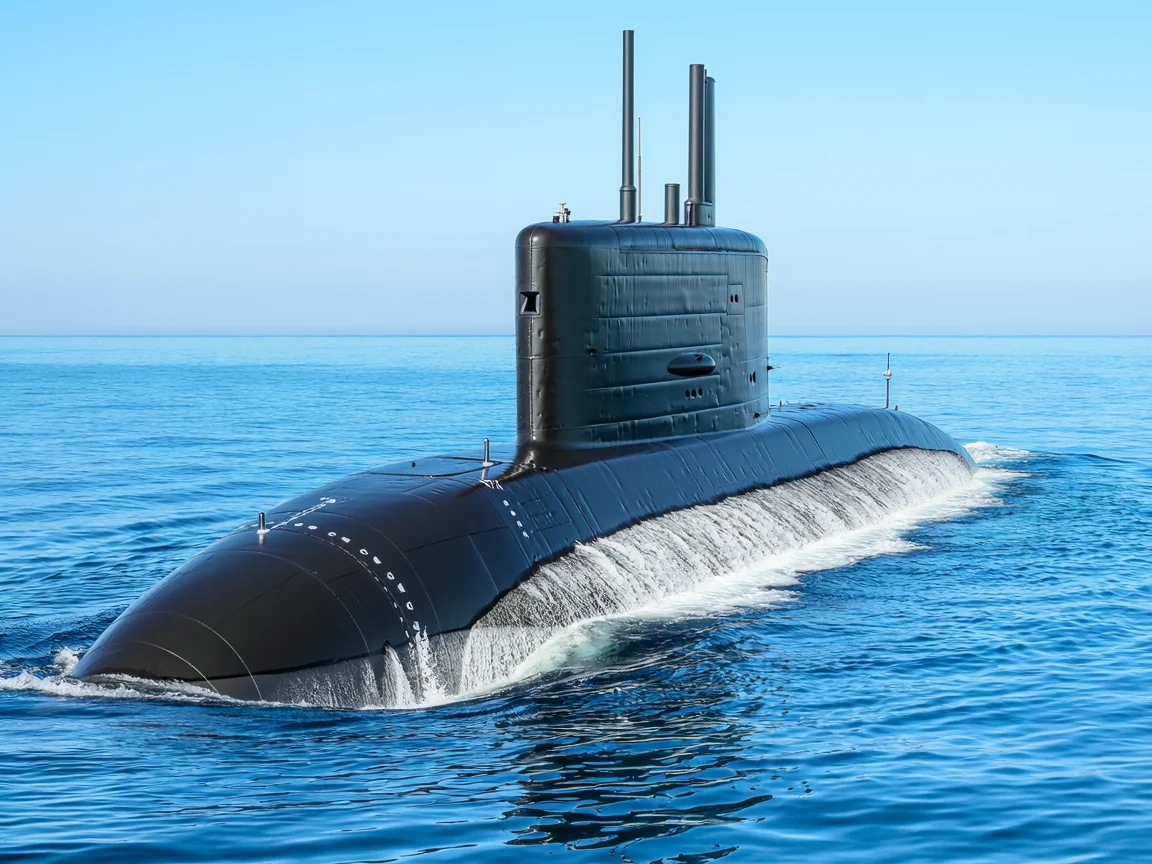
Ballast tanks
Between the inner pressure hull and the outer hull, submarines carry large main ballast tanks. Filled with air, they make the boat float. When vents at the top open, air escapes and seawater floods in through openings at the bottom, and the boat becomes heavy enough to sink.
Neutral buoyancy
Once submerged, the crew aims for neutral buoyancy, neither rising nor sinking. Trim tanks inside the hull move or adjust small amounts of water to balance the boat front to back and compensate for changes such as fuel use or water density.
Fins and speed
While moving, horizontal fins called hydroplanes or diving planes angle the boat up or down, much like an aircraft's elevators. This lets a submarine change depth smoothly without constantly pumping water in and out.
Coming back up
To surface, high-pressure compressed air is blown into the ballast tanks, pushing the water out through the bottom openings. In an emergency, a rapid blow can send the submarine climbing steeply to the surface.
Sources & further reading
Military operating depths are estimates; exact figures are not published. Photograph: original AI-generated illustration (Adobe Firefly). Reference organisations do not endorse this website.