Ordinary light is a crowd
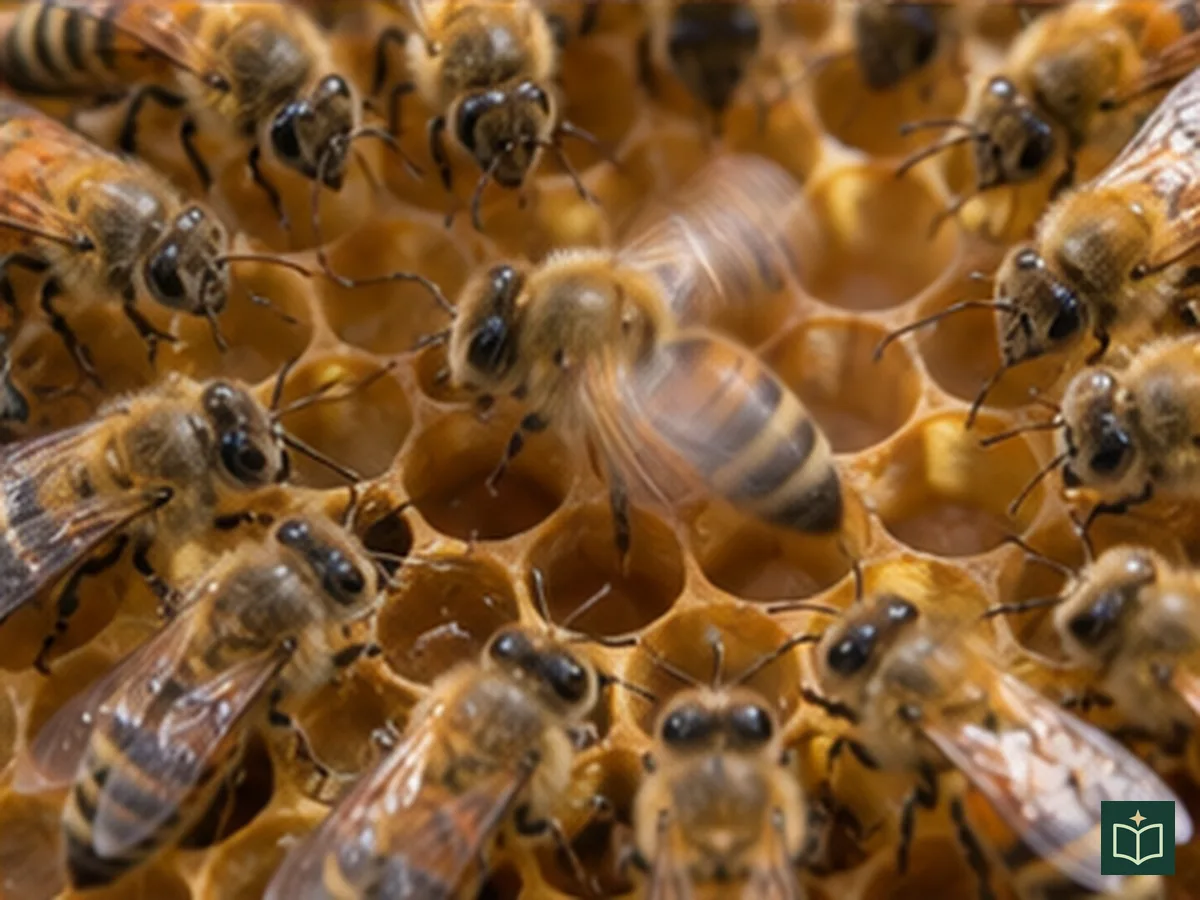
A light bulb or the Sun sends out light in every direction, across a jumble of colours, with its waves rising and falling out of step. Laser light is different in three ways. It is monochromatic, meaning almost a single wavelength or colour. It is directional, leaving the device in a narrow beam that spreads very little. And it is coherent: the peaks and troughs of its waves line up in time and space, like soldiers marching in step rather than a crowd hurrying through a station. The word laser began as an acronym for 'light amplification by stimulated emission of radiation', and the second half of that phrase explains everything.
Einstein's idea
Atoms can absorb energy and jump to an excited state. Normally they drop back at random, releasing a photon in a random direction. This is spontaneous emission, the source of ordinary light. In 1917 Albert Einstein showed that there must be a second route. If a photon with exactly the right energy passes an excited atom, it can trigger the atom to release a second photon identical in wavelength, direction and phase. That is stimulated emission. One photon becomes two, two become four, and the light is amplified. The catch is that, under normal conditions, most atoms sit in their low-energy state and simply absorb passing photons instead.
Building the beam
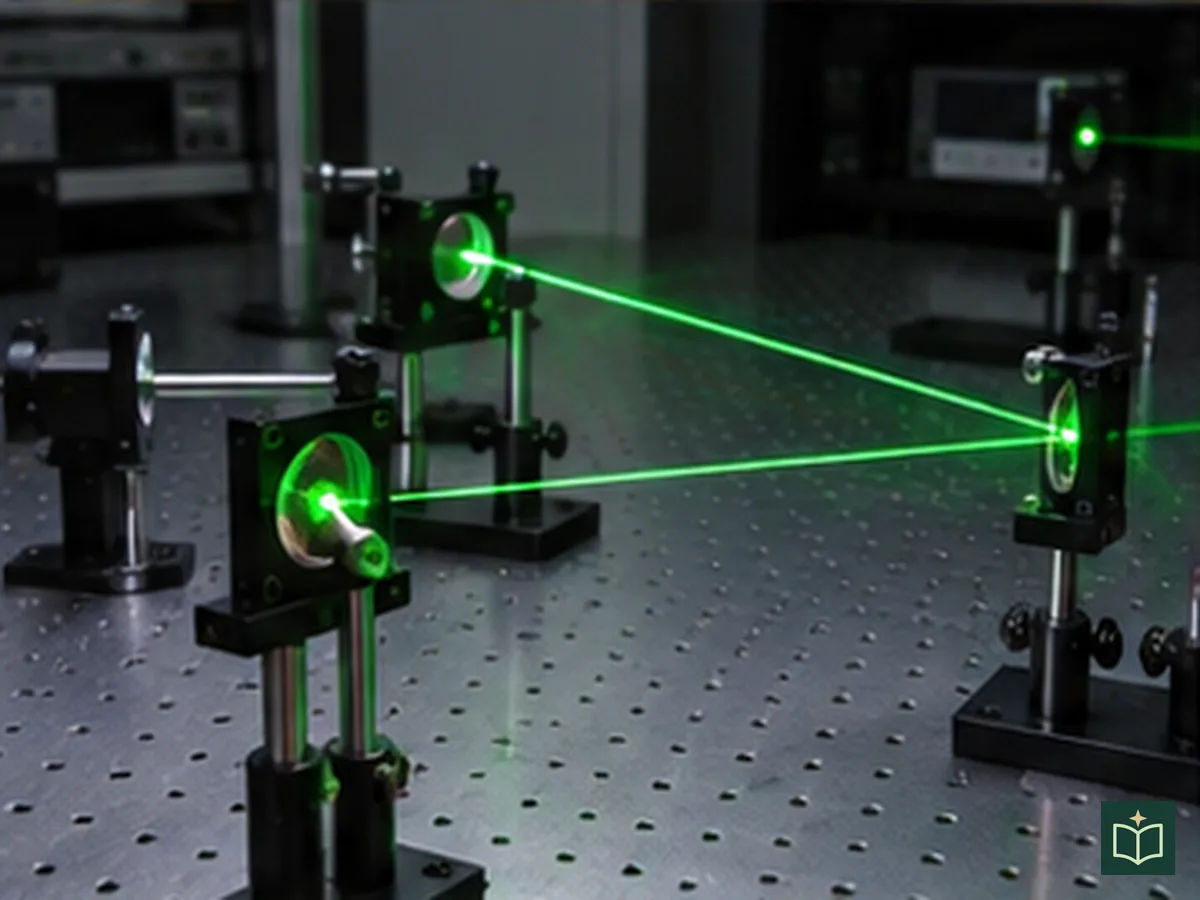
A laser overcomes the catch by pumping energy into a material, called the gain medium, until more of its atoms are excited than not, a condition called population inversion. The pump can be a flash lamp, an electric current or another laser. The medium sits between two mirrors. Photons travelling along the axis bounce back and forth, stimulating more emission on every pass, while those travelling sideways escape and are lost. One mirror reflects slightly less than all the light, letting a small fraction out as the beam. The first working laser, built by Theodore Maiman in 1960, used a ruby crystal pumped by a flash lamp and produced deep red pulses.
From checkout to operating theatre
Lasers spread rapidly into daily life. Barcode scanners sweep a red beam across the stripes and read the reflected pattern. Fibre-optic cables carry internet traffic as pulses of infrared laser light. Surgeons use lasers to reshape the cornea in vision correction and to cut or seal tissue precisely, and dermatologists use them to treat skin. Factories cut and weld metal with high-power beams. Cheap semiconductor lasers, smaller than a grain of salt, sit inside printers, optical drives and pointers. Because a laser's colour can be matched to what a particular material absorbs, each application uses a wavelength suited to its job, from ultraviolet to far infrared.
Measuring the world
A laser's narrow, sharply timed pulses make it an excellent ruler. Fire a pulse, time its echo and, knowing the speed of light, you have a distance. Surveyors and builders rely on this daily, and lidar systems sweep laser pulses across landscapes from aircraft, mapping terrain beneath forests and the shape of coastlines. Many self-driving test vehicles use lidar to sense their surroundings. The most famous measurement involves the Moon. Apollo astronauts left reflectors on the lunar surface, and observatories still fire lasers at them. The round trip of about 384,400 kilometres each way takes roughly 2.6 seconds, and decades of timing show the Moon receding by about 3.8 centimetres a year.
Respect the beam
The same concentration that makes lasers useful makes them hazardous to eyes. The eye focuses a parallel beam onto a tiny spot on the retina, so even a modest laser can cause permanent damage, and powerful handheld pointers have injured children and dazzled aircraft pilots. Lasers are therefore sold in safety classes according to their power, and many countries restrict high-power pointers. Never look into a beam or aim one at people, vehicles or aircraft. Treated with care, though, the laser is one of the twentieth century's most versatile inventions, a device that began as a theoretical curiosity and now underpins communications, medicine, manufacturing and science.
Sources & further reading
Figures are rounded and widely published; check the linked organisations for the latest editions. These organisations do not endorse this website.