A colony that forages as one
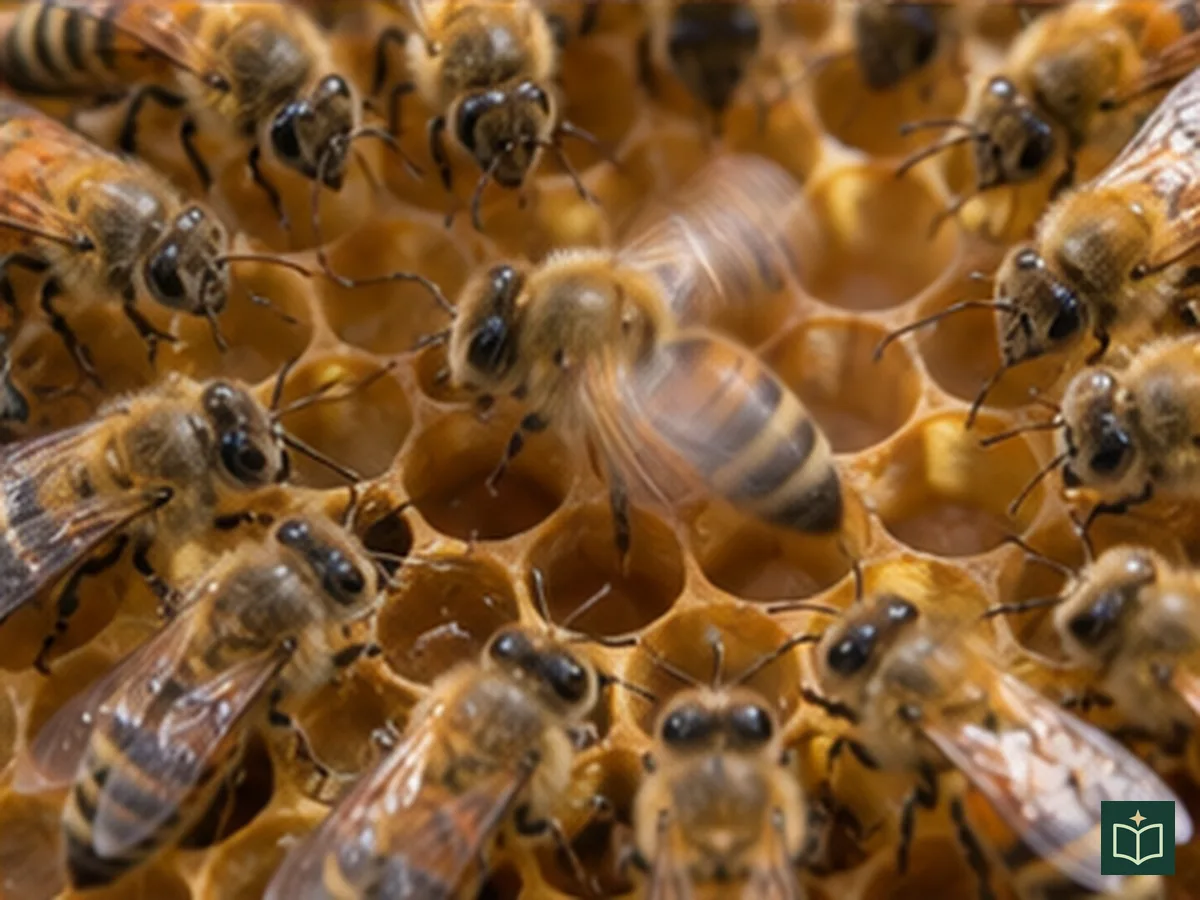
A honeybee colony may contain tens of thousands of workers, and its survival depends on finding nectar and pollen efficiently. Flowers bloom unpredictably, sometimes kilometres from the hive, and individual foragers searching alone would waste much of their effort. The colony's solution is to share information. When a forager finds a rich source, she returns and performs a dance on the vertical wax comb inside the dark hive, surrounded by her sisters. The dance tells them where to go. It is one of very few known cases of an animal communicating the location of something out of sight, and it was decoded through decades of patient experiments by Karl von Frisch.
The figure of eight
The waggle dance has two parts. In the waggle run, the bee walks forward in a straight line while vigorously shaking her abdomen from side to side and buzzing her wings. At the end of the run she turns, circles back to the start on one side, performs another waggle run, then circles back on the other side, tracing a figure of eight. A forager may repeat the pattern dozens of times. Other bees crowd round, following closely, sensing vibrations and air movements through their antennae and smelling the flowers' scent on her body. For food very close to the hive, bees perform a simpler circling dance that effectively says 'search nearby'.
Direction from the Sun
The direction of the waggle run carries the bearing. Inside the hive, gravity stands in for the Sun. If the bee waggles straight up the comb, the food lies in the direction of the Sun. If she waggles 60 degrees to the right of vertical, the food lies 60 degrees to the right of the Sun's direction as seen from the hive. Straight down means directly away from the Sun. Because the Sun moves across the sky, bees adjust the angle through the day, compensating for its motion. On cloudy days they can still locate the Sun from patterns of polarised light in patches of blue sky, which their eyes detect and ours cannot.
Distance in time
Distance is encoded in the length of the waggle run: the farther the food, the longer the bee waggles. As a very rough guide, a run of about one second corresponds to around a kilometre, though the scale varies between colonies and subspecies. Experiments in narrow, patterned tunnels revealed that bees measure distance not by energy spent but by the amount of visual motion flowing past their eyes, a kind of optical odometer. Bees flying through a busy-looking tunnel greatly overestimated how far they had gone. The dance therefore reports how far the journey looked, which works well as long as recruits fly over similar terrain to reach the same flowers.
Doubt and confirmation
Von Frisch's findings were questioned for years. Some researchers argued that recruits simply followed scent rather than the dance. Technology eventually settled the matter. In the early 2000s, scientists used harmonic radar to track individual recruits fitted with tiny transponders and found that they flew in the direction indicated by the dance before searching locally, using scent to finish the job. Researchers now know the dance is imprecise: recruits scatter around the indicated spot, and scent and memory help them close the final gap. Von Frisch shared the 1973 Nobel Prize in Physiology or Medicine with Konrad Lorenz and Nikolaas Tinbergen, pioneers of the study of animal behaviour.
Bees in Arabia
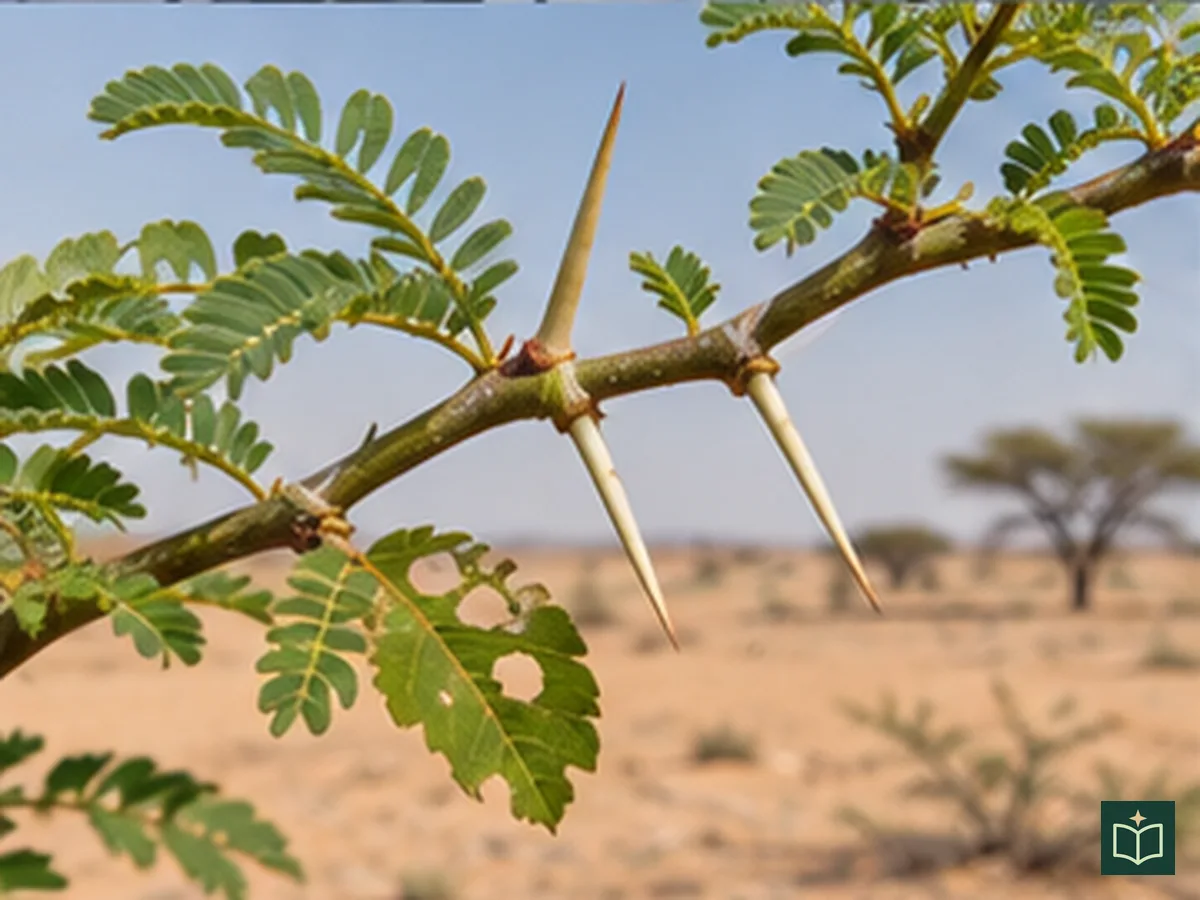
Beekeeping has a long tradition in Arabia, where honey from flowering sidr and samr trees is especially prized. The native Arabian honeybee, a small subspecies tolerant of heat and drought, still lives wild in parts of the region's mountains as well as in managed hives. Bees here face hot summers and short, patchy flowering seasons, and dances help colonies concentrate quickly on whatever blooms appear, sometimes far away. The waggle dance also helps scientists: by decoding dances filmed inside hives, researchers can map where colonies find food and how landscapes and farming affect them. It is a reminder that a brain smaller than a grain of rice can carry a map, a compass and a clock.
Sources & further reading
Figures are rounded and widely published; check the linked organisations for the latest editions. These organisations do not endorse this website.