A heater you cannot see
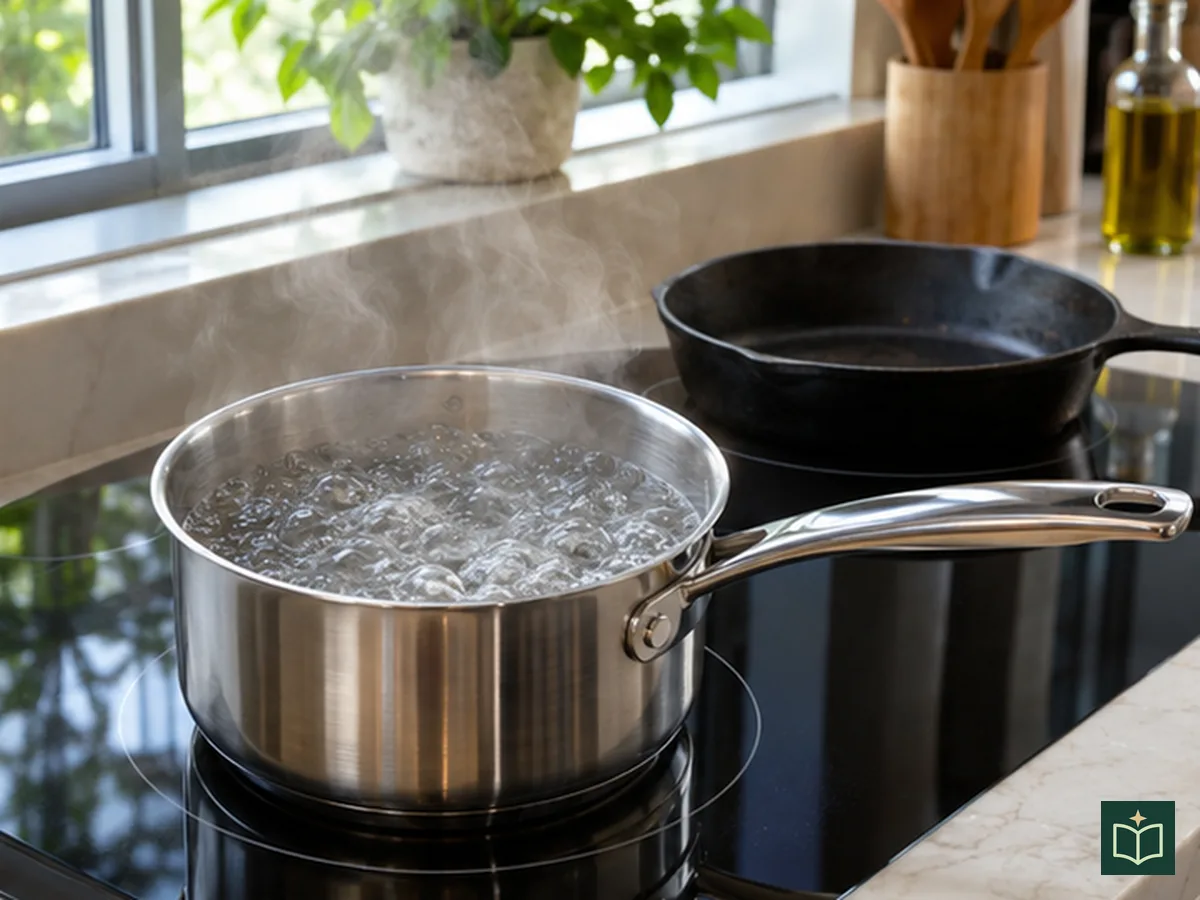
Most hobs heat something and then pass that heat to a pan. A gas burner heats the air and metal beneath the pan with a flame. A resistance or ceramic hob heats a glowing element, which warms the glass, which warms the pan. An induction hob skips those steps. Beneath its smooth glass top sits a flat coil of copper wire. When switched on, it creates a magnetic field that generates heat inside the base of the pan itself. The glass warms only because the hot pan sits on it. Lift the pan away and heating stops almost instantly, which is why induction feels so responsive to cooks.
The physics underneath
The principle is electromagnetic induction, described by Michael Faraday in 1831: a changing magnetic field induces electric currents in a conductor. Electronics inside the hob convert mains electricity into alternating current at roughly 20,000 to 100,000 cycles per second and send it through the coil. The resulting magnetic field reverses just as rapidly. In the metal base of the pan it drives swirling eddy currents, and the metal's electrical resistance turns them into heat. Iron-based metals add a second effect: their magnetic domains flip back and forth with the field, losing a little energy as heat each time. Both concentrate the heating in the bottom few millimetres of the pan.
Why the pan must be magnetic
Induction hobs work best with ferromagnetic cookware such as cast iron, carbon steel and many stainless steels. Ordinary aluminium, copper and glass pans usually do not heat, because their low resistance and lack of magnetism let the currents flow without producing much warmth. A simple check is to hold a fridge magnet to the base; if it sticks firmly, the pan will work. Many modern aluminium pans include a bonded steel disc in their base for this reason, and adaptor plates exist, though they lose much of the efficiency advantage. Hobs also sense whether a suitable pan is present and will not deliver power to an empty zone.
Counting the kilowatt-hours
Bringing 2 litres of water from 25°C to boiling needs about 628 kilojoules, or 0.17 kilowatt-hours. Tests by US government programmes suggest induction delivers around 85 per cent of its energy to the food, so the hob draws about 0.21 kilowatt-hours. At an illustrative tariff of 40 fils per kilowatt-hour, that costs roughly 8 fils. A gas hob delivering about 40 per cent would burn the equivalent of about 0.44 kilowatt-hours to do the same job. In a hot climate there is a further benefit: less wasted heat escapes into the kitchen, so the air conditioning has a little less work to do.
From factories to kitchens
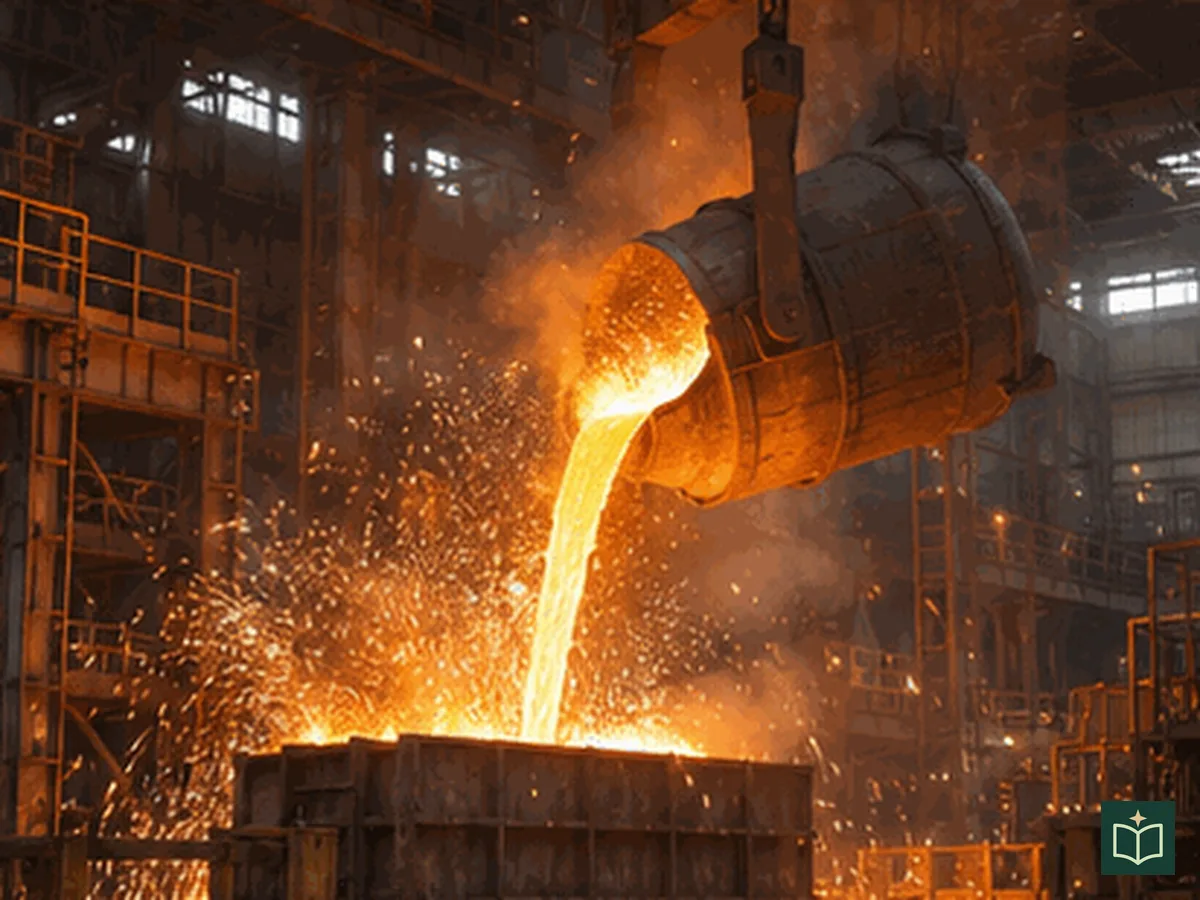
Induction heating is far older than the kitchen hob. Industry has used it since the early 20th century to melt metals, harden gears and weld pipes, because it heats metal quickly and precisely without a flame. Domestic induction hobs were demonstrated in the 1950s and sold from the 1970s, but they remained expensive until power electronics became cheap and reliable. They are now common across Europe and East Asia and increasingly fitted in new apartments in the Gulf, where builders like their clean surfaces, lack of an open flame and absence of a gas connection. Many models also include safety cut-outs, child locks and timers built into their electronics.
Limits and questions
Induction is not perfect. Hobs cost more than basic resistance models, and some households must replace pans. Heavy use can require a higher-rated electrical circuit. Pans with layered bases can hum or buzz at high settings, and cooling fans run while cooking. Very rounded woks do not sit well on a flat coil, though curved induction units exist. Because the hob produces a magnetic field close to its surface, manufacturers advise people with pacemakers or other implanted medical devices to keep a sensible distance and to check with their doctor or device maker. The field drops off quickly with distance, and hobs are tested against international exposure limits.
Sources & further reading
Figures are rounded and widely published; check the linked organisations for the latest editions. These organisations do not endorse this website.