Snow in the desert
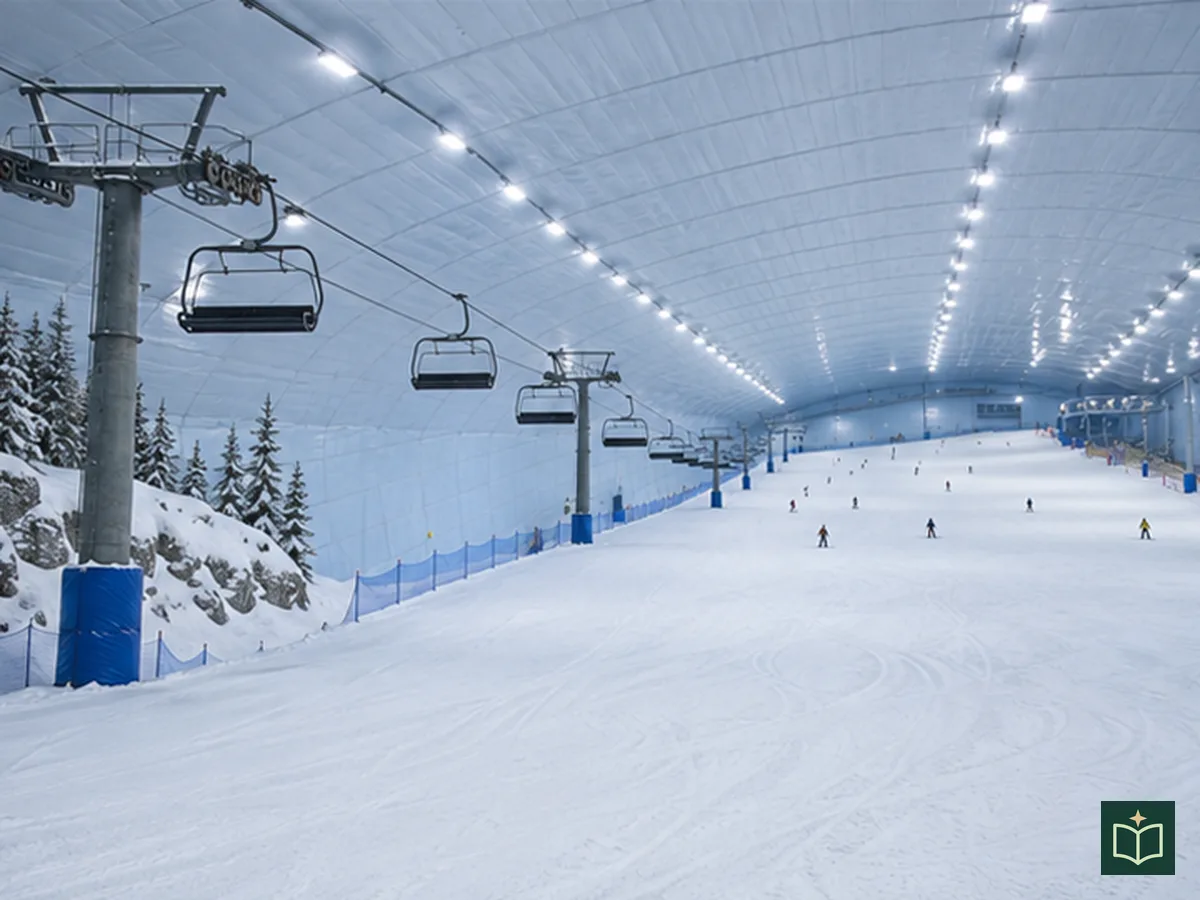
When Ski Dubai opened in the Mall of the Emirates in 2005, it offered something that seemed impossible: real snow, ski runs and a chairlift in a city where summer temperatures often exceed 40°C. The resort covers about 22,500 square metres with snow, and its longest run is roughly 400 metres. Indoor slopes existed before, notably in Japan and Europe, but placing one in a hot desert climate made the engineering challenge much greater. The principle is simple even if the execution is not. The slope sits inside a huge insulated box kept just below freezing, and the snow on the floor is made on site rather than imported.
Keeping the heat out
Heat constantly tries to leak into any cold space, and the larger the temperature difference, the faster it flows. The building's walls and roof are therefore heavily insulated, much like the panels of a cold store, to slow the passage of heat from the hot air outside. Entrances use airlocks and changing areas, so warm, humid air from the mall does not pour in every time someone enters. Inside, the main heat sources are visitors, lighting and machinery. Each person gives off body heat roughly comparable to a small light bulb, so a busy day adds a noticeable load. Refrigeration plants run continuously to remove that heat.
Cold air, cold floor
The air in the slope area is typically held at around minus one or minus two degrees Celsius during opening hours, cold enough to keep snow firm without being uncomfortable for skiers in winter clothing. Refrigeration works by pumping a coolant through coils, where it absorbs heat from the air before carrying it to condensers outside that release it to the atmosphere. The floor beneath the snow is also cooled by pipes carrying chilled fluid, which prevents the snow from melting from below as the ground slowly gives up heat. Fans circulate the cold air evenly, so no part of the slope develops warm patches or slushy snow.
Making snow overnight
Skiers gradually wear snow down, compacting it and pushing it downhill, so fresh snow must be added regularly. At night, when the slope is closed, the air is cooled further and snow guns spray water as a fine mist, often mixed with compressed air. The tiny droplets freeze as they fall, forming small ice crystals that settle as snow. This is real snow made from water, not crushed ice, although its texture is denser than fresh powder in the mountains. Grooming machines then shape the surface into even runs. The cycle of overnight snowmaking and daytime skiing continues throughout the year, regardless of the weather outside.
The energy question
Keeping a large hall below freezing in a hot climate uses a great deal of electricity, and indoor ski slopes are often cited as examples of energy-intensive leisure. Operators reduce consumption through thick insulation, efficient compressors, recovering waste heat and limiting how much warm air enters. The larger the building and the hotter the climate, the more cooling it needs, which is why designs focus first on keeping heat out rather than simply adding more refrigeration. A useful comparison is a domestic freezer. It works on the same principle but holds only a few hundred litres. An indoor slope applies the same physics to a volume of air millions of times larger.
Why it matters
Indoor slopes show how far engineering can reshape climate inside a building, and they raise questions about energy, cost and sustainability. They have become tourist attractions in the Gulf and are used by local residents to learn to ski before travelling to mountain resorts. Similar projects have opened or been planned elsewhere in the region and around the world, from Egypt to China. The same technologies, insulation, large-scale refrigeration and humidity control, are used in ice rinks, food cold stores and data centres. Understanding how an indoor ski slope works helps explain the wider challenge of keeping buildings cool in a hot climate as efficiently as possible.
Sources & further reading
Figures are rounded and widely published; check the linked organisations for the latest editions. These organisations do not endorse this website.