The raw materials
Most bottle glass is soda-lime glass made from silica sand, soda ash to lower the melting point, and limestone for durability. Crushed recycled glass, or cullet, is added in large amounts. Small additions of iron, chromium or sulphur give green and brown colours.
Melting
The batch is fed into a large furnace that runs continuously for years. At about 1,500 °C it melts into a thick liquid, and bubbles are refined out. Molten glass flows into channels where it cools to a workable temperature.
Shaping
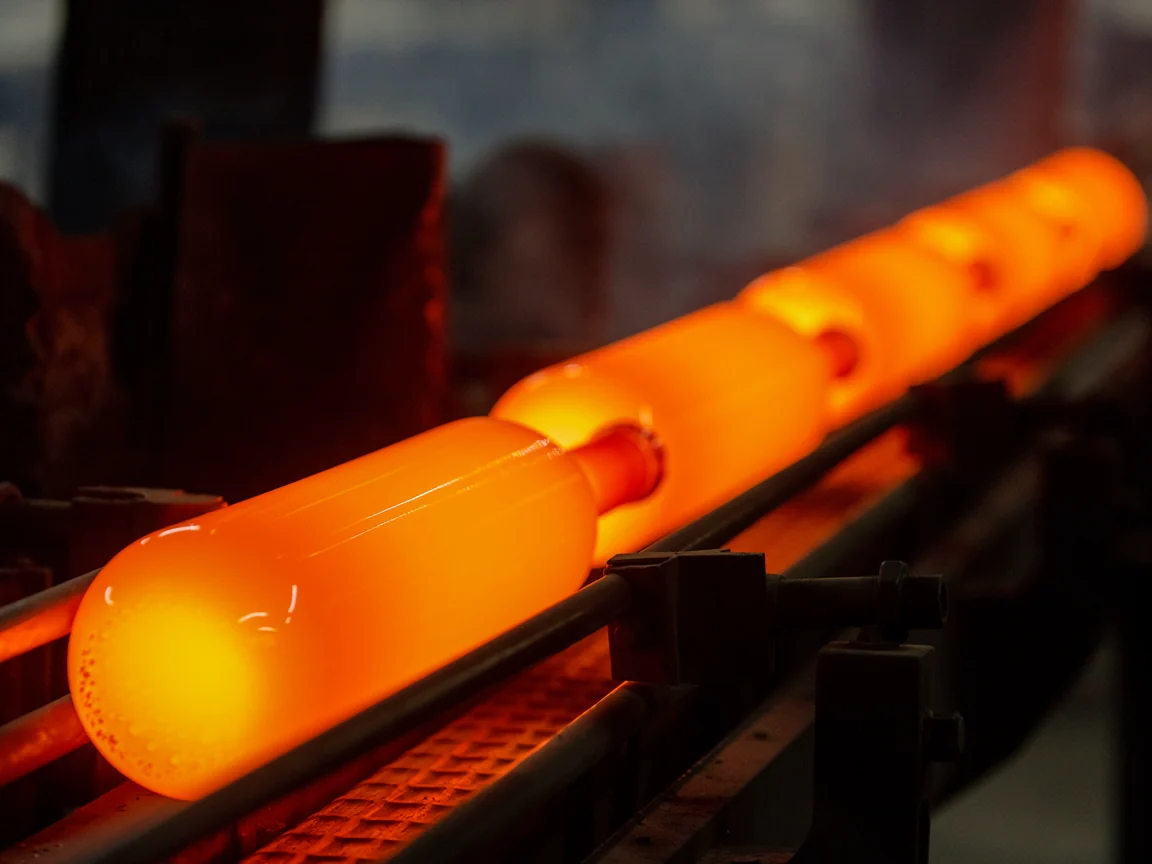
Shears cut the stream into gobs, each enough for one bottle. In an individual section machine, the gob drops into a blank mould where it is pressed or blown into a parison with a finished neck. It is flipped into a final mould and blown to full shape.
Cooling and checking
Freshly formed bottles carry internal stresses that could make them shatter, so they pass through an annealing lehr that cools them slowly. Cameras and sensors check for cracks, bubbles and wall thickness before bottles are packed.
Sources & further reading
Recipe shares are approximate. Photograph: original AI-generated illustration (Adobe Firefly). Reference organisations do not endorse this website.