From metal to blank
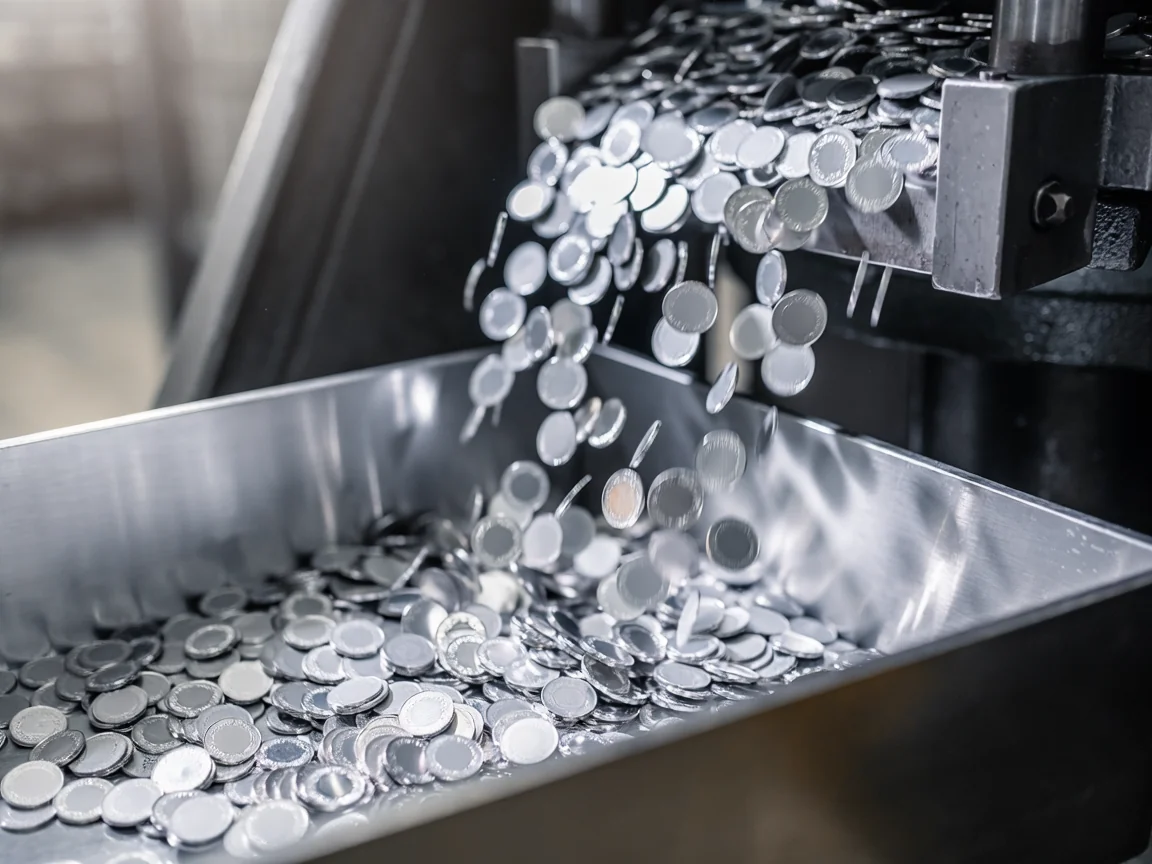
Mints receive or produce long coils of metal strip rolled to an exact thickness. Machines punch out discs called blanks, and the leftover webbing is recycled. Many modern coins are plated steel or layered metals to keep costs below face value.
Softening and rimming
Blanks are heated in a furnace to soften the metal, a process called annealing, then cleaned and polished. An upsetting mill squeezes the edges to form a raised rim, which protects the design from wear and helps coins stack.
The strike
Engravers design the coin and the image is transferred onto hardened steel dies. In the press, the blank sits in a collar between two dies and is struck with enormous force, forcing metal into every detail. The collar can also add edge reeding or lettering.
Checks and release
Cameras and inspectors remove misstruck coins. Good coins are counted, bagged and shipped to central banks, which issue them to commercial banks according to demand.
Sources & further reading
Processes vary between mints. Photograph: original AI-generated illustration (Adobe Firefly). Reference organisations do not endorse this website.