A medicine, not just air
Air is about 21 per cent oxygen, but patients with pneumonia, heart failure, serious injuries or those under anaesthesia often need much higher concentrations. Medical oxygen is regulated as a medicine, with purity standards set in national pharmacopoeias and supply overseen by health regulators. A large hospital may use oxygen in operating theatres, intensive care, emergency rooms and ordinary wards at the same time. Rather than wheeling a cylinder to every bed, modern hospitals deliver it through a fixed pipeline, much like water or electricity. A nurse simply plugs a flowmeter into a wall outlet, sets the flow in litres per minute and connects the mask or nasal tube.
The tank in the car park
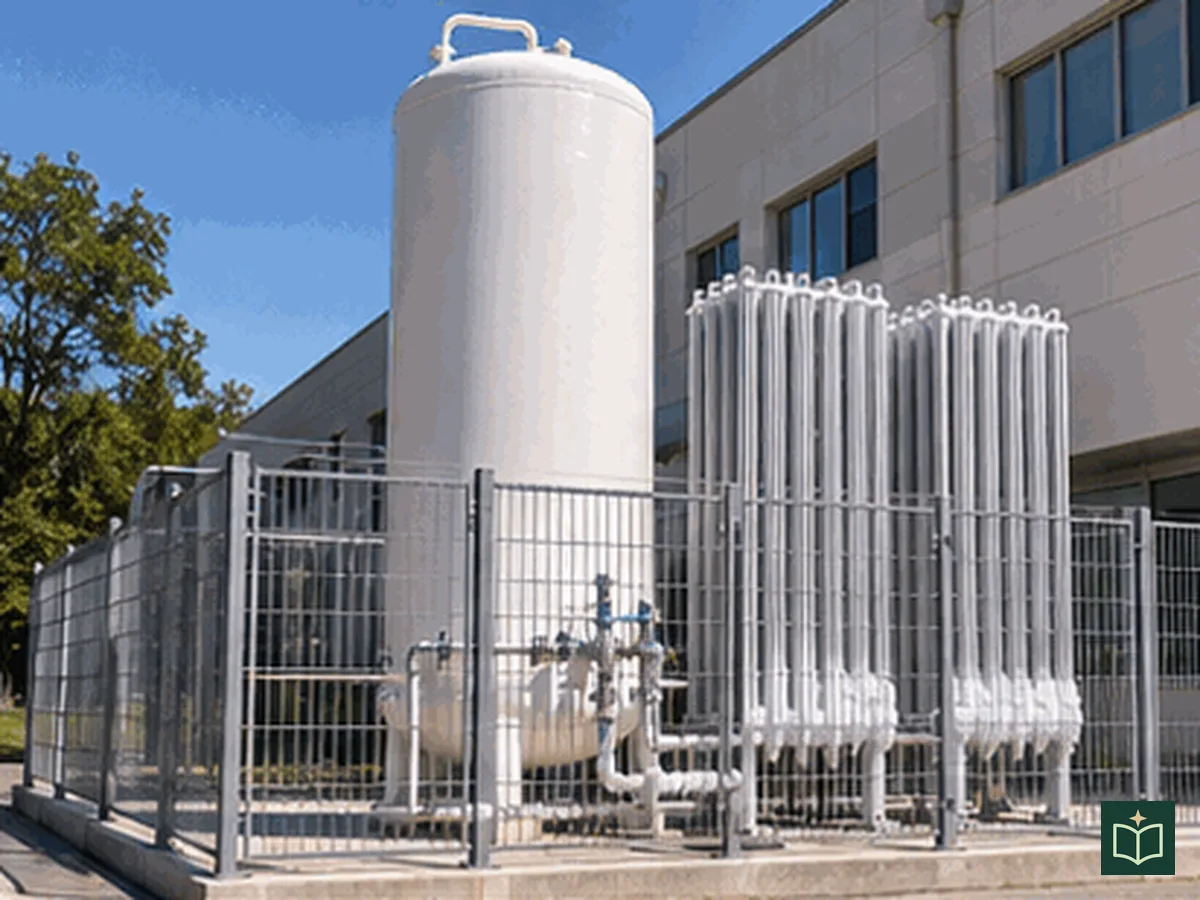
Most large hospitals store oxygen as a liquid in a vacuum-insulated tank, often a tall white cylinder standing in a fenced area outside. Oxygen becomes liquid at about minus 183 degrees Celsius, and in that form it takes up a tiny fraction of the space of the gas. One litre of liquid produces roughly 860 litres of gas once warmed. Tanker lorries from industrial gas companies refill the tank, which is filled from air separation plants that cool air until its components can be distilled apart. Beside the tank, finned metal vaporisers use the heat of the surrounding air to turn the liquid back into gas before it enters the hospital.
Making oxygen on site
Some hospitals, especially in remote areas or countries with patchy tanker deliveries, produce their own oxygen with pressure swing adsorption plants. Compressed air is pushed through vessels packed with zeolite, a mineral that traps nitrogen more readily than oxygen. What passes through is gas of roughly 90 to 96 per cent oxygen, which many health systems accept for medical use. When one vessel is saturated, the system releases the pressure to flush the nitrogen out while a second vessel takes over. These plants avoid dependence on deliveries, but they need reliable electricity, maintenance and spare parts, and their output is limited by the size of the compressors.
Working out the demand
Supply planning starts with simple arithmetic. A patient receiving 10 litres per minute uses 14,400 litres of gas in a day, or about 17 litres of liquid oxygen. Now picture a ward of 50 patients averaging 5 litres per minute. That is 360,000 litres of gas a day, close to 420 litres of liquid. Intensive care patients on high-flow devices can use far more, sometimes 40 litres per minute or above. Planners add these loads across the hospital, allow for surges, and size the tank, the vaporisers and the pipes so that pressure at the farthest outlet stays steady even when every bed is in use.
Backups and alarms
Because an interruption can be fatal, pipeline systems are designed with layers of redundancy. Standards typically call for a primary supply, a secondary supply and a reserve, often a bank of high-pressure cylinders on a manifold that switches over automatically if the main source falters. Zone valves allow one ward to be isolated for repairs without cutting off the rest of the building. Pressure sensors trigger alarms at nursing stations and in the engineering office if pressure rises or falls outside its range. Outlets for oxygen, medical air, nitrous oxide and suction use different shapes and colour codes, so a hose cannot be plugged into the wrong gas.
Lessons from the pandemic
The COVID-19 pandemic exposed how fragile oxygen supply can be. In several countries hospitals ran short as demand multiplied in days, tanker fleets were stretched and some older pipelines could not deliver enough flow to wards filled with patients on high-flow oxygen. The World Health Organization and partners have since pushed for oxygen to be treated as essential infrastructure, with investment in generation plants, cylinders, pipelines and the technicians who maintain them. For any hospital, the lesson is the same: oxygen planning has to assume a bad day, not an average one, and backup supplies must be tested before they are needed.
Sources & further reading
Figures are rounded and widely published; check the linked organisations for the latest editions. These organisations do not endorse this website.