A department behind the theatres
Every operation depends on instruments that are free of living microorganisms. Most hospitals reprocess reusable instruments in a central department, often called central sterile services or sterile processing. Trays of scissors, clamps, retractors and scopes arrive after each procedure, and the department returns them sterile, checked and ready, sometimes within hours. The work follows a strict one-way flow, from a dirty area to a clean area and then a sterile store, so that contaminated items never cross paths with processed ones. It is skilled, highly regulated work. A single failure can expose patients to infection, which is why each step is designed, tested and documented.
Cleaning comes first
Sterilisation cannot work through dirt. Blood, tissue and other soil can shield microorganisms from steam or chemicals, so cleaning is the most important step. Instruments are kept moist after surgery so residues do not dry hard, then taken to the decontamination area. Staff in protective clothing take sets apart, brush channels and joints, and load them into washer-disinfectors, which clean with detergents and then disinfect with hot water. Ultrasonic baths shake loose dirt from crevices. After washing, each item is inspected, often under magnification, for remaining soil, damage and correct function. Scissors are tested for sharpness, hinges are lubricated, and worn instruments are removed from service.
Inside the autoclave
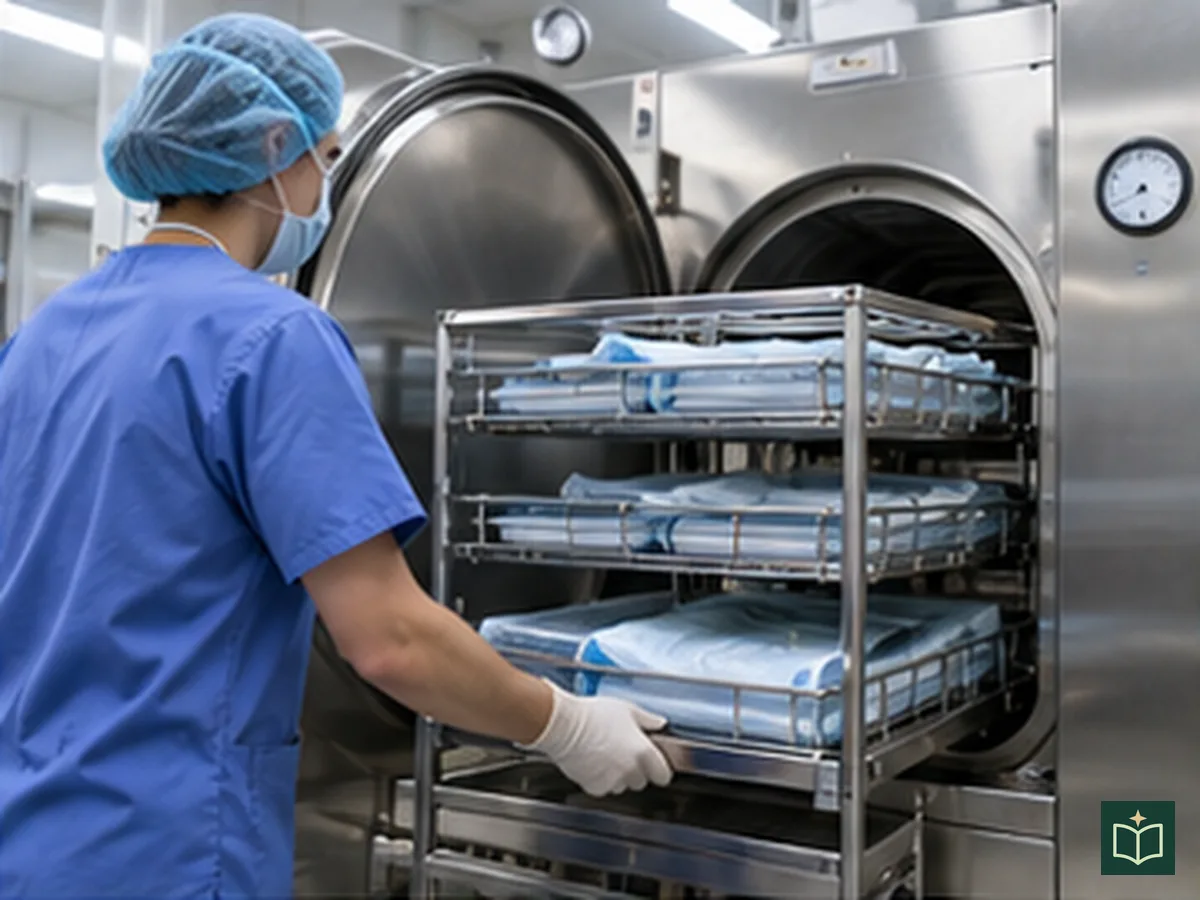
Clean sets are packed in wrapping material or rigid containers and loaded into an autoclave, a pressure chamber that uses steam. Air is the enemy, because pockets of air stop steam reaching surfaces, so modern machines pump air out in several vacuum pulses before admitting steam. Pressure lets the steam reach temperatures above the normal boiling point. A common cycle holds 134 degrees Celsius for at least three minutes, while another holds 121 degrees for at least 15 minutes. Heat and moisture together destroy proteins in bacteria, viruses and even tough bacterial spores. A drying phase follows, because wet packs can wick in microorganisms from outside.
Proving it worked
Hospitals do not simply trust the machine. Each cycle's temperature, pressure and time are recorded. Chemical indicators, such as tape or strips that change colour when exposed to the right conditions, go on and inside packs. A daily air-removal test, often called the Bowie-Dick test, checks that steam penetrates a standard pack evenly. Biological indicators contain spores of a heat-resistant bacterium; after the cycle, they are incubated to confirm that none survived. Every set is labelled with a code linking it to the load, machine and date, so if a problem emerges later, the hospital can trace which patients received instruments from that cycle.
When steam is too harsh
Some devices cannot survive high heat and moisture, including many flexible endoscopes, electronic instruments and certain plastics. These need low-temperature methods. Hydrogen peroxide gas or plasma systems sterilise at around room-to-moderate temperatures in under an hour or so. Ethylene oxide gas works at low temperatures and penetrates well, but it is toxic, so items need long aeration periods afterwards. Some flexible scopes undergo high-level disinfection in automated reprocessors rather than full sterilisation, depending on how they are used. Each method has its own indicators and validation. Single-use instruments, meanwhile, avoid reprocessing entirely, though they create waste and are not always better for every application.
Limits and why it matters
No sterilisation method makes up for poor cleaning, damaged packaging or careless storage. A sterile pack that is torn, wet or dropped is treated as contaminated. Some infectious agents are unusually tough; prions, the misfolded proteins behind diseases such as Creutzfeldt-Jakob disease, resist standard sterilisation and require special handling. International guidance from bodies such as the World Health Organization and national infection-control agencies sets out the steps and tests, and accreditation inspections check that hospitals follow them. For patients, sterile services are almost invisible. Yet the quiet routine of washing, inspecting, steaming and recording is one of medicine's most effective defences against infection.
Sources & further reading
- US CDC · Guideline for disinfection and sterilization ↗
- WHO · Decontamination and reprocessing of medical devices ↗
Figures are rounded and widely published; check the linked organisations for the latest editions. These organisations do not endorse this website.