Skipping the shelf
A traditional distribution centre receives goods, puts them away in racks, stores them for days or weeks and later picks them for orders. Cross-docking skips the middle. Goods arrive on inbound lorries, are unloaded at receiving doors, sorted by destination and moved directly to outbound doors on the other side of the building, where they are loaded for delivery. Ideally nothing is stored at all, or only briefly in a staging area. The method became famous in the 1980s, when the American retailer Walmart used it to supply stores rapidly and cheaply, but its roots lie in older practices of trucking terminals and postal sorting depots.
Why the building looks different
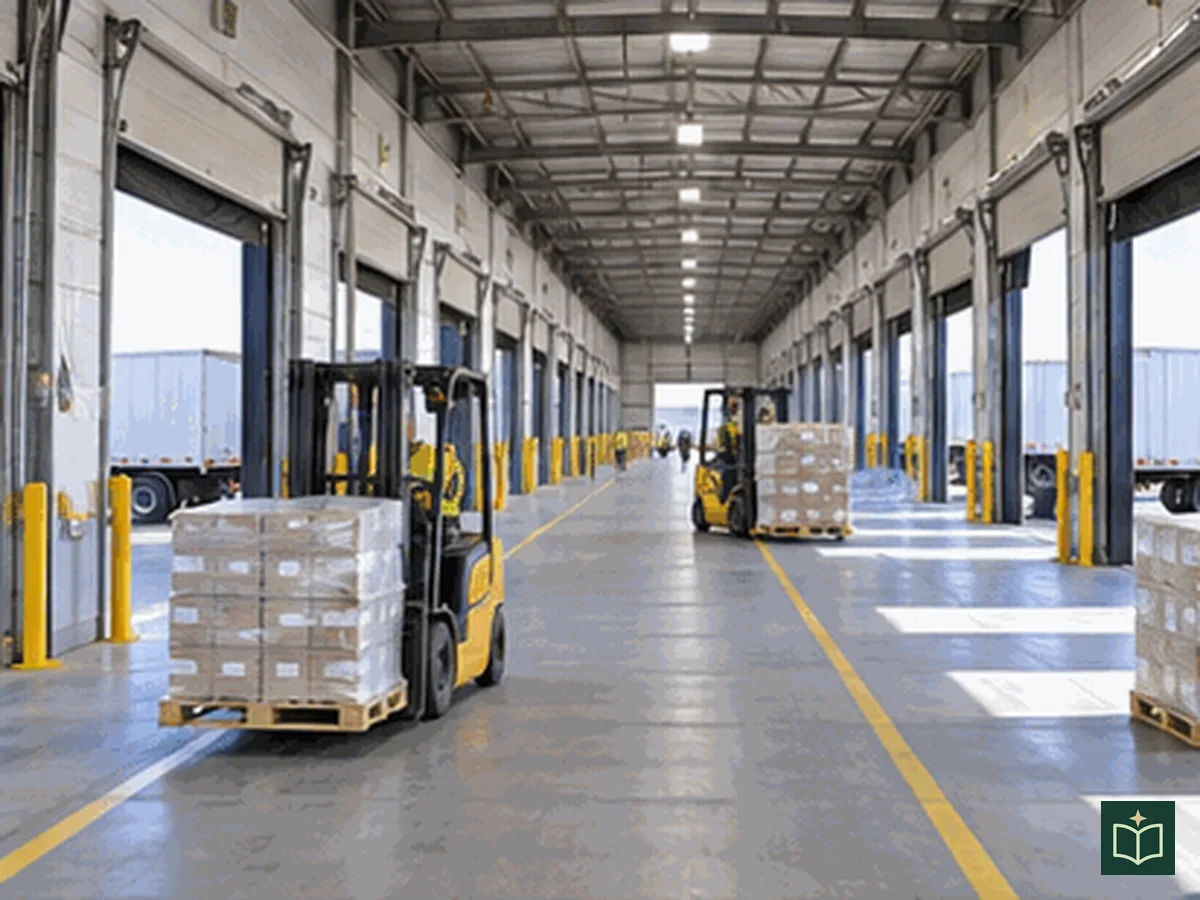
A cross-dock facility is usually long and narrow, with many loading doors along both long sides and relatively little racking. The aim is to minimise the distance a pallet travels between arrival and departure. Floor space is divided into lanes, each linked to an outbound door and destination. Forklifts, pallet trucks and conveyors move goods across, guided by scanners and a warehouse management system that knows where each item must go. Timing is everything: inbound and outbound vehicles are scheduled so that goods arrive shortly before the lorries that will take them away. A delay in one delivery can leave outbound vehicles waiting half-empty.
Two ways to sort
In pre-distribution cross-docking, the supplier already knows which store each pallet is for and labels it accordingly before shipping. The cross-dock simply reads the label and moves the pallet to the right door. In post-distribution cross-docking, the supplier sends bulk goods, and the cross-dock splits and allocates them to destinations on arrival, based on the latest orders. The first is faster and simpler at the dock; the second gives the retailer more flexibility to respond to demand. Many operations mix both, handling full pallets that pass straight through alongside cartons that must be broken down and combined into mixed pallets for each destination.
The arithmetic of consolidation
The main saving comes from combining loads. Imagine four suppliers each needing to deliver to ten stores. If every supplier drives directly to every store, that could mean 40 separate deliveries, many with partly empty vehicles. With a cross-dock in between, each supplier sends one full lorry to the hub, making four inbound trips, and ten outbound lorries each carry a mix of all four suppliers' goods to a single store. The total drops to 14 trips, with fuller vehicles and fewer deliveries arriving at each shop's back door. Stores receive one consolidated delivery instead of several, which also saves time unloading and checking goods.
Where it works best
Cross-docking suits goods with steady, predictable demand and those that must move fast. Supermarkets use it for fresh produce, dairy and bakery items, where every hour of storage reduces shelf life. Parcel networks rely on hubs that sort millions of packages overnight from inbound to outbound vehicles. Car factories use cross-docks to sequence parts arriving from many suppliers for just-in-time assembly. Regional hubs, such as those around Jebel Ali and Dubai's logistics zones, use similar methods to split container loads into shipments for different markets. It works less well for slow-moving items, highly variable demand or goods that need inspection, labelling or assembly before dispatch.
Limits and risks
Cross-docking demands accurate data and tight coordination. If advance shipping notices are wrong, labels missing or deliveries late, goods pile up on the floor and the advantage disappears. Suppliers must meet strict delivery windows and labelling standards, and they bear some of the cost. Disruption can ripple quickly, because there is no buffer stock to absorb delays. For this reason many companies run hybrid networks, cross-docking fast-moving lines while storing slower ones. When it works, the benefits are significant: less warehouse space, lower inventory, fresher products and fewer journeys. The best cross-dock is one where goods barely stop moving between factory and shop.
Sources & further reading
- Britannica · Logistics ↗
- Massachusetts Institute of Technology · Center for Transportation and Logistics ↗
Figures are rounded and widely published; check the linked organisations for the latest editions. These organisations do not endorse this website.