Heat and chemical change
Every chemical reaction involves energy. Breaking bonds between atoms, or pulling apart the orderly lattice of a crystal, requires energy. Forming new bonds or new attractions releases energy. Whether a reaction warms or cools its surroundings depends on which is larger. If forming the products releases more energy than was needed to break up the reactants, the surplus appears as heat and the reaction is called exothermic. If more energy goes in than comes out, the reaction draws heat from its surroundings and is called endothermic. Burning fuel is exothermic; cooking an egg and the photosynthesis in leaves are endothermic, because they need energy supplied from outside.
Iron that rusts on purpose
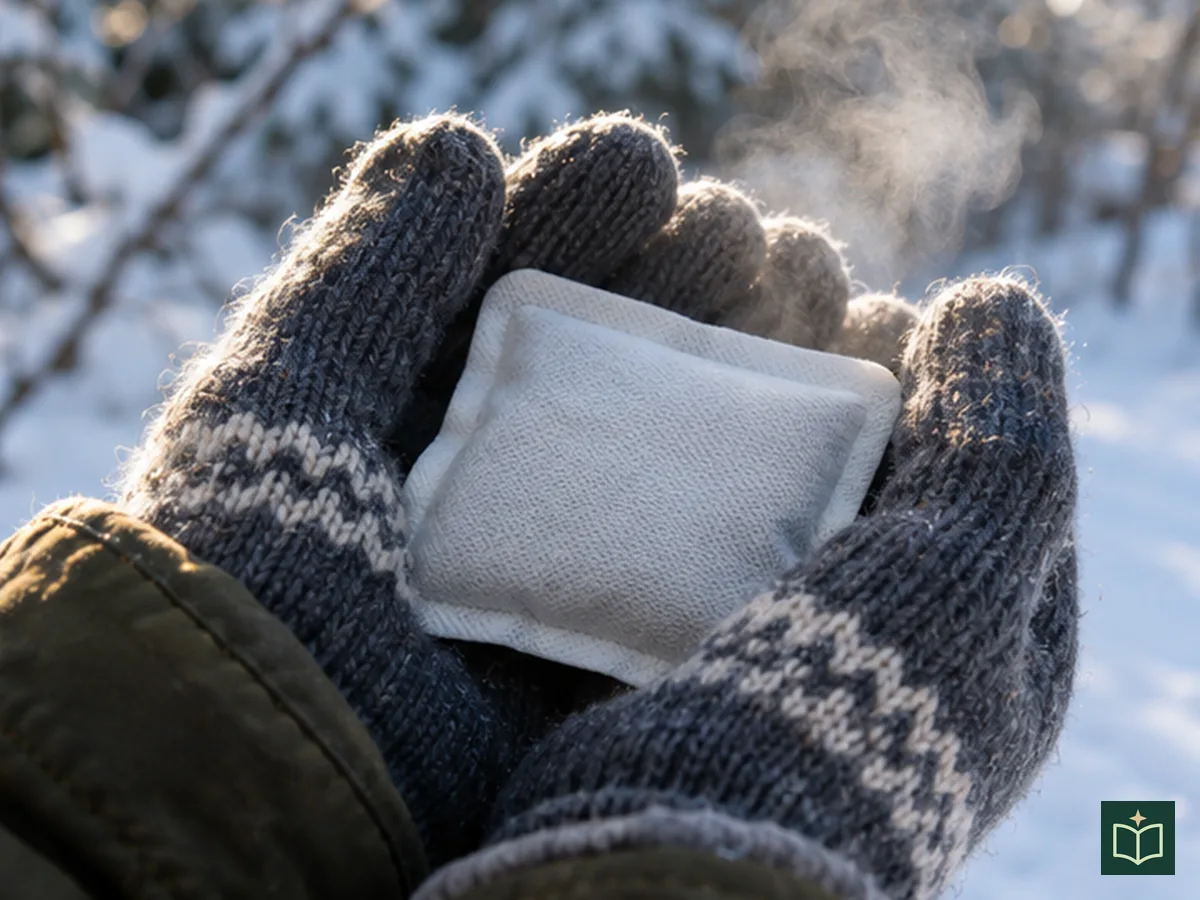
Disposable hand warmers contain iron powder, salt, water, activated charcoal and an absorbent mineral such as vermiculite, sealed in an airtight wrapper. Opening the wrapper lets air in through the porous pouch, and the iron begins to oxidise, essentially rusting at high speed. The fine powder gives a huge surface area, the salt water speeds the reaction, and the charcoal helps spread moisture and oxygen. The oxidation of iron is strongly exothermic, so the pouch warms to around 50 to 60°C and stays warm for several hours until the iron is used up. Slow rusting of a gate releases the same energy, just too gradually to notice.
Click-to-heat crystals
Reusable hand warmers work differently. They contain a supersaturated solution of sodium acetate, a liquid holding more dissolved salt than it normally could at room temperature. Flexing a small metal disc inside creates a disturbance that triggers crystals to form, and crystallisation spreads rapidly through the pack. As the dissolved particles lock into a solid lattice, they release energy, warming the pack to about 50°C. To reset it, the pack is boiled until the crystals dissolve again, then cooled carefully so it stays liquid. The heat released when it crystallises is the same heat that was put in when it was boiled, so the pack stores energy rather than creating it.
The instant cold pack
Instant cold packs used in sports first aid contain water and a separate pouch of a solid, often ammonium nitrate or urea. Squeezing the pack breaks the inner pouch, and the solid dissolves. Dissolving ammonium nitrate is endothermic: pulling its ions out of the crystal costs more energy than is returned as they attract water molecules. Each mole, about 80 grams, absorbs roughly 26 kilojoules. Treat 80 grams dissolving in 250 millilitres of water as about 330 grams of liquid with water's heat capacity, and that heat comes out of the mixture, lowering its temperature by around 19°C. A pack that starts at 25°C would fall to about 6°C, cold enough to soothe a sprain.
Everyday examples
Exothermic and endothermic changes are everywhere. Mixing cement with water releases heat as it sets, which is why large concrete pours in Gulf heat are carefully cooled. Adding concentrated acid to water releases heat strongly, which is why chemists always add acid to water slowly and never the reverse. Evaporation is endothermic: sweat cools the skin because water absorbs energy as it turns to vapour, and clay water jars cool their contents the same way. Melting ice absorbs heat, which is how a cooler box keeps drinks cold. Photosynthesis stores the Sun's energy in sugar, and respiration in our cells releases it again, an endothermic and exothermic pair.
Energy is never created
A common misconception is that hot or cold packs make energy or cold out of nothing. They do not. The energy released by a hand warmer was stored in the iron, which took energy to extract from its ore in the first place. A cold pack does not produce cold; it moves heat from its surroundings into the dissolving process. Both obey the principle of conservation of energy. Another misconception is that exothermic reactions always happen easily. Many need a starting push, such as a spark for fuel or air for a hand warmer. How fast a reaction runs is a separate question from whether it releases or absorbs heat.
Sources & further reading
Figures are rounded and widely published; check the linked organisations for the latest editions. These organisations do not endorse this website.