A sense of its own
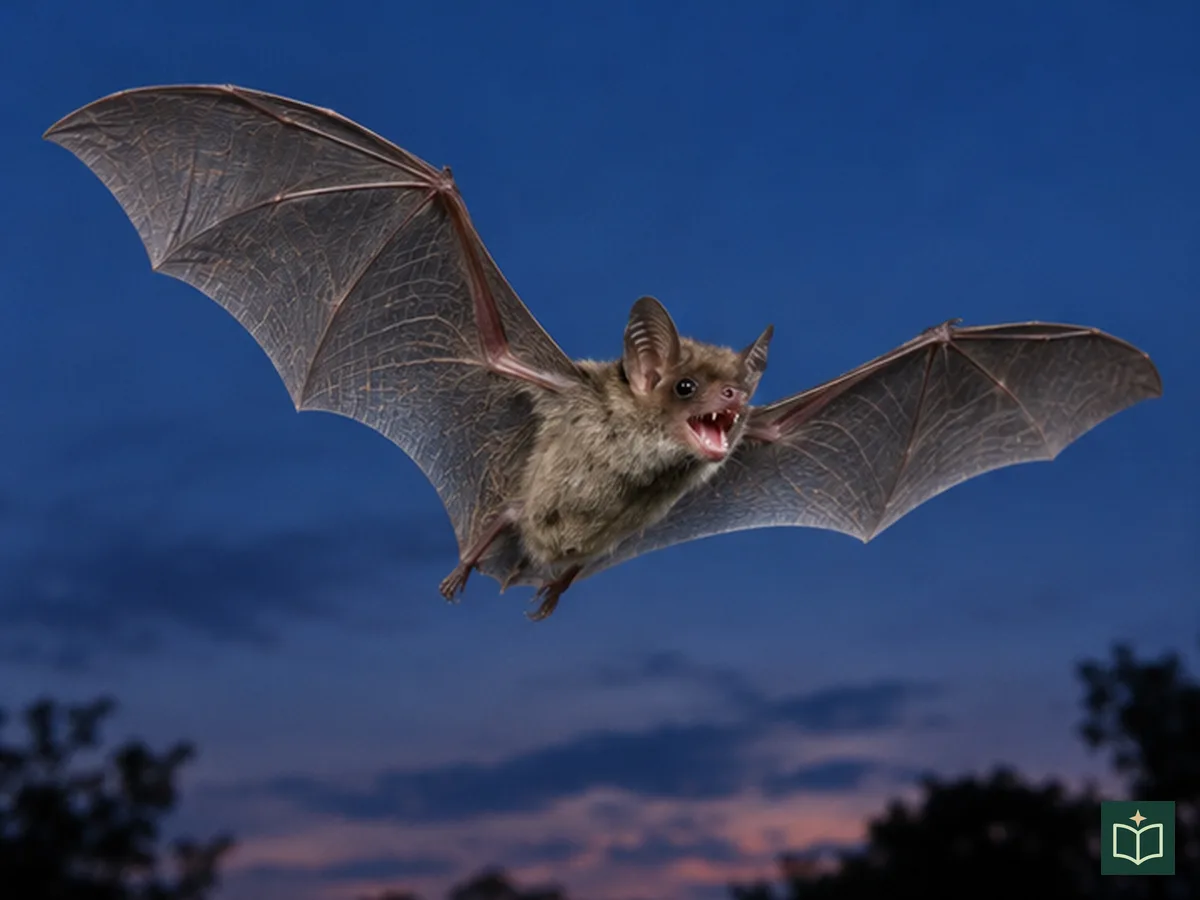
Bats are the only mammals capable of true flight, and with more than 1,400 species they make up about a fifth of all mammal species. Most of them hunt at night, and the majority of species use echolocation, a biological sonar. The idea was proposed in the eighteenth century, when the Italian scientist Lazzaro Spallanzani found that blinded bats could still fly around obstacles, but deafened bats could not. The explanation only became clear in the 1930s and 1940s, when the American researcher Donald Griffin used new equipment to detect their calls. Most of those calls lie above about 20 kilohertz, the upper limit of human hearing.
Calls and echoes
An echolocating bat produces short pulses of sound, usually from its larynx and through its mouth, though some species, such as horseshoe bats, emit them through elaborate noses. The calls can be extremely loud, comparable at close range to a smoke alarm, though we cannot hear them. When a pulse hits an object, part of it bounces back. The bat's large, mobile ears collect the echoes, and its brain measures the delay. Sound travels about 343 metres per second, so an echo from an insect one metre away returns after about 6 thousandths of a second, while one from a wall five metres away takes about 29.
Reading the details
Delay gives distance, but bats extract much more. Differences between the echoes reaching each ear reveal direction. The strength of an echo hints at size, and subtle changes in its frequency show whether a target is approaching or flapping its wings, a Doppler shift that lets some bats recognise a fluttering insect among still leaves. Higher frequencies have shorter wavelengths and reveal finer detail, which is why insect-hunting bats use ultrasound. As a bat closes in on prey, it shortens and speeds up its calls, rising from a few per second to as many as 200 per second in a final 'feeding buzz', updating its picture almost continuously.
Not all bats echolocate
Echolocation is not universal. Most fruit bats and flying foxes, which feed on fruit and nectar, rely mainly on large eyes and a strong sense of smell. One group, the rousette fruit bats, has developed a simpler form of echolocation using tongue clicks. In the Arabian Peninsula, the Egyptian fruit bat, a rousette species, lives in caves and old buildings and visits date gardens and orchards, while smaller insect-eating bats such as tomb bats and pipistrelles hunt over oases, wadis and lit city streets. Bats are also not blind; all have functional eyes, and many see reasonably well in dim light. The phrase 'blind as a bat' is a myth.
The moths fight back
Moths have been hunted by bats for tens of millions of years, and many have evolved defences. Numerous moths have simple ears tuned to bat frequencies. When they hear an approaching call, they turn away, dive or spiral towards the ground. Some tiger moths answer with ultrasonic clicks of their own, which can warn that they taste bad or, in some species, appear to jam the bat's sonar. Other moths have scales that absorb sound, acting as acoustic camouflage. Luna moths have long, twisting tails on their hindwings that create misleading echoes, so bats often strike the tails instead of the body, letting the moth escape.
Lessons from bats
Echolocation has inspired technology and research. Sonar on ships and submarines works on a similar principle, though it was developed independently. Studies of bat calls inform research into medical ultrasound, autonomous vehicle sensors and devices that help blind people sense their surroundings; some blind people have even learned to echolocate using tongue clicks. Bats also matter ecologically: insect-eating species consume large numbers of pests, while fruit bats pollinate plants and disperse seeds. Many populations face threats from habitat loss, disturbance of roosts and, in some regions, disease. Because echolocation calls are species-specific, researchers use ultrasonic detectors to survey bats without having to catch them.
Sources & further reading
Figures are rounded and widely published; check the linked organisations for the latest editions. These organisations do not endorse this website.