A tree with a secret
Oud, also called agarwood or aloeswood, comes from trees in the genus Aquilaria, and a few relatives, native to the forests of South and Southeast Asia, from north-east India and Bangladesh to Indonesia and Papua New Guinea. A healthy Aquilaria tree has pale, light, almost scentless wood. The fragrance appears only when something goes wrong. When the tree is wounded, by lightning, wind, grazing animals, boring insects or human cutting, and fungi or other microbes invade the injury, the tree responds by producing a dark, oily resin. Over years, this resin infuses the surrounding wood, transforming it into the dense, deeply scented material traded as agarwood.
A chemical defence
The resin is the tree's immune response. Like many plants, Aquilaria fights infection with defensive chemicals that seal off damaged tissue and slow the spread of fungi. In agarwood these include a family of aromatic compounds, among them sesquiterpenes and chromones, that are responsible for the rich, woody, sweet and slightly animal scent. The process is slow. The resin accumulates over many years, and wood from trees infected for decades is generally considered superior. Not every wounded tree produces good agarwood, and in the wild only a small proportion of trees contain significant resin, which makes finding it a matter of experience, effort and luck.
From wood to oil
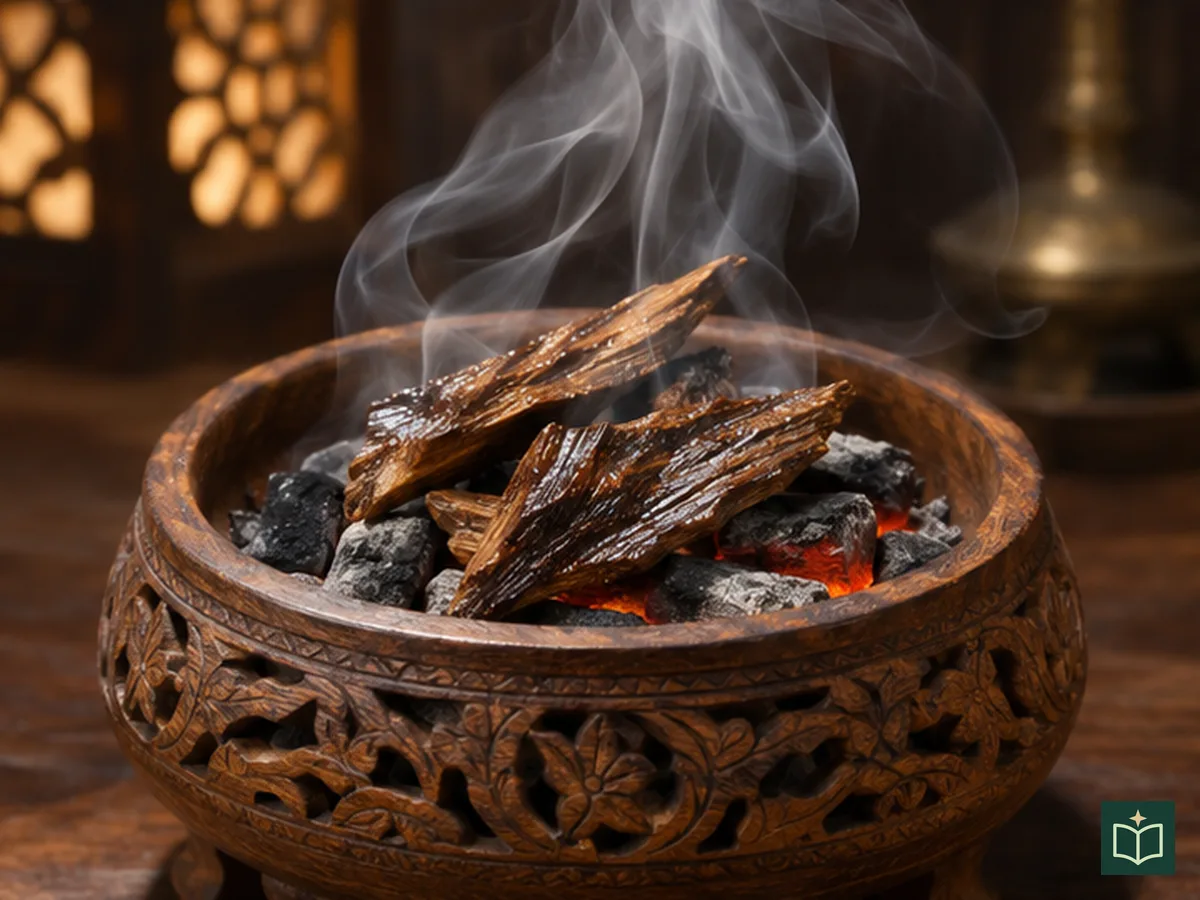
Agarwood is used in two main forms. Resin-rich wood chips are burned to release fragrant smoke, a practice central to hospitality in the Gulf, where incense burners called mabkhara perfume homes, clothes and majlis rooms. The densest, most resinous pieces are heavy enough to sink in water, a traditional test of quality. Oud oil is made by soaking lower-grade wood and then distilling it, usually with steam or boiling water, over several days. The yield is very small, often only a few millilitres from many kilograms of wood. The oil is used in traditional attar perfumes and has become a widely used note in international perfumery.
Why genuine oud is so costly
Natural agarwood is among the most expensive raw materials in the world, with the finest grades selling for many times the price of silver by weight. Several factors explain this. Resin forms unpredictably and slowly, wild trees with high-quality resin are scarce, and centuries of harvesting have depleted many forests. Collectors sometimes fell healthy trees in search of resin that is not there, wasting the resource. Grading depends on colour, density, resin content and scent, and is partly a matter of expert judgement. The high value has also encouraged fakes, such as wood soaked in oil or coloured, so buyers rely on trusted dealers and careful testing.
Plantations and inoculation
Because wild Aquilaria populations declined sharply, all agarwood-producing species were placed on Appendix II of CITES, the international convention on trade in endangered species, by 2004. This allows trade but requires permits showing it is legal and sustainable. To meet demand, growers in countries including Vietnam, Thailand, Malaysia, Indonesia, Cambodia and Sri Lanka have planted large areas of Aquilaria. Rather than waiting for chance injuries, they wound trees deliberately and introduce fungi or chemical inducers, a technique called inoculation. Cultivated agarwood can be harvested within a few years, though many connoisseurs consider its scent less complex than that of wood which developed slowly in the wild.
Culture and conservation
Agarwood has been valued for well over a thousand years. It is mentioned in early Sanskrit, Chinese and Arabic texts, burned in Buddhist and Hindu rituals, and used in traditional medicine in several Asian systems. In the Gulf, oud is woven into daily and ceremonial life, from welcoming guests to weddings and Eid, and the region is one of the world's largest markets. That demand links Gulf households to forests thousands of kilometres away. Sustainable plantations, legal supply chains and research into how the tree produces its resin offer a path to keep the tradition alive without stripping the last wild trees from their native forests.
Sources & further reading
Figures are rounded and widely published; check the linked organisations for the latest editions. These organisations do not endorse this website.