What makes a gem
More than 5,000 minerals are known, but only a few dozen are commonly used as gemstones. To qualify, a mineral generally needs beauty, durability and rarity. Beauty comes from colour, clarity and the way the crystal handles light. Durability depends on hardness and toughness, so a gem can be worn without scratching or breaking easily. Rarity arises because the conditions needed to grow large, clear crystals are unusual. Most minerals form as tiny, cloudy or fractured grains locked inside rock. A gem crystal needs the right chemical ingredients, the right temperature and pressure, room to grow, and time without disturbance, often over thousands to millions of years.
From magma and fluids
Gems form in several geological settings. Some crystallise from cooling magma. Pegmatites, coarse-grained rocks that form from the last, water-rich portion of a cooling granite magma, can grow crystals of tourmaline, topaz and beryl many centimetres or even metres long. Hot water circulating through cracks in rock, called hydrothermal fluid, dissolves elements in one place and deposits them in another, and many emeralds formed this way. Diamonds come from much deeper, typically 150 kilometres or more down in Earth's mantle, and reach the surface carried in rare, fast-rising volcanic rocks called kimberlites. Peridot also comes from the mantle, often brought up in basalt lava.
Pressure and metamorphism
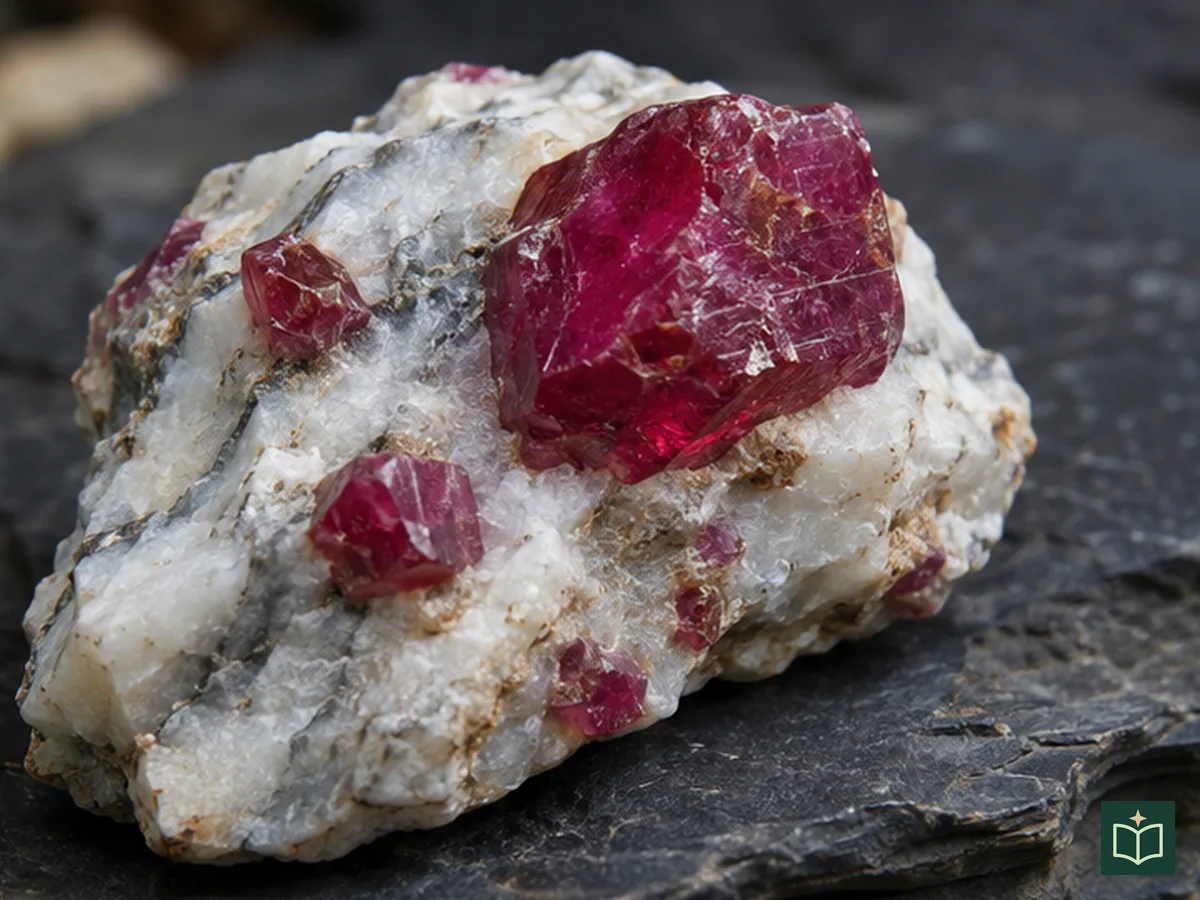
Other gems form when existing rocks are transformed by heat and pressure without melting, a process called metamorphism. When continents collide and mountain ranges rise, buried rocks are squeezed and heated, and their minerals recrystallise into new forms. Many of the world's finest rubies grew in marble formed this way, including in the Mogok region of Myanmar, where the collision between India and Asia created the conditions. Garnets are common in metamorphic rocks such as schist. Because metamorphism can take place deep inside a mountain belt, the gems formed there reach the surface only after millions of years of uplift and erosion strip away the overlying rock.
Colour from impurities
The most striking feature of many gems is that their colour comes from tiny amounts of other elements. Corundum, a crystal of aluminium oxide, is colourless when pure. Add a trace of chromium, which replaces some aluminium atoms, and it becomes red: a ruby. Add iron and titanium instead, and it becomes blue: a sapphire. Corundum of other colours, yellow, pink or green, is also called sapphire. Beryl works similarly: with chromium or vanadium it becomes green emerald, and with iron it becomes blue aquamarine. Some gems, such as peridot, owe their colour to an element that is part of their basic chemical recipe rather than an impurity.
Natural and synthetic
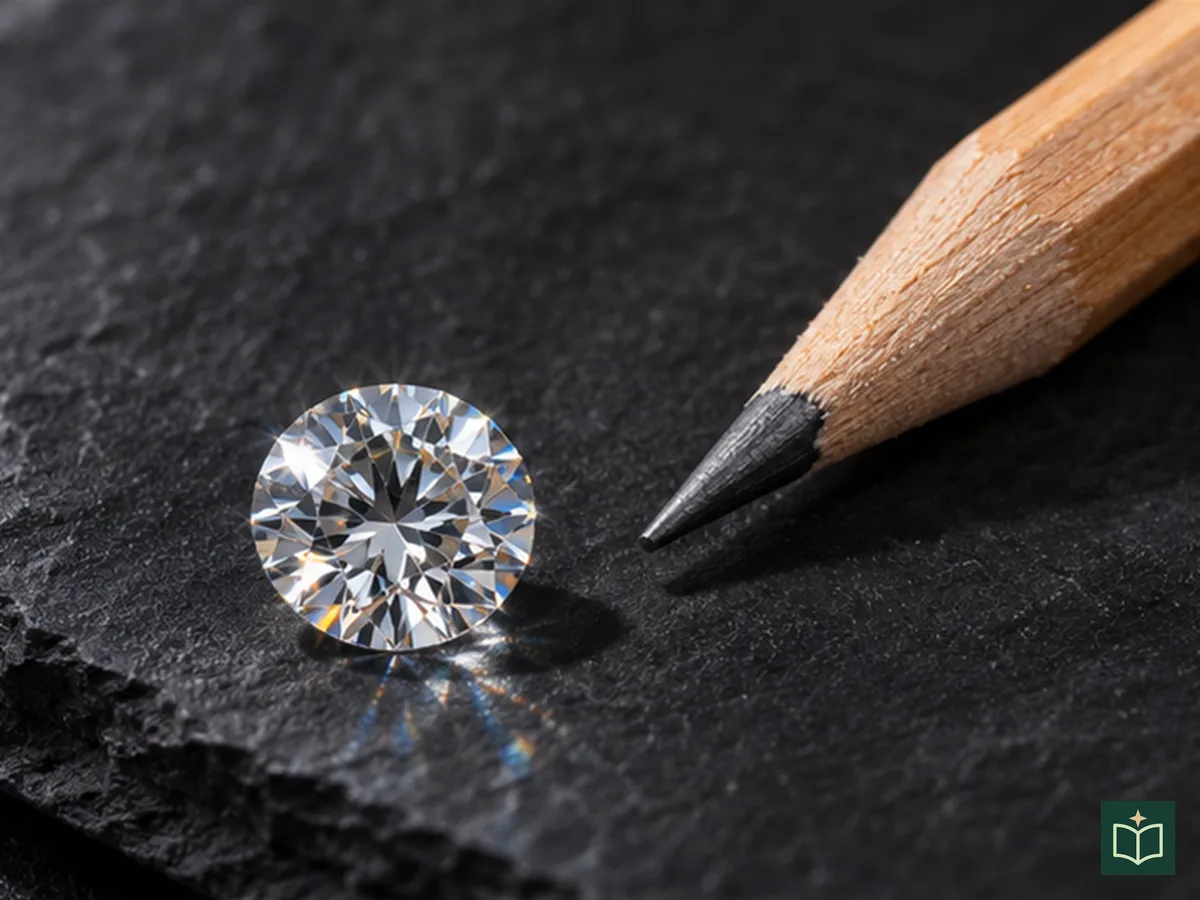
Because gems are simply crystals, they can be grown in laboratories. In 1902 the French chemist Auguste Verneuil developed a method of melting aluminium oxide powder in a flame and letting it crystallise into synthetic rubies, and the technique is still used, including for watch glass. Synthetic diamonds were first made reliably in the 1950s, and laboratory-grown diamonds are now chemically and physically the same as mined ones. Gemmologists use magnification, spectroscopy and specialist instruments to distinguish natural stones from synthetics and to detect treatments such as heating, which can improve colour. Telling them apart matters, because natural gems usually command far higher prices.
Beyond the jewellery box
Gemstones are more than ornaments. Tiny inclusions trapped inside them, fluids, gases or other minerals, act as time capsules that record the conditions where they grew. Diamonds are especially valuable to geologists, because they carry samples from the deep mantle that no drill could reach. Corundum's hardness makes it useful as an abrasive, and synthetic sapphire is used for scratch-resistant windows and phone camera covers. In the Gulf, the trade in precious stones has long been part of the souk economy, and Dubai has become one of the world's major hubs for trading rough and polished diamonds, connecting mines in Africa with cutting centres in India.
Sources & further reading
Figures are rounded and widely published; check the linked organisations for the latest editions. These organisations do not endorse this website.