Why plants need couriers
Plants cannot walk to find a mate. To reproduce sexually, a flowering plant must move pollen, which carries male cells, from the anthers of one flower to the stigma of another, ideally on a different plant of the same species, because cross-pollination mixes genes and produces more vigorous offspring. Some plants, such as grasses and many trees, release clouds of light pollen into the wind, which is wasteful but needs no helpers. Most flowering plants instead recruit animals. A widely cited estimate suggests that about 87% of flowering plant species depend at least partly on animal pollinators. Flowers are the adverts, and nectar and pollen are the payment that keeps the couriers coming.
Colours we cannot see
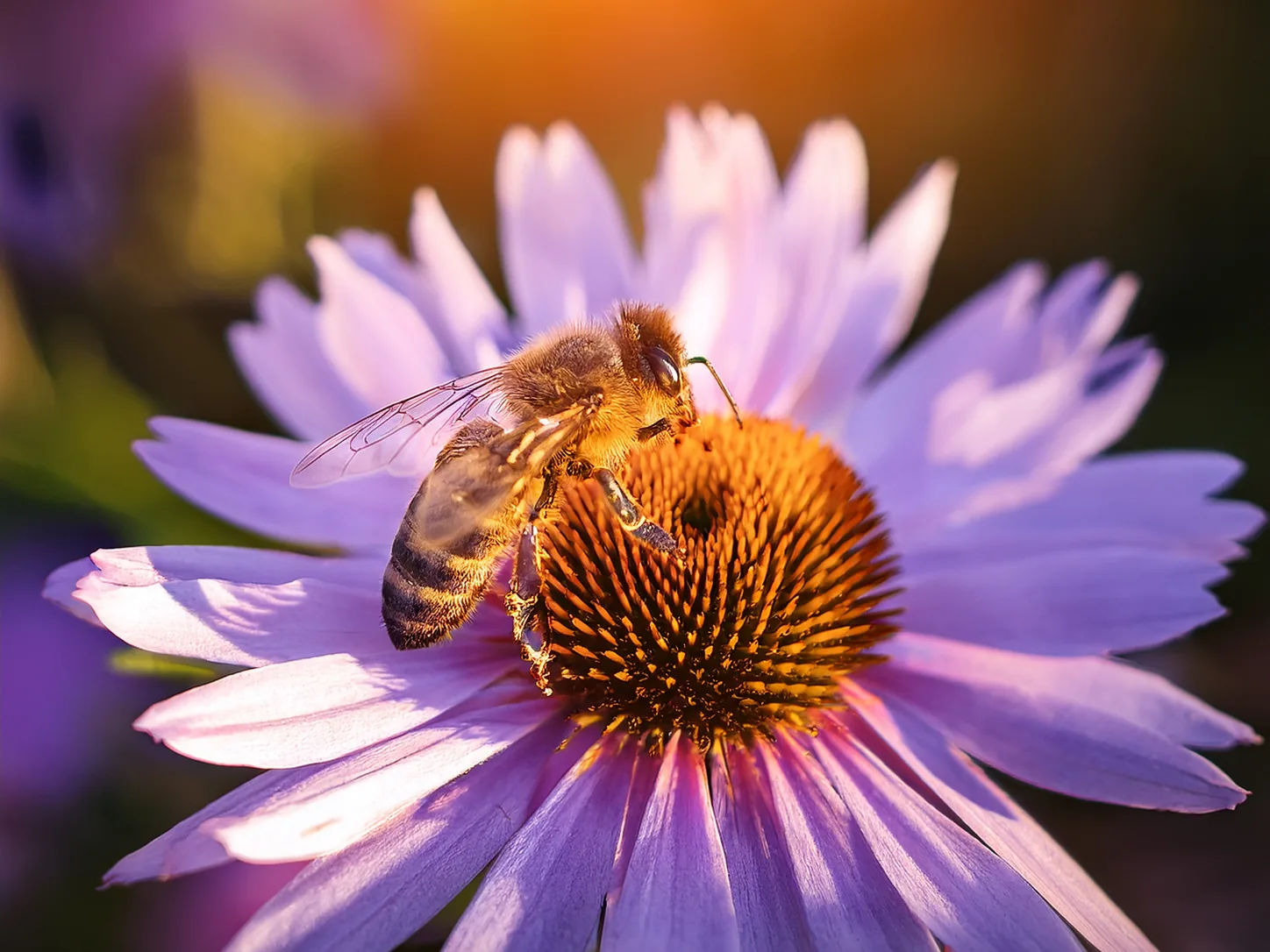
Bees see colour differently from us. Their eyes are sensitive to ultraviolet, blue and green light but not to red, which appears dark to them. Many flowers that look plain yellow or white to us carry striking ultraviolet patterns, such as bullseyes and lines pointing towards the centre, that act as nectar guides, like runway lights for landing insects. Photographs taken through ultraviolet filters reveal these hidden markings. Bees also learn quickly, remembering which colours and shapes have paid off. Experiments have shown that bumblebees can even sense the weak electric fields around flowers, which change briefly after another bee has visited, helping them avoid recently emptied blooms.
Scent and nectar
Scent works over longer distances than colour, and each flower releases its own blend of volatile chemicals, often strongest when its pollinators are active. Nectar is a sugary liquid produced by glands called nectaries, an energy-rich reward that fuels the pollinator's flight. Pollen itself is an important food, rich in protein, especially for bees, which collect it to feed their larvae. The plant must strike a balance. If the reward is too generous, a visitor may fill up at one flower and not move on; too small, and it will go elsewhere. Many flowers therefore offer modest amounts, refilled over time, so that pollinators keep visiting many flowers and carry pollen between them.
Matched to the visitor
Over millions of years, many flowers have evolved features suited to particular pollinators, sometimes called pollination syndromes. Bee flowers are often blue, purple or yellow with landing platforms and sweet scents. Bird flowers tend to be red or orange and tubular, with plenty of dilute nectar but little scent, since most birds rely on sight. Bat flowers are often pale, open at night, sturdy and musky-smelling, as with many agaves and the baobab. Moth flowers are white and strongly fragrant in the evening. Some flowers smell of rotting meat to attract flies. In Gulf gardens, purple sunbirds can be seen probing tubular blooms for nectar, much as hummingbirds do in the Americas.
Tricks and deceptions
Not every flower plays fair. Many orchids offer no reward at all and instead deceive their visitors. Bee orchids and their relatives mimic the appearance and scent of female insects so convincingly that males try to mate with the flower and leave carrying pollen. Other flowers imitate rewarding species without producing nectar themselves. Some insects cheat too, biting through the base of a flower to steal nectar without touching the pollen. These arms races show that pollination is not a cosy partnership but a negotiation between parties with different interests, each shaped by natural selection to get the most from the exchange at the lowest cost.
Why pollinators matter
Pollinators are vital for food. The Intergovernmental Science-Policy Platform on Biodiversity and Ecosystem Services found in 2016 that about three-quarters of the world's leading types of food crops benefit at least partly from animal pollination, including many fruits, nuts, vegetables and coffee. Honeybees are the best-known managed pollinators, and in the Arabian Peninsula beekeepers prize honey from the flowers of the sidr tree. But wild bees, flies, beetles, butterflies, birds and bats do much of the work. Habitat loss, pesticides, disease and climate change are putting pressure on many pollinator populations, which is why planting a variety of flowering plants matters even in cities.
Sources & further reading
- Britannica · Pollination ↗
- IPBES · Assessment report on pollinators, pollination and food production ↗
Figures are rounded and widely published; check the linked organisations for the latest editions. These organisations do not endorse this website.