A simple, clever valve
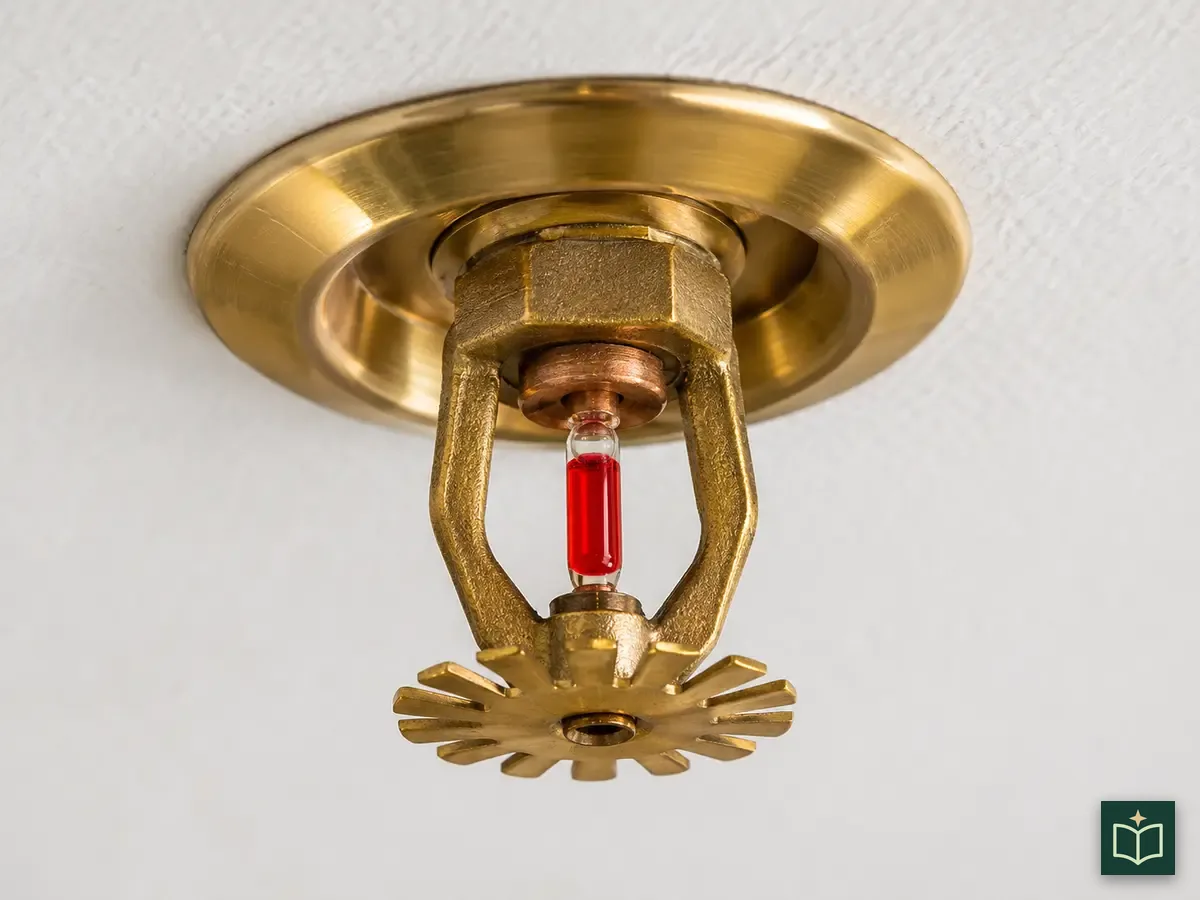
Look up in many offices, hotels, malls and apartment buildings and you will see small metal fittings in the ceiling, each with a tiny coloured glass bulb. These are sprinkler heads, connected to a network of pipes permanently filled with water under pressure. The glass bulb holds a seal in place. It contains a liquid with a small air bubble, and when the surrounding air heats up, the liquid expands until the pressure shatters the glass. The seal falls away and water flows through a deflector that spreads it in a spray pattern. No electricity, smoke detector or central computer is needed for the head to open.
Colours and temperatures
The colour of the liquid in the bulb indicates its operating temperature. Orange and red bulbs, which open at about 57 and 68°C, are common in ordinary rooms. Higher ratings, shown by colours such as yellow, green and blue, are used near heat sources, under skylights or in hot environments where normal temperatures could cause accidental activation. In the Gulf, roof spaces and plant rooms can become extremely hot in summer, so designers choose ratings carefully. Some heads use a fusible metal link instead of a glass bulb, which melts at a set temperature. Faster-responding heads, with thinner bulbs, are used in homes and care facilities.
Not like the films
In films, one sprinkler sets off every head in the building, drenching everyone. Real systems do not work that way. Each head responds only to heat in its immediate area, so in most fires only one or a few heads open, those directly above the flames. Records from fire services in several countries show that fires in sprinklered buildings are usually controlled by a small number of heads. Smoke or burnt toast will not set them off. Some special deluge systems, used in high-hazard industrial settings, do open all their nozzles at once, but they are triggered by separate detection systems and are rare in everyday buildings.
The wider system
Sprinkler heads are the visible tip of a larger system. Water comes from the mains or from dedicated tanks and pumps, sized to supply enough flow for a set time. Alarm valves detect water moving through the pipes and alert the building’s fire panel and, often, the fire service. In cold climates, dry-pipe systems hold compressed air instead of water to prevent freezing. Regular inspections check valves, pumps and heads, and blocked or painted heads must be replaced. In Dubai and the rest of the UAE, civil defence authorities set fire and life safety codes that require sprinklers in many building types, particularly high-rises.
A long history
Early fire protection used perforated pipes that had to be opened manually. The first practical automatic sprinkler is generally credited to Henry Parmelee, an American inventor who patented a design in 1874 to protect his piano factory. Later improvements by Frederick Grinnell and others made heads more reliable, and insurers began offering lower premiums for buildings with sprinklers. The glass bulb design became widespread in the twentieth century. Over time, building codes in many countries made sprinklers mandatory in high-risk and tall buildings. Fire safety organisations such as the US National Fire Protection Association publish detailed standards that are used, or adapted, around the world.
Why it matters
Sprinklers act within minutes, when a fire is still small, which makes them one of the most effective tools for protecting lives and property. Data from fire services consistently show lower death rates and less damage in buildings with working sprinklers. Because only nearby heads open, water damage is far less than when firefighters use hoses on a fully developed fire. Sprinklers do not replace smoke alarms, escape routes or fire drills; alarms warn people early, while sprinklers fight the fire itself. Never hang items from sprinkler heads or block them with tall storage, as either can prevent them working when they are needed.
Sources & further reading
Figures are rounded and widely published; check the linked organisations for the latest editions. These organisations do not endorse this website.