A different kind of message
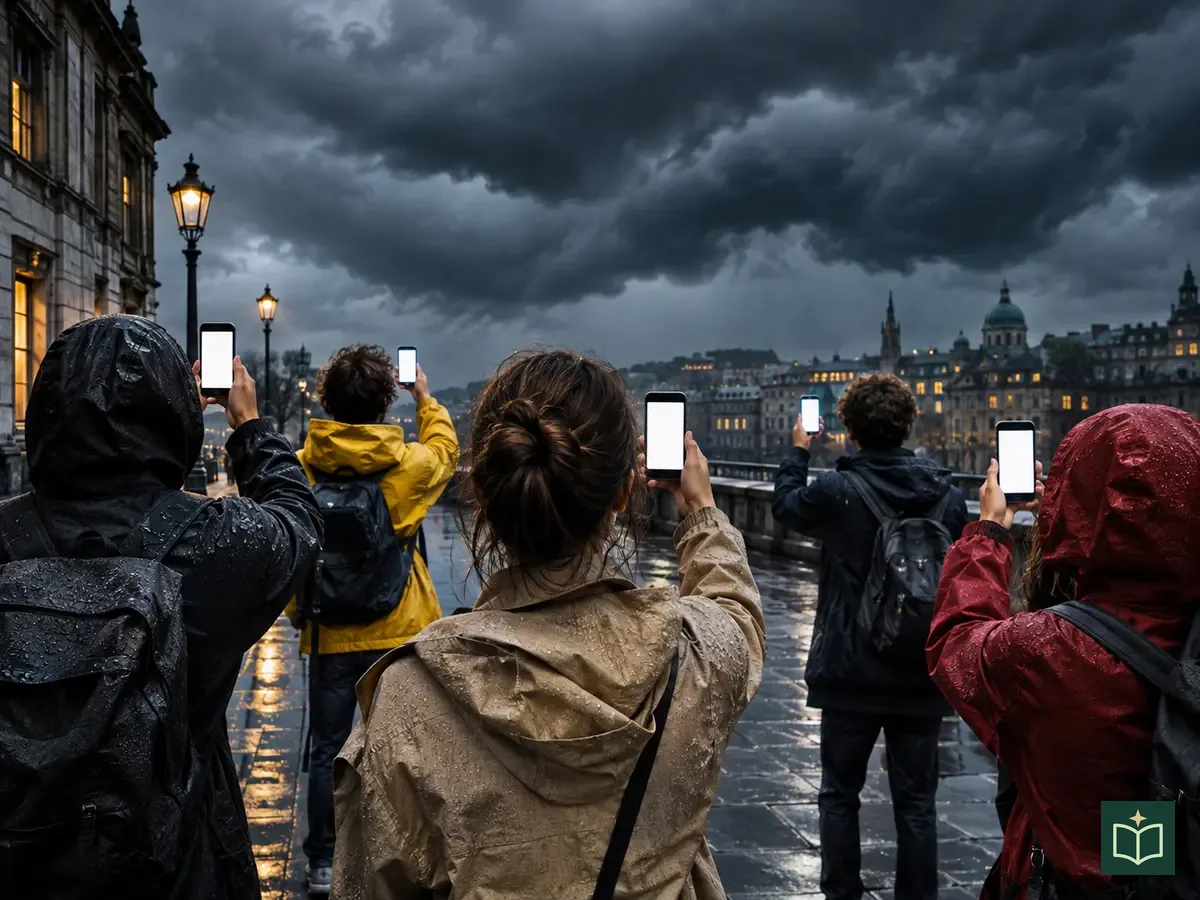
When a flood, storm, fire or other serious hazard threatens an area, authorities need to warn everyone there, quickly. Sending millions of individual text messages would be slow, would require knowing everyone’s phone number and could jam the network just when people need it most. Many countries therefore use cell broadcast, a feature built into mobile network standards for decades. Instead of addressing individual phones, the alert is sent once through selected masts, and every compatible handset connected to those cells receives it. Visitors, roaming tourists and people who have never registered anywhere get the same warning as residents, because what matters is where the phone is, not who owns it.
How the system works
An authorised agency, such as a national emergency management authority, uses a secure platform to draw the affected area on a map, choose a severity level and write the message, often in more than one language. The platform passes the alert to mobile operators, whose systems identify every cell covering that area and broadcast the message on a dedicated channel. Because it is one-to-many, the load on the network barely changes whether ten phones or ten million receive it. Phones display the alert on screen with a loud, distinctive sound and vibration, and for the most serious levels the tone can override silent settings. Delivery usually takes only seconds.
Around the world
The technical standards are defined by 3GPP, the body behind mobile network specifications, so alerts work on most modern smartphones. National systems carry different names. The United States launched Wireless Emergency Alerts in 2012, and Japan uses alerts for earthquake early warnings, sometimes giving seconds of notice before shaking arrives. European Union rules required member states to provide mobile public warnings by June 2022, and the United Kingdom tested its Emergency Alerts service nationwide in April 2023. In the UAE, the National Emergency Crisis and Disaster Management Authority and local authorities have used mobile alerts to warn residents of severe weather, including heavy rain and flooding.
Levels and testing
Systems usually define several levels. The highest are reserved for imminent threats to life, such as tsunamis, flash floods or severe storms, and often cannot be switched off by the user. Lower levels cover serious but less immediate hazards, and some countries also use alerts to help find missing children. Authorities run periodic tests so that people recognise the sound and know it is genuine, and to check that the technology reaches phones as expected. Tests sometimes surprise people at awkward moments, which is partly the point: an unfamiliar alarm during a real emergency could waste precious seconds while people work out what is happening.
Limits and misconceptions
Cell broadcast is not tracking. The system does not collect phone numbers or locations; it simply transmits through masts, and each phone decides whether to show the message. Nor is it perfect. Phones that are switched off, in flight mode, without signal or running very old software may miss alerts, and areas near the edge of a zone can receive warnings they do not strictly need because cell coverage does not follow neat boundaries. Some people disable lower-level alerts, which can leave them uninformed. For these reasons, authorities still use sirens, radio, television and social media alongside phone alerts, and official instructions should always be followed.
Why it matters
Warnings save lives when they arrive early, reach everyone at risk and tell people clearly what to do. Studies of disasters repeatedly show that confusing or late warnings cost lives, while short, specific instructions, such as stay indoors or move to higher ground, help people act. Mobile alerts are fast, wide-reaching and work even when networks are busy, which makes them one of the most effective warning tools available. As extreme weather events become more frequent in many regions, including the Gulf, the system is likely to be used more often. Knowing what the alert sound means, and keeping alerts enabled, is a simple step towards staying safe.
Sources & further reading
- UK Government · Emergency Alerts ↗
- 3GPP · Mobile network standards ↗
- NCEMA · UAE National Emergency Crisis and Disaster Management Authority ↗
Figures are rounded and widely published; check the linked organisations for the latest editions. These organisations do not endorse this website.