A molecule that feeds the world
Ammonia is one nitrogen atom bonded to three hydrogen atoms. Plants need nitrogen to build proteins, and although the air is about 78 per cent nitrogen, that gas is so stable that most plants cannot use it. Before the twentieth century, farmers depended on manure, crop rotation, guano and mined nitrates to replenish soils. Synthetic ammonia changed that. Today most nitrogen fertiliser, such as urea and ammonium nitrate, starts as ammonia. Researchers including Vaclav Smil have estimated that around half of the world’s population is fed thanks to synthetic nitrogen fertiliser, which is why the process is often counted among the most important inventions of the modern era. Its influence on population growth is hard to overstate.
How Haber–Bosch works
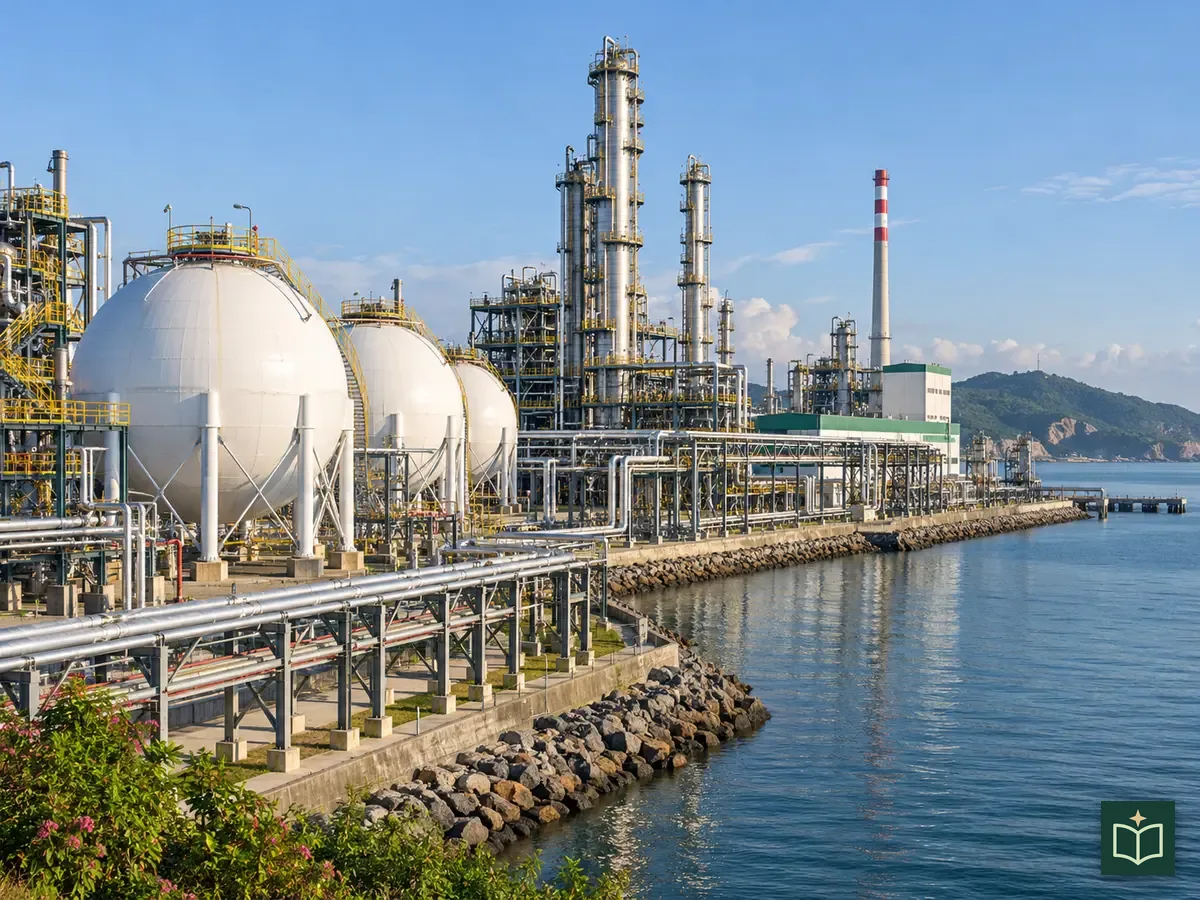
German chemist Fritz Haber demonstrated the reaction in the laboratory in 1909, and Carl Bosch at BASF scaled it up into an industrial process by 1913. Nitrogen and hydrogen are compressed to well over 100 times atmospheric pressure, heated to roughly 400 to 500 degrees Celsius and passed over an iron-based catalyst. Only part of the gas reacts on each pass, so the ammonia is condensed out and the rest is recycled. Both men later received Nobel Prizes. The process is energy hungry: ammonia production uses around 2 per cent of the world’s final energy, mostly as natural gas used both as fuel and as the source of hydrogen.
The carbon problem
Because most ammonia plants make their hydrogen from natural gas or coal, the industry emits a large amount of carbon dioxide. Making one tonne of ammonia from gas typically releases around two tonnes of carbon dioxide. There are two main ways to reduce this. Plants can capture the concentrated carbon dioxide stream released during hydrogen production and store it underground, producing what is often called blue ammonia. Or they can use hydrogen from electrolysis powered by low-carbon electricity, producing green ammonia. Both routes add cost compared with conventional plants. Several Gulf producers, which already run large gas-based ammonia plants and export fertiliser, have announced projects along both routes.
Ammonia as an energy carrier
Hydrogen is hard to ship because it must be compressed or cooled to minus 253 degrees Celsius to become liquid. Ammonia liquefies at about minus 33 degrees Celsius, or under modest pressure at room temperature, and the world already moves millions of tonnes of it by ship each year. That makes it a candidate for carrying hydrogen energy across oceans. At the destination, ammonia can be burned directly, co-fired in power stations, as tested in Japan, or ‘cracked’ back into hydrogen. It is also a leading candidate fuel for large ships, and engine makers have been developing ammonia-capable marine engines.
Risks and limits
Ammonia is toxic, and leaks can harm people and aquatic life, so handling standards are strict. Burning it can produce nitrogen oxides and nitrous oxide, a powerful greenhouse gas, unless combustion is carefully controlled and exhaust is treated. Converting hydrogen to ammonia and back again loses a substantial share of the energy, which raises the cost of delivered hydrogen. Fertiliser use itself has environmental side effects: excess nitrogen washing off fields can feed algal blooms and oxygen-poor ‘dead zones’ in coastal waters. None of these problems are new, but scaling ammonia as a fuel would multiply the volumes involved, and with them the need for careful regulation.
Why it matters
Ammonia links three systems that are usually discussed separately: food, energy and climate. Gas prices affect fertiliser prices, which affect farmers’ costs and, eventually, food prices. Decarbonising ammonia removes a major industrial emission source, and using it as a fuel could help decarbonise shipping and long-distance energy trade. For the Gulf, which has gas, sunshine, ports and existing ammonia expertise, it is one of the most practical ways to turn clean electricity into an exportable product. Watching ammonia is therefore a useful way to follow how the energy transition reaches beyond electricity into the chemistry of everyday life, from farm fields to ship engines.
Sources & further reading
Figures are rounded and widely published; check the linked organisations for the latest editions. These organisations do not endorse this website.