Not a rubbish dump
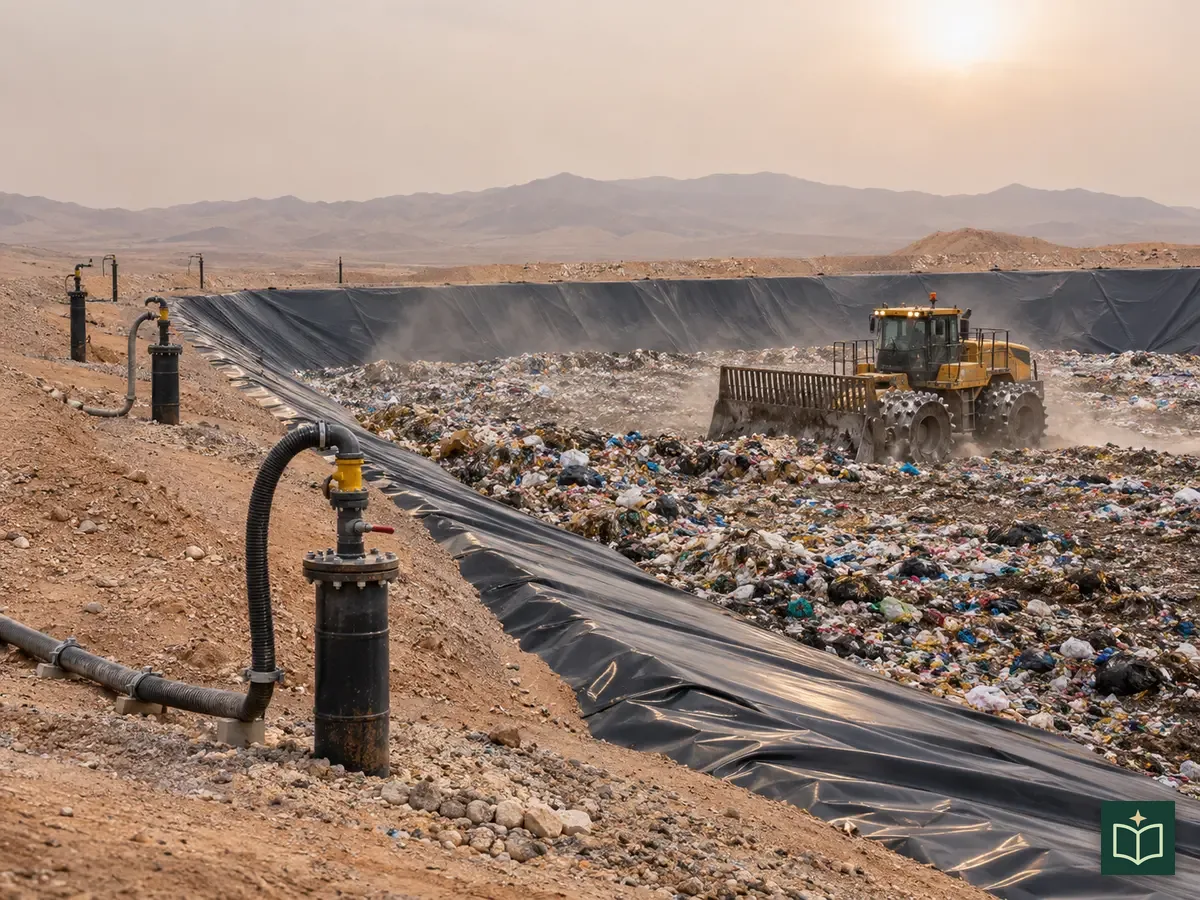
An open dump is simply a place where waste is piled up, attracting pests, burning and polluting water. A modern sanitary landfill is an engineered structure designed to isolate waste from the environment for decades. Before any waste arrives, engineers prepare the ground with a liner, usually a layer of compacted clay topped with a thick plastic membrane made of high-density polyethylene. Above that lies a drainage layer of gravel and pipes. The site is divided into cells, and waste is placed into one cell at a time, spread in thin layers and compacted by heavy machines to reduce its volume and limit settlement.
Daily cover and leachate
At the end of each working day, the exposed waste is covered with soil or an alternative material, such as tarpaulins or foam. This daily cover reduces smells, windblown litter, birds and fire risk. As rainwater filters through the waste and organic material breaks down, a polluted liquid called leachate forms. It can contain organic compounds, ammonia and metals, and must not reach groundwater. The drainage layer collects it and channels it to sumps, from which it is pumped to treatment plants. In arid regions such as the UAE, less rain produces less leachate, but the liquid that does form can be highly concentrated.
The gas problem
Food scraps, paper, garden waste and other organic materials decompose without oxygen once buried, producing landfill gas, roughly half methane and half carbon dioxide. Methane is a powerful greenhouse gas, trapping around 80 times more heat than carbon dioxide over twenty years, according to assessments by the Intergovernmental Panel on Climate Change. Landfills are among the largest human sources of methane worldwide. Modern sites drill vertical wells into the waste and connect them to pipes under suction, drawing the gas to a flare where it is burned, or to engines that generate electricity. Capture is never complete, so some methane still escapes into the atmosphere.
Closing and caring
When a landfill is full, it is capped with layers of clay, plastic membranes and soil, then planted with grass or other vegetation. Closure is not the end. Waste continues to settle and produce leachate and gas for decades, so operators must monitor groundwater, maintain gas systems and repair the cap. Closed landfills can sometimes become parks, solar farms or sports fields, but rarely sites for heavy buildings, because the ground continues to sink unevenly. In many countries, operators must set aside money in advance to pay for this long aftercare, which can last thirty years or more, so that the costs do not fall on future taxpayers.
A UAE context
The UAE has historically sent a large share of its municipal waste to landfill, and authorities have set targets to divert much more. Dubai has opened a large waste-to-energy plant at Warsan, which burns non-recyclable waste to generate electricity, and emirates are expanding recycling, composting and construction waste processing. Older landfills have been upgraded or closed, with gas capture systems added at some sites. Separating food waste is particularly important, because it is the main source of landfill methane. National strategies aim to move towards a circular economy, in which materials stay in use for longer and landfill becomes a last resort rather than the default.
Misconceptions
Many people imagine that biodegradable items quickly vanish in a landfill. In practice, the lack of oxygen means decomposition is slow, and archaeologists digging into old landfills have found legible newspapers decades after they were buried. Biodegradable plastics often need industrial composting conditions to break down, and in a landfill they may simply add to methane. Another misconception is that landfills are always worse than every alternative. Well-run landfills with gas capture can outperform poorly run alternatives, and some waste, such as incinerator ash, still needs landfilling. The real priority, according to the waste hierarchy, is to reduce waste in the first place, then reuse and recycle.
Sources & further reading
Figures are rounded and widely published; check the linked organisations for the latest editions. These organisations do not endorse this website.