What a trap does
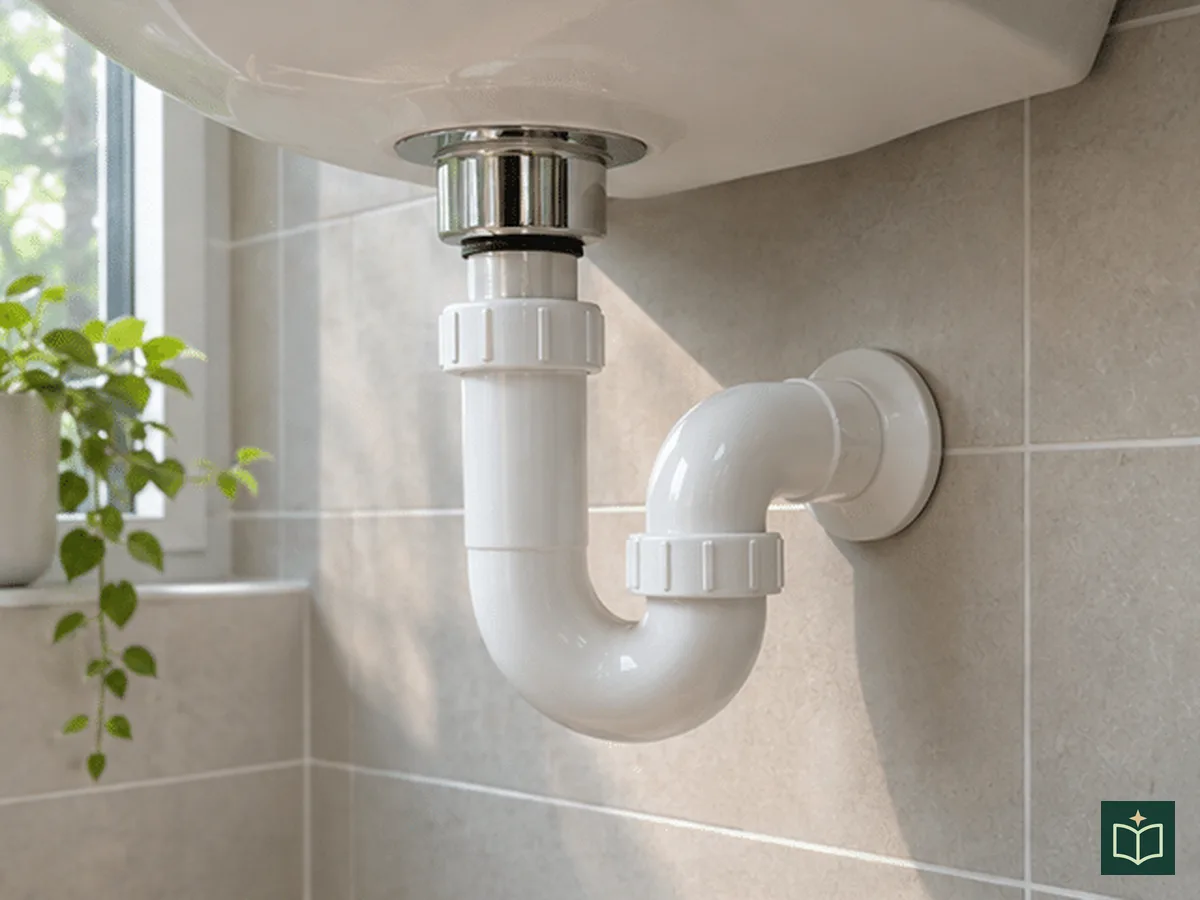
Look under almost any sink and you will see a pipe that dips down and back up before heading into the wall. That bend is a trap. Its job is simple: after water drains away, a little stays behind in the lowest part of the curve, forming a plug. Waste water can push through it easily, but gases in the sewer pipes cannot get past without bubbling through the water. Every fixture that connects to the drains, including basins, baths, showers, washing machines and floor drains, needs a trap. Toilets have one too, moulded into the ceramic bowl, which is why water always sits in the bottom.
Why sewer gas matters
Sewers carry decomposing organic matter, and bacteria produce a mix of gases as they break it down. The most noticeable is hydrogen sulphide, with its rotten-egg smell, which people can detect at very low concentrations. Sewer air can also contain methane, ammonia and other compounds, and it can carry moisture and bacteria. At the levels that typically leak into homes, the main effect is unpleasant odour, but persistent sewer smells should be fixed, because larger concentrations can be harmful and some gases are flammable. Before traps became standard in the nineteenth century, sewer smells in houses were common and were often blamed, wrongly, for spreading disease as miasma.
Shapes of trap
The classic S-bend was patented by the Scottish watchmaker Alexander Cumming in 1775 as part of a flushing toilet. Later designs added the U-bend and the P-trap, which turns horizontally into a wall and is less prone to losing its water. Bottle traps, common under bathroom basins, use a small cylinder instead of a curved pipe and are compact and easy to clean. Shower and floor drains often use shallow traps hidden below a grate. Building codes in many countries require a water seal of roughly 50 to 75 millimetres, deep enough to resist normal pressure changes in the drain pipes without needing so much water that they clog.
Why dry drains smell
The most common cause of a smelly drain is simply evaporation. A trap in a guest bathroom, a rarely used shower or a floor drain in a utility room can dry out after a few weeks without use. In hot, dry indoor air, such as air-conditioned Gulf apartments left empty over summer, this can happen faster. As an illustration, if a 50-millimetre seal lost 2 millimetres a day to evaporation, it would be gone in about 25 days. The fix is easy: run water into every drain regularly, or pour a little water with a spoonful of cooking oil on top, which slows evaporation in drains that are seldom used.
Siphonage and venting
Traps can also lose their water when other fixtures drain. A large rush of water down a shared pipe can pull air, and with it the water in a nearby trap, a process called induced siphonage. A basin draining fast can even suck its own trap partly empty, known as self-siphonage, often heard as a gurgle. To prevent this, drainage systems include vent pipes that let air in and out, usually running up through the roof. Where a full vent pipe is impractical, plumbers fit air admittance valves, one-way devices that let air into the pipe but not back out. Poorly designed or blocked vents are a common cause of recurring smells.
Other causes and fixes
Not every bad smell comes from a dry trap. Hair, soap scum and grease build up inside traps and pipes and begin to decay, producing smells even when the seal is intact. Cleaning the trap, often by unscrewing a bottle trap or removing a shower grate, usually solves this. Cracked pipes, failed seals around a toilet base or a missing trap on a washing machine hose can also let gas escape. A common myth is that pouring strong chemicals regularly keeps drains healthy; they can damage pipes and seals and are hazardous to handle. Persistent smells after basic checks are best investigated by a qualified plumber.
Sources & further reading
Figures are rounded and widely published; check the linked organisations for the latest editions. These organisations do not endorse this website.