An animal shaped by the desert
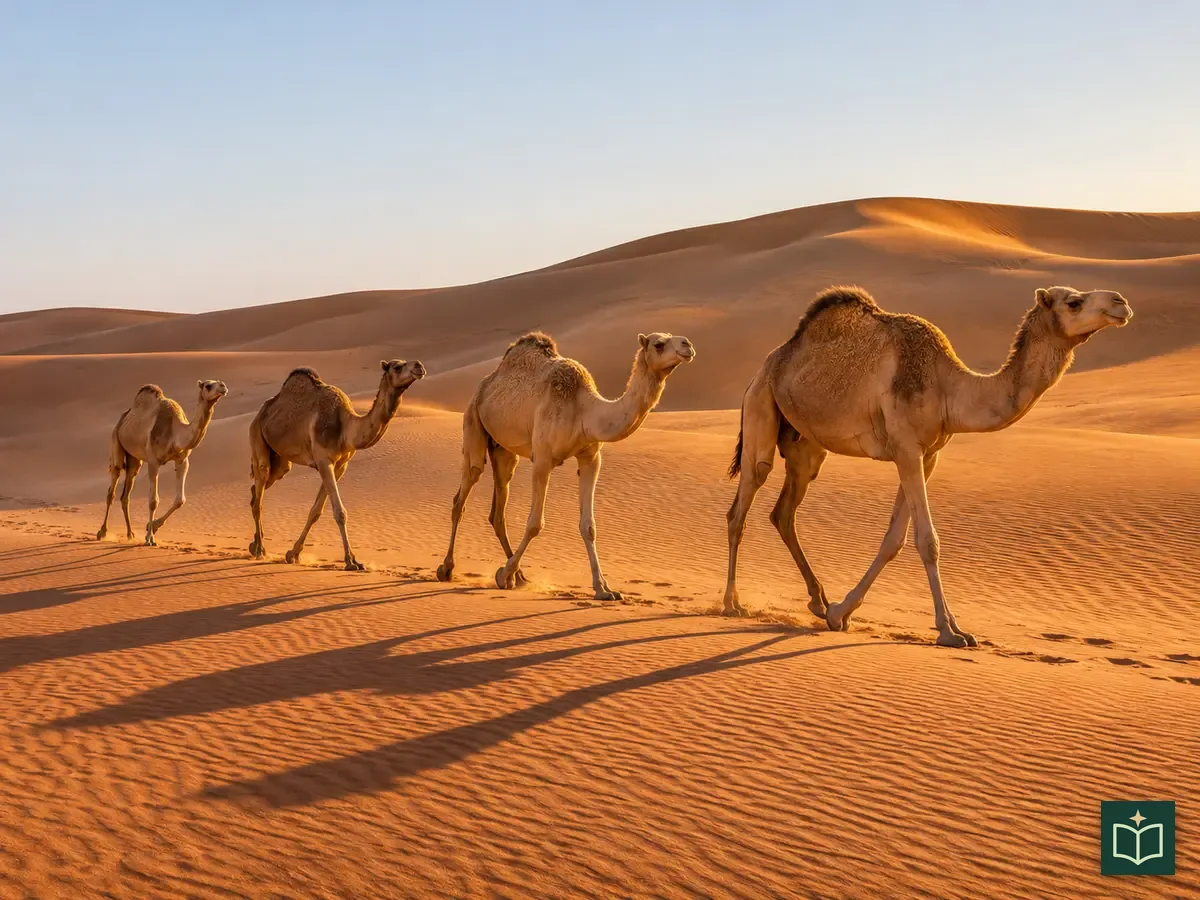
The dromedary, or one-humped camel, has lived alongside people in Arabia for thousands of years, and it remains central to the region’s heritage, from racing to camel milk. Today it is found mainly as a domestic animal across North Africa, the Middle East and South Asia, with a large feral population in Australia. Its close relative, the two-humped Bactrian camel, lives in the cold deserts of Central Asia. Dromedaries can walk long distances across sand, eat thorny and salty plants that other animals avoid, and keep working through summer heat. Their survival depends less on any single trick than on many small savings that add up.
The hump is not a water tank
One of the most persistent myths is that the hump stores water. It is mostly fat, a concentrated energy reserve that can sustain the animal when food is scarce. A well-fed camel has a firm, upright hump; a hungry one may have a hump that sags or leans to one side. Storing fat in one place, rather than spread beneath the skin all over the body, may also help camels lose heat more easily from the rest of their bodies. Breaking down fat does release some water as a by-product, but the breathing required to supply oxygen for that process also costs water, so the net gain is small.
Running hot to save water
A camel’s most important trick is tolerating changes in its own body temperature. When water is plentiful, its temperature stays fairly stable. When dehydrated, it lets its core cool to about 34°C overnight and warm to around 40°C or more during the day before it starts to sweat. Storing heat this way saves litres of water that would otherwise be lost cooling the body, and the excess is released into the cool night air. Thick fur on the back acts as insulation against the sun rather than trapping body heat, and camels often face the sun to reduce the area of body exposed to direct sunlight.
Kidneys, nose and blood
Camels also cut water losses in other ways. Their kidneys produce highly concentrated urine, and their dung is so dry it can be used as fuel. Their nasal passages recover moisture from exhaled air. Most remarkable is their blood. Camel red blood cells are oval rather than round, which helps them keep flowing when the blood thickens during dehydration. They can also swell considerably without bursting when the animal drinks a large amount of water quickly, something that would damage the cells of most mammals. Camels can tolerate losing a quarter or more of their body weight in water, far beyond the limit for humans.
Drinking on a grand scale
When a thirsty camel finally reaches water, it can drink an extraordinary amount, often cited as around 100 litres in a matter of minutes. The water is absorbed and distributed safely, and the animal can recover its normal condition within hours. How long a camel can go without drinking depends heavily on conditions. In cooler months, when grazing on green plants that contain moisture, dromedaries may go for weeks or even months. In the height of an Arabian summer, with dry fodder and hard work, they need water much more often, sometimes every few days. The often repeated claim that camels can always go weeks without water oversimplifies.
Lessons from a desert specialist
Camels remain important for food security in arid regions because they produce milk and meat in conditions where cattle struggle. Scientists study their physiology to understand dehydration, heat tolerance and kidney function, and their unusual immune system has interested medical researchers, because camels produce small, simple antibodies that are easier to engineer than human ones. In the Gulf, research centres, veterinary hospitals and breeding programmes support a large camel economy tied to racing, dairy and tradition. With global temperatures rising and droughts becoming more frequent in many regions, the camel offers a working example of how a large mammal can thrive where water is scarce.
Sources & further reading
Figures are rounded and widely published; check the linked organisations for the latest editions. These organisations do not endorse this website.