A planet-wide movement
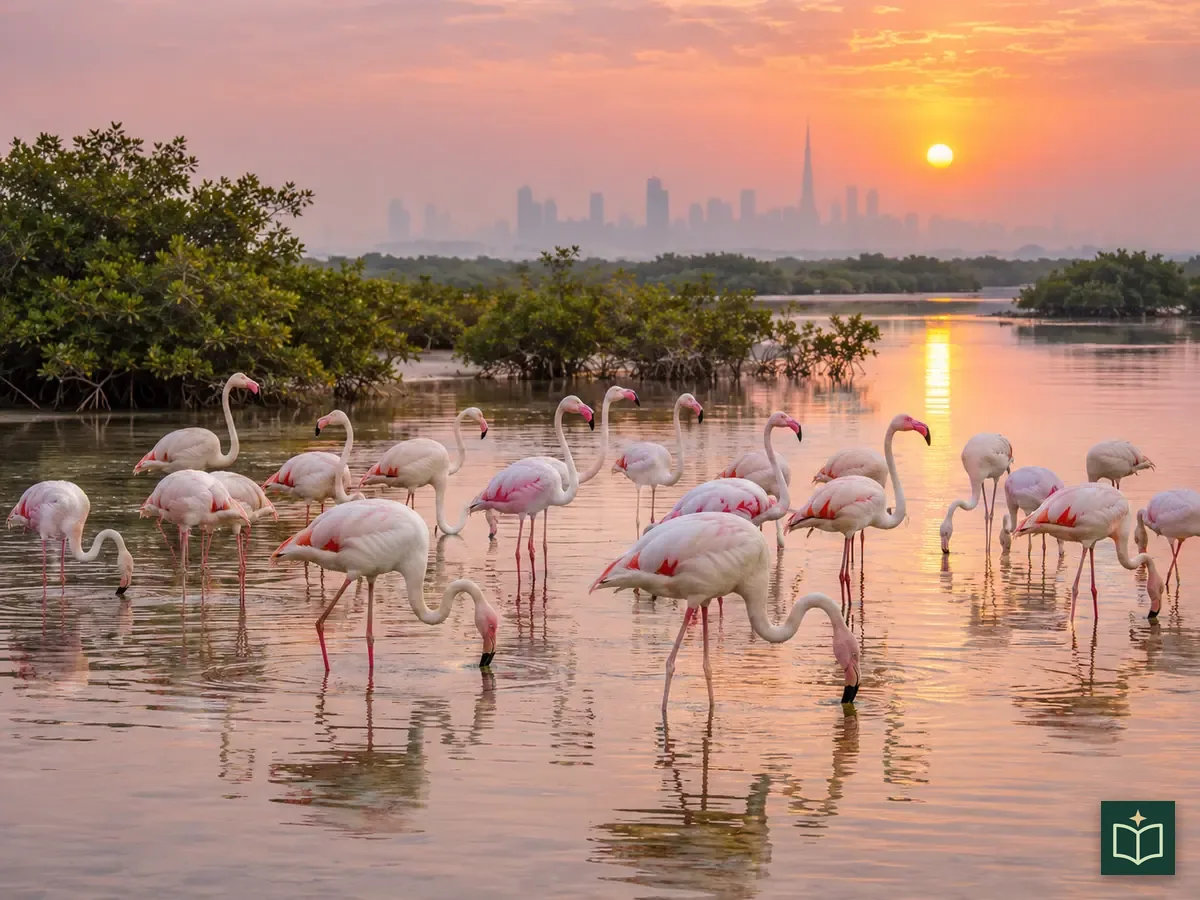
Each year, billions of birds travel between breeding grounds and wintering areas, following routes known as flyways. Some journeys are staggering. The Arctic tern breeds in the far north and spends the northern winter around Antarctica, a round trip that can exceed 70,000 kilometres. The bar-tailed godwit flies nonstop across the Pacific for more than a week. Smaller birds are just as impressive: warblers weighing less than a coin cross the Sahara and the Arabian deserts. The Arabian Peninsula sits on major flyways linking Europe, Central Asia and Africa, and wetlands in the UAE, such as Ras Al Khor in Dubai, host migrating flamingos, waders and other visitors.
Knowing when to leave
Migration starts with timing. Many birds respond to changing day length, which triggers hormonal changes, heavy feeding and the build-up of fat reserves; some double their body weight before a long crossing. Captive birds show a restless urge to move, known by the German term Zugunruhe, at the right season even without outdoor cues, revealing an inner annual calendar. Weather then shapes the exact departure. Birds often wait for favourable tailwinds and clear skies. Many small songbirds migrate at night, when the air is cooler and calmer and predators are fewer, resting and feeding during the day before continuing their journey.
Sun and star compasses
Experiments over the past century have shown that birds use several compasses. Starlings tested in round cages with mirrors that shifted the apparent position of the Sun changed their preferred direction accordingly, showing they use a Sun compass corrected by an internal clock. Night migrants such as indigo buntings were studied in planetariums; when the artificial sky was rotated, the birds reoriented. They learn the centre of rotation of the night sky, near the pole star in the Northern Hemisphere, while young. Patterns of polarised light around sunset, invisible to humans, also appear to help birds calibrate their compasses each evening before setting off.
A magnetic sense
Birds can also detect Earth’s magnetic field. Experiments show that caged migrants change direction when the surrounding field is altered. Two main mechanisms are under investigation. One proposes that light-sensitive proteins called cryptochromes in the eye undergo chemical reactions affected by the magnetic field, potentially letting birds ‘see’ the field’s direction as a pattern overlaid on their vision. Another involves sensing magnetic intensity, perhaps through the beak or inner ear, which could act as a map by indicating latitude. This remains an active and debated area of research, and the full sensory picture is not yet settled, partly because the effects are so subtle.
Compass versus map
A compass gives a direction, but reaching a specific destination requires knowing where you are. Young birds on their first migration often seem to follow an inherited direction and distance, which is why they are more easily blown off course. Adults appear to develop a true map sense, correcting for displacement: experienced birds moved hundreds of kilometres can reorient towards their goal, while young ones often cannot. Landmarks such as coastlines, mountain ranges and rivers help along the way, and some seabirds and pigeons seem to use smell. Homing pigeons, long used to carry messages, remain important research subjects for understanding avian navigation.
Threats along the route
Migration is risky, and modern hazards add to the danger. Artificial light at night can disorientate birds, drawing them towards illuminated buildings and coastlines; some cities now dim decorative lighting during peak migration seasons. Habitat loss at stopover sites, where birds refuel, can break a chain that stretches across continents. Climate change is shifting the timing of insect peaks and plant growth, so birds may arrive too late for the food their chicks need. Illegal hunting remains a threat along some flyways. International agreements and protected wetlands, including several in the Gulf, aim to safeguard the network of sites that migrating birds depend upon.
Sources & further reading
Figures are rounded and widely published; check the linked organisations for the latest editions. These organisations do not endorse this website.