The great misunderstanding
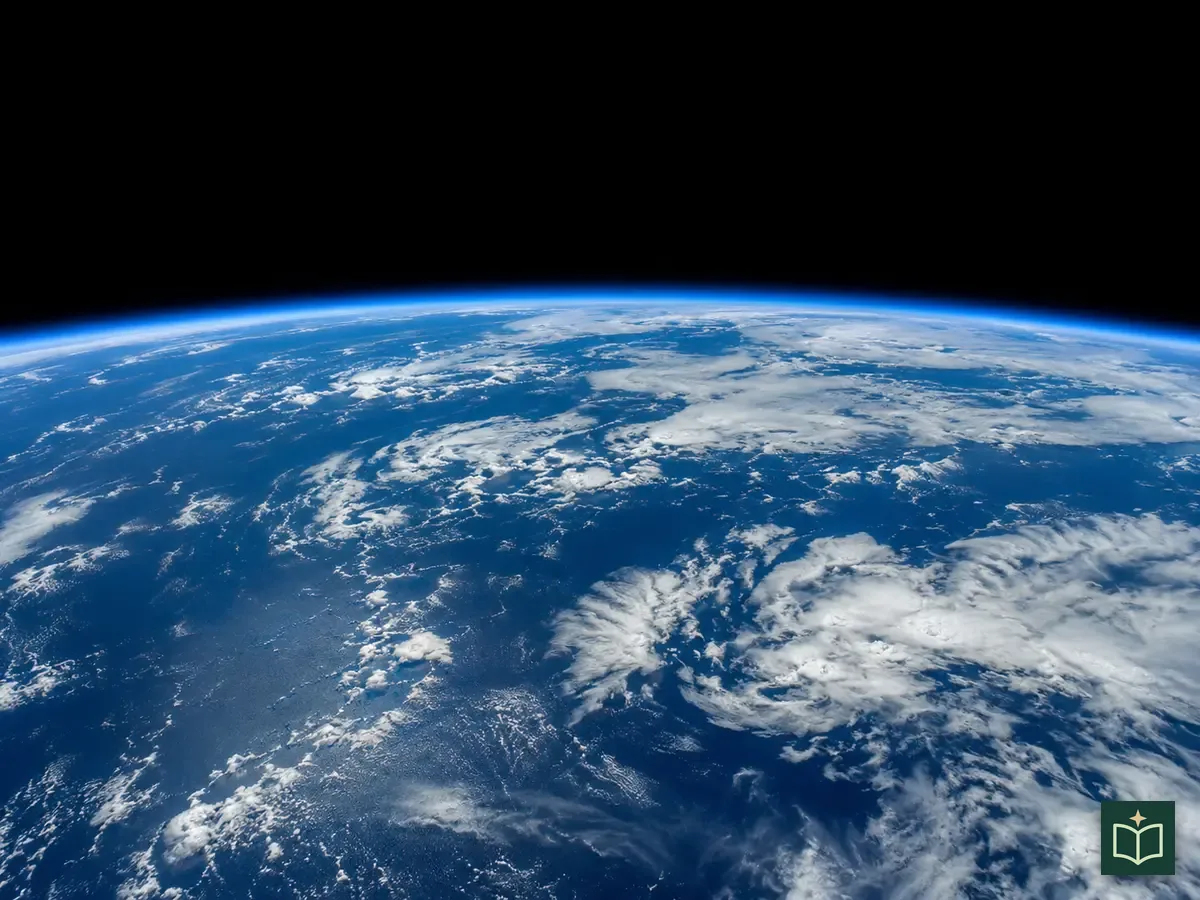
Footage of astronauts drifting through a space station gives a powerful impression that space has no gravity. That impression is wrong. The International Space Station orbits roughly 400 kilometres above Earth, a distance shorter than a drive from Dubai to Muscat. At that height, Earth’s gravity is still about 90 per cent as strong as at the surface. If you could build a tower 400 kilometres tall and stand on top, you would feel almost your normal weight. What astronauts experience is better described as free fall, or microgravity. They float not because gravity has vanished but because everything around them is falling at the same rate.
Newton’s cannonball
Isaac Newton explained orbits with a thought experiment. Imagine a cannon on a very high mountain. Fire a ball slowly and it falls to the ground nearby. Fire faster and it travels further before landing. Because Earth is curved, there is a speed at which the ground curves away beneath the ball as fast as the ball falls towards it. The ball never lands; it keeps falling around the planet. That is an orbit. For a low Earth orbit, the required speed is about 7.7 kilometres per second, roughly 28,000 kilometres per hour, which carries the space station around the world about every 90 minutes.
Why falling feels weightless
Weight, as we feel it, is not gravity itself but the push of the floor or a chair holding us up. In free fall there is nothing pushing back, because everything falls together. A brief version of this happens at the top of a fairground drop or when a lift accelerates sharply downwards. Space agencies train astronauts in aircraft that fly steep arcs, giving about 20 to 25 seconds of weightlessness at a time. In orbit, the free fall simply never ends. A pen released in mid-air stays beside the astronaut’s hand, because pen, astronaut and station are all following the same path around Earth.
What space does to the body
Long stays in microgravity have measurable effects. Without the constant load of gravity, bones lose mineral density and muscles weaken, so astronauts exercise for around two hours a day using treadmills, bikes and resistance machines. Body fluids shift towards the head, causing puffy faces and thin-looking legs, and some astronauts develop changes to the eye that affect vision. The inner ear’s balance system is confused at first, contributing to space sickness in the early days. Returning to Earth requires a period of readjustment. Studying these changes helps prepare for long missions to the Moon and Mars, and informs research into ageing and osteoporosis on Earth.
Orbits at different heights
Not all orbits are alike. Lower orbits require higher speeds and are dragged by thin traces of atmosphere, so the space station must periodically boost itself to avoid sinking. Further out, orbits are slower. At about 36,000 kilometres above the equator, a satellite takes exactly one day to circle Earth, so it appears to hover over the same spot; this geostationary orbit is used for many communications and weather satellites, including those serving the Middle East. The Moon, about 384,000 kilometres away, takes around 27 days to complete one orbit. In every case, the principle is the same: falling continually while moving sideways fast enough to miss.
Why it matters
Understanding orbits underpins modern life. Satellite navigation, weather forecasting, television broadcasting and climate monitoring all rely on spacecraft placed carefully into orbits suited to their jobs. The UAE’s own satellites and its Hope probe to Mars depended on precise orbital calculations. Free fall also offers a unique laboratory. Experiments on the space station study how flames, fluids and crystals behave without the effects of weight, and how cells and tissues respond. The next time a video shows an astronaut floating, it is worth remembering what is really happening: they are hurtling around the planet at enormous speed, falling all the time and never hitting the ground.
Sources & further reading
Figures are rounded and widely published; check the linked organisations for the latest editions. These organisations do not endorse this website.