Living, changing tissue
Bone can look like inert scaffolding, but it is living tissue with blood vessels, nerves and cells that constantly build and dismantle it. Cells called osteoblasts lay down new bone, while osteoclasts dissolve old bone, and in a healthy adult the two stay roughly in balance. Over about a decade, much of the adult skeleton is renewed in this way. That ongoing turnover is the reason bone can heal so well. When a bone breaks, the body does not glue the pieces back together. It mobilises the same building machinery it uses every day and grows fresh bone across the gap, following a sequence of overlapping stages.
Stage one: the clot
In the first hours after a fracture, torn blood vessels in the bone and surrounding tissue bleed into the break, forming a clot called a haematoma. This is why fractures swell and bruise. The clot is not simply damage: it acts as a temporary scaffold and releases chemical signals. Inflammation follows over the next few days. Immune cells clear dead tissue and debris, and growth factors call in stem cells from the bone's outer membrane, the periosteum, and from the marrow. The pain and swelling of this phase are uncomfortable but useful, and that is one reason doctors are cautious about how strongly to suppress inflammation early on.
Stage two: the soft callus
After about a week or two, the stem cells begin turning into cartilage-forming cells and bone-forming cells. They produce a soft callus, a rubbery bridge of cartilage and fibrous tissue that spans the broken ends and holds them loosely together. New blood vessels grow into it to supply oxygen. At this point the bone is beginning to unite but cannot yet bear much load, and too much movement can disrupt the callus. That is why fractures are immobilised with casts, splints or, for more complex breaks, metal plates, screws or rods, which hold the fragments in the right position while the biology takes its course.
Stage three: hard callus
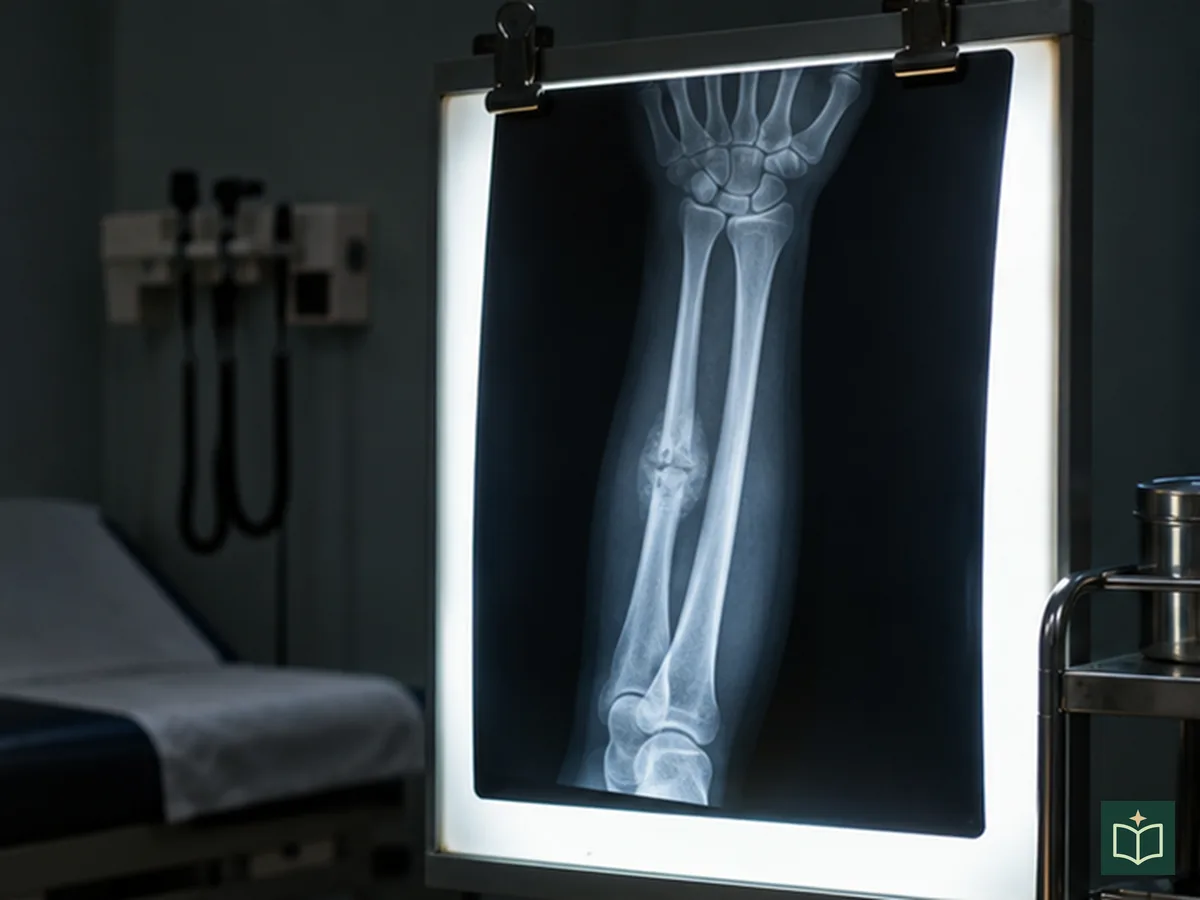
Over the following weeks, the soft callus is gradually mineralised and converted into woven bone, a rough, quickly made form of bone with fibres laid down in a haphazard pattern. On an X-ray the callus appears as a cloudy collar around the fracture. For many simple fractures in adults, the bone is united enough to remove a cast after about six to eight weeks, though large bones such as the thigh can take months. Children heal much faster because their bones are actively growing and have a thick, richly supplied periosteum. Older adults, smokers and people with diabetes or poor nutrition tend to heal more slowly.
Stage four: remodelling
The final stage can last months or even years. Osteoclasts gradually remove the bulky woven bone, and osteoblasts replace it with lamellar bone, the strong, layered form found in a healthy skeleton. The bone is reshaped according to the loads it carries, a principle known as Wolff's law: areas under stress are strengthened, and unnecessary bulk is trimmed away. In children, remodelling can even straighten a moderately angled fracture over time. Eventually the repaired region can be as strong as the original bone and sometimes hard to spot on an X-ray. Bone is one of the few tissues that can heal by regeneration rather than scarring.
Myths and limits
A common belief is that a healed bone becomes stronger than before and will never break in the same place. In the early months the callus can indeed make the site bulky, but after remodelling the bone returns to roughly normal strength, not super-strength. Not all fractures heal smoothly. If the ends are too far apart, move too much or have poor blood supply, healing can stall, a condition called non-union that may need surgery or bone grafts. Calcium, vitamin D and protein support healing, and gradual, guided use of the limb helps remodelling. Anyone with a suspected fracture should seek medical assessment promptly.
Sources & further reading
Figures are rounded and widely published; check the linked organisations for the latest editions. These organisations do not endorse this website.