The tag is the key
At check-in, an agent or self-service kiosk prints a bag tag carrying a ten-digit licence plate number. The first digit indicates the type of tag, the next three identify the airline that issued it, and the remaining six are a serial number. The same number appears as a barcode and, increasingly, on an embedded radio-frequency chip. When the bag is dropped onto the belt, the number is linked to a baggage message containing your flights, connections and final destination. From that point on, every reader along the way uses the number to look up where the bag should go. The tag is the single point of identity for your suitcase.
Screening below the floor
Every checked bag must be screened for explosives before it can fly. In large airports this happens out of sight, inside the baggage system. Bags pass through computed tomography or multi-view X-ray machines that build images and flag suspicious items automatically. Cleared bags continue on their route; flagged bags are diverted for further imaging or for officers to inspect by hand. This step adds complexity, because the system must keep track of each bag’s status and position at all times. If a bag’s identity is lost, for example because a tag has torn off, it is sent to a manual area for staff to resolve.
Kilometres of belts
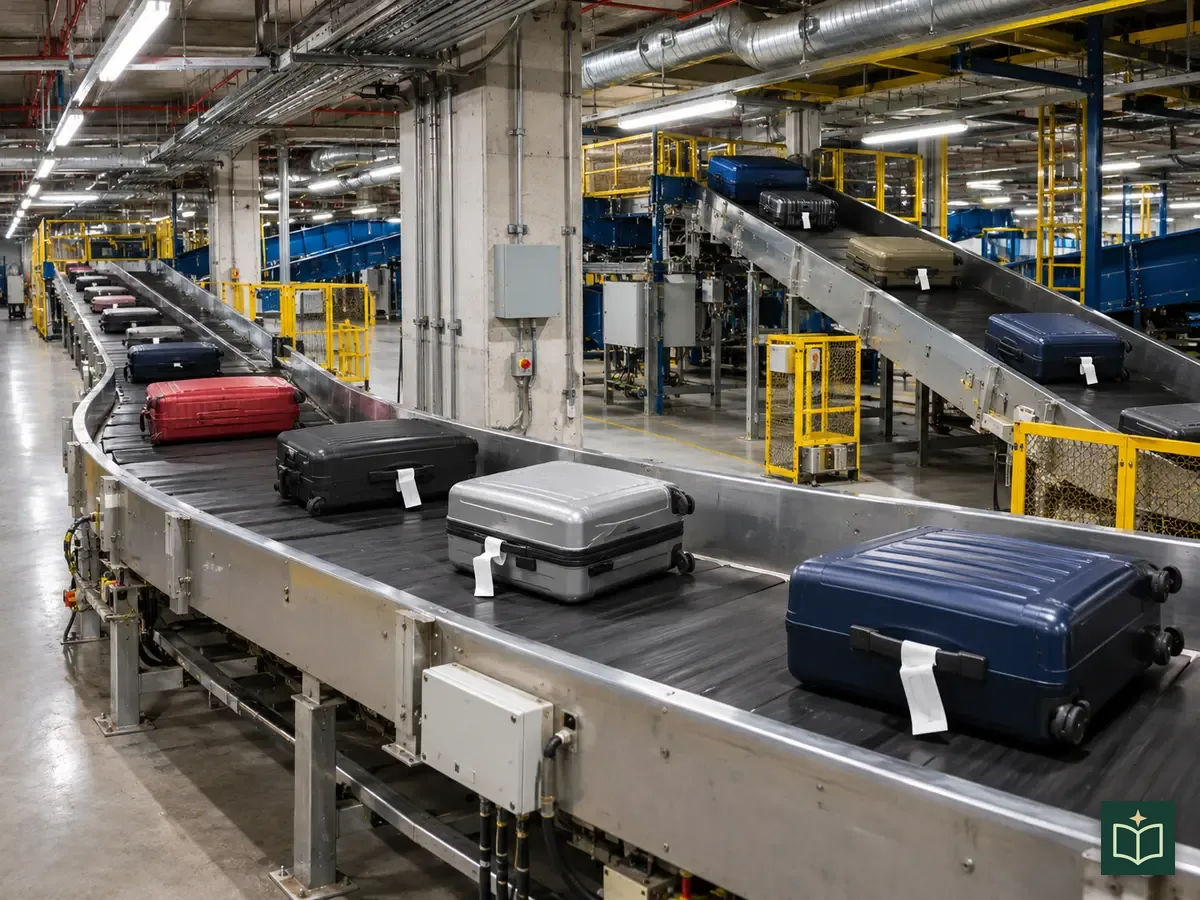
Large hub airports run baggage networks that stretch for tens of kilometres beneath their terminals. Conveyors, tilting trays and individual carriers move bags at speed, with junctions that divert each one according to its tag. Bags checked in early may be stored in automated racks until their flight opens. Transfer bags arriving from another aircraft are fed straight into the system for their next departure, which is why tight connections are especially risky for luggage. Major Gulf hubs such as Dubai and Doha handle very large volumes of transfer bags, since a large share of their passengers are connecting between continents rather than starting or ending their journeys locally.
Loading and reconciliation
At the end of the line, bags drop into make-up areas where handlers load them into containers or carts for a specific flight. Readers confirm each bag before loading, and the system reconciles the list against passengers who have actually boarded. If a passenger fails to board, their bag usually has to come off, a security rule that can delay departures. Since 2018 an IATA resolution has required airlines to track bags at key points such as acceptance, loading, transfer and arrival, and to share that data along the journey. Many airlines now show this tracking in their apps, so passengers can see where their bag was last scanned.
When bags go astray
Industry data from SITA, an aviation technology company, shows that only a small fraction of bags are mishandled, typically a few per thousand passengers, and most of those are delayed rather than lost. Transfer bags account for a large share of problems, especially on short connections. Other causes include tags that tear or cannot be read, loading errors and flights that are too full or weight-restricted to carry every bag. When a bag is delayed, airlines match it to its owner using the tag number and a worldwide tracing system. Keeping your tag receipt, removing old tags and placing your name inside the bag all help.
Why it matters
Baggage handling is one of the hardest operational problems in aviation, combining security, timing and tight physical space. A system failure can strand thousands of bags in hours, as several high-profile terminal openings around the world have shown. Investment in automation, tracking and better data sharing aims to reduce mishandling and labour costs. For passengers, a few simple habits help: allow sensible connection times, check in on time and photograph your bag. For airports, a well-run baggage hall is invisible. That invisibility is the goal, because the only bags passengers notice are the ones that fail to appear on the carousel.
Sources & further reading
Figures are rounded and widely published; check the linked organisations for the latest editions. These organisations do not endorse this website.