What controllers actually do
Air traffic control exists to prevent collisions and keep traffic flowing in an orderly way. Its central concept is separation: a minimum distance that must be maintained between aircraft, both horizontally and vertically. In radar-covered airspace, horizontal separation is commonly five nautical miles en route and three near airports, while vertical separation at cruising levels is normally 1,000 feet. Controllers issue clearances by radio, telling pilots which altitude to fly, which heading to steer and when to climb or descend. Pilots read the instructions back to confirm them. English is the standard language of international aviation, and the phraseology is precise, so that a busy frequency can carry many conversations.
A relay across airspace
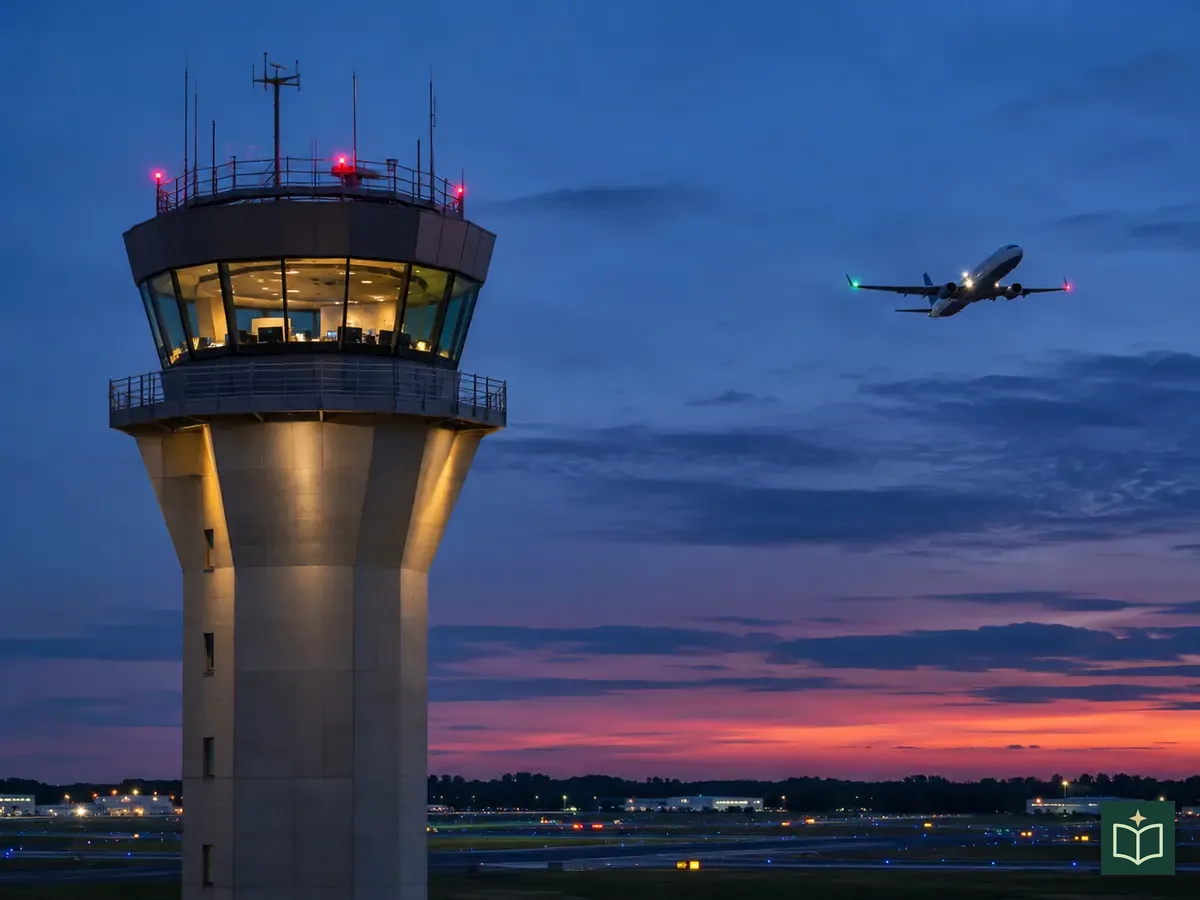
A single flight passes through several units. Ground and tower controllers, sitting high above the airfield, handle taxiing aircraft, take-offs and landings. Once airborne, the flight is handed to approach or terminal control, which sequences departing and arriving traffic in the busy airspace around airports. At higher levels, area control centres manage large blocks of airspace divided into sectors, each watched by a team. As an aircraft leaves one sector, it is formally transferred to the next, and the pilot switches radio frequency. On a long-haul flight from the Gulf to Europe, crews may talk to dozens of controllers in several countries before landing.
The tools behind the voice
Controllers rely on radar and transponders. Primary radar detects reflected signals, while secondary surveillance radar interrogates each aircraft’s transponder, which replies with an identity code and altitude. A newer technology, ADS-B, has aircraft broadcast their satellite-derived position several times a second, allowing coverage over areas where radar is impractical. Computers predict conflicts and warn controllers if aircraft are likely to come too close. Flight plans filed before departure tell every unit what to expect. Aircraft also carry their own collision avoidance system, which can instruct pilots to climb or descend if another aircraft comes dangerously near, acting as a final safety net.
Rules that span the world
Air traffic control works internationally because countries follow common standards set by the International Civil Aviation Organization, a United Nations agency created under the Chicago Convention of 1944. ICAO publishes rules on separation, phraseology, charts and controller licensing, which states adopt into their national regulations. Each country controls its own airspace, but oceanic regions are divided into flight information regions managed by designated states. Over oceans without radar, aircraft historically used fixed tracks and regular position reports; satellite tracking has allowed much closer spacing. In the UAE, the General Civil Aviation Authority oversees air navigation services in one of the busiest airspaces in the Middle East.
Misconceptions and limits
Controllers do not fly aircraft, and pilots remain responsible for their aircraft’s safe operation. Nor do controllers simply watch dots on a screen: much of the work is planning minutes ahead, building sequences and solving conflicts before they occur. Delays attributed to air traffic control are often caused by capacity limits, weather or staff shortages, when a sector can accept only a certain number of flights per hour. Flow management units then hold aircraft on the ground at their departure airport, which is safer and cheaper than circling. Mid-air collisions in controlled airspace are extremely rare, a sign of how well layered defences work.
What to watch
Air traffic is growing faster than the number of trained controllers in many regions, and training takes several years. Modernisation programmes aim to let aircraft fly more direct routes, saving fuel and emissions. Remote towers, where controllers watch an airfield through high-definition cameras from a distant centre, are already in use at some smaller airports. Drones and new electric air taxis will add traffic at low altitudes, demanding new systems to manage them. Automation will take on more routine tasks, but regulators and controllers alike expect human judgement to remain at the centre of the system for the foreseeable future.
Sources & further reading
Figures are rounded and widely published; check the linked organisations for the latest editions. These organisations do not endorse this website.