Heat flows downhill—unless pushed
Heat naturally flows from warm places to cool ones. To move heat from a cool room to the hotter outdoors, a machine has to do work. That is what an air conditioner’s compressor does. The same principle runs refrigerators and heat pumps, which can also run in reverse to heat a home in winter.
The refrigerant loop
Inside a sealed loop, a refrigerant changes between liquid and gas. Indoors, it passes through an expansion valve, drops in pressure and evaporates in the cold coil, absorbing heat from the air blown across it. The compressor then squeezes the vapour, making it hotter than the outdoor air, so it can release heat through the outdoor coil and condense back into liquid.
Why it also dries the air
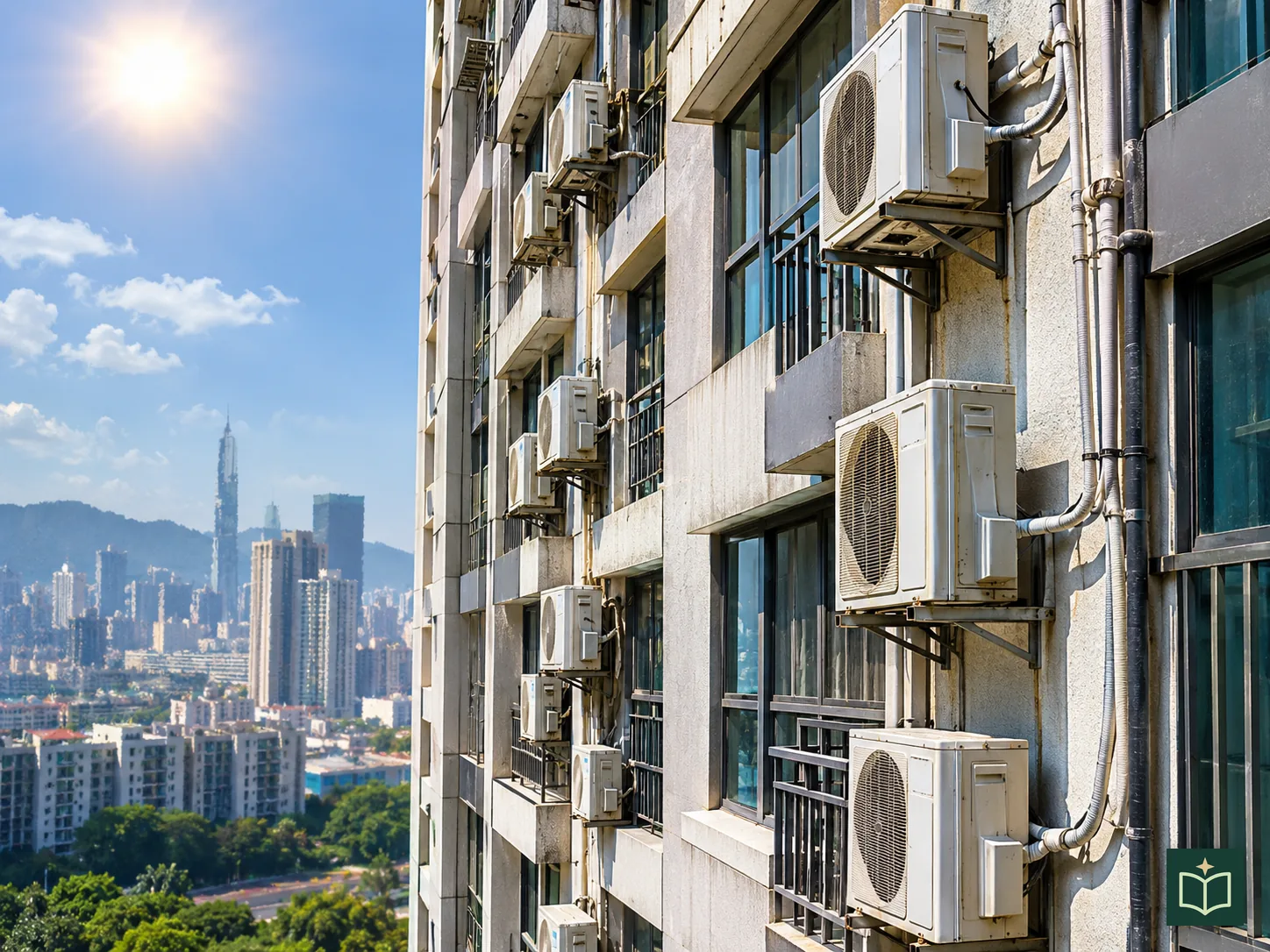
As warm, humid room air passes over the cold indoor coil, water vapour condenses on it, like droplets on a cold glass. That water drains away, which is why air conditioners dehumidify. In humid climates, removing moisture is a big part of feeling comfortable, and it is why you see condensate pipes dripping outside buildings.
Efficiency matters
Because an air conditioner moves heat rather than generating it, a good unit can shift three or four units of heat for each unit of electricity. Ratings such as SEER or COP measure this. Setting the thermostat a degree or two higher, shading windows and keeping filters clean can cut energy use noticeably—important in hot regions where cooling drives a large share of electricity demand.
Sources & further reading
Figures are rounded and widely published; check the linked organisations for the latest editions. These organisations do not endorse this website.