Primary treatment
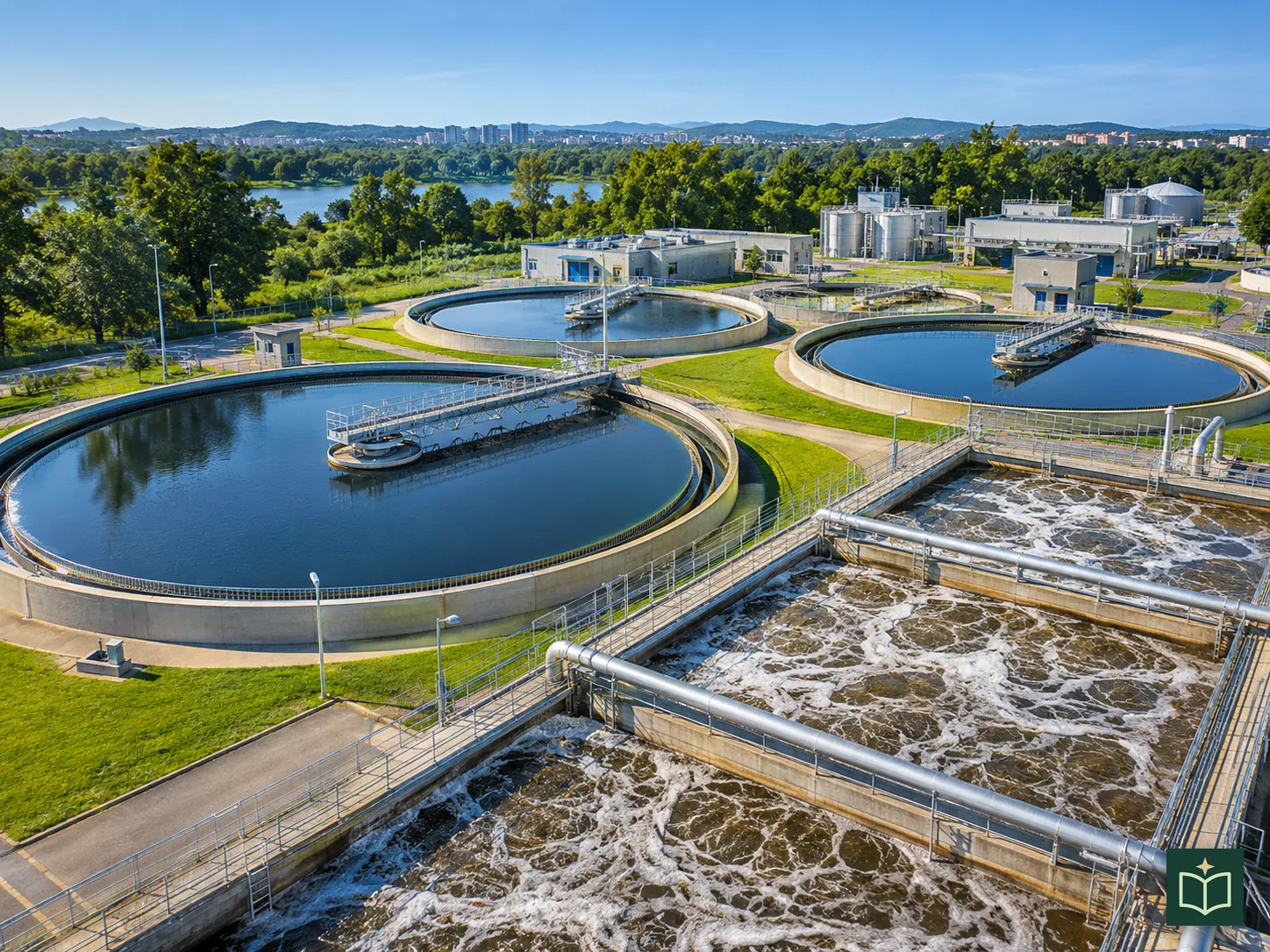
Sewage arrives through pipes, sometimes after long journeys pumped across a city. Screens remove rags, plastics and other large items, which should never be flushed. Grit chambers let sand settle out. In large primary settling tanks, heavier organic solids sink as sludge, while oils and grease float and are skimmed off. This removes a substantial share of suspended solids.
Biological treatment
The water still contains dissolved organic matter and nutrients. In aeration tanks, air is pumped in to support huge populations of bacteria and other microorganisms that consume this pollution. The microbes clump into flocs that settle in secondary clarifiers. Some of this ‘activated sludge’ is returned to the tanks to keep the process going.
Polishing and reuse
Further treatment may remove nitrogen and phosphorus, which otherwise feed algal blooms in rivers and seas. Filtration and disinfection—by ultraviolet light, chlorine or ozone—reduce pathogens. In water-scarce places such as the UAE, treated wastewater is widely reused for irrigation and landscaping, and some cities purify it further for industry.
Sludge is a resource
The separated sludge is often treated in sealed digesters where bacteria break it down without oxygen, producing biogas that can generate electricity and heat for the plant. The remaining material can be dried and, where regulations allow, used as fertiliser. Modern plants increasingly aim to be energy-neutral and to recover nutrients.
Sources & further reading
Figures are rounded and widely published; check the linked organisations for the latest editions. These organisations do not endorse this website.