An accidental discovery
In the 1940s, engineer Percy Spencer was working on radar equipment at Raytheon when he noticed a chocolate bar in his pocket had melted. He experimented with popcorn and eggs, and the company patented the microwave oven. Early models were the size of refrigerators; countertop versions spread into homes from the late 1960s.
Why water heats up
Water molecules are polar: one end carries a slight positive charge and the other a slight negative charge. The microwave field flips direction billions of times a second, and the molecules try to align with it, rotating back and forth. That motion is passed on to neighbouring molecules as heat. Fats and sugars also absorb some energy.
The myth of inside-out
Microwaves do not cook food from the inside out. They penetrate a few centimetres, heating the outer layers directly; the centre of a thick item warms by conduction. Because waves form standing patterns with hot and cold spots, turntables rotate the food. Stirring and letting food stand helps heat spread evenly and is important for food safety.
Is it safe?
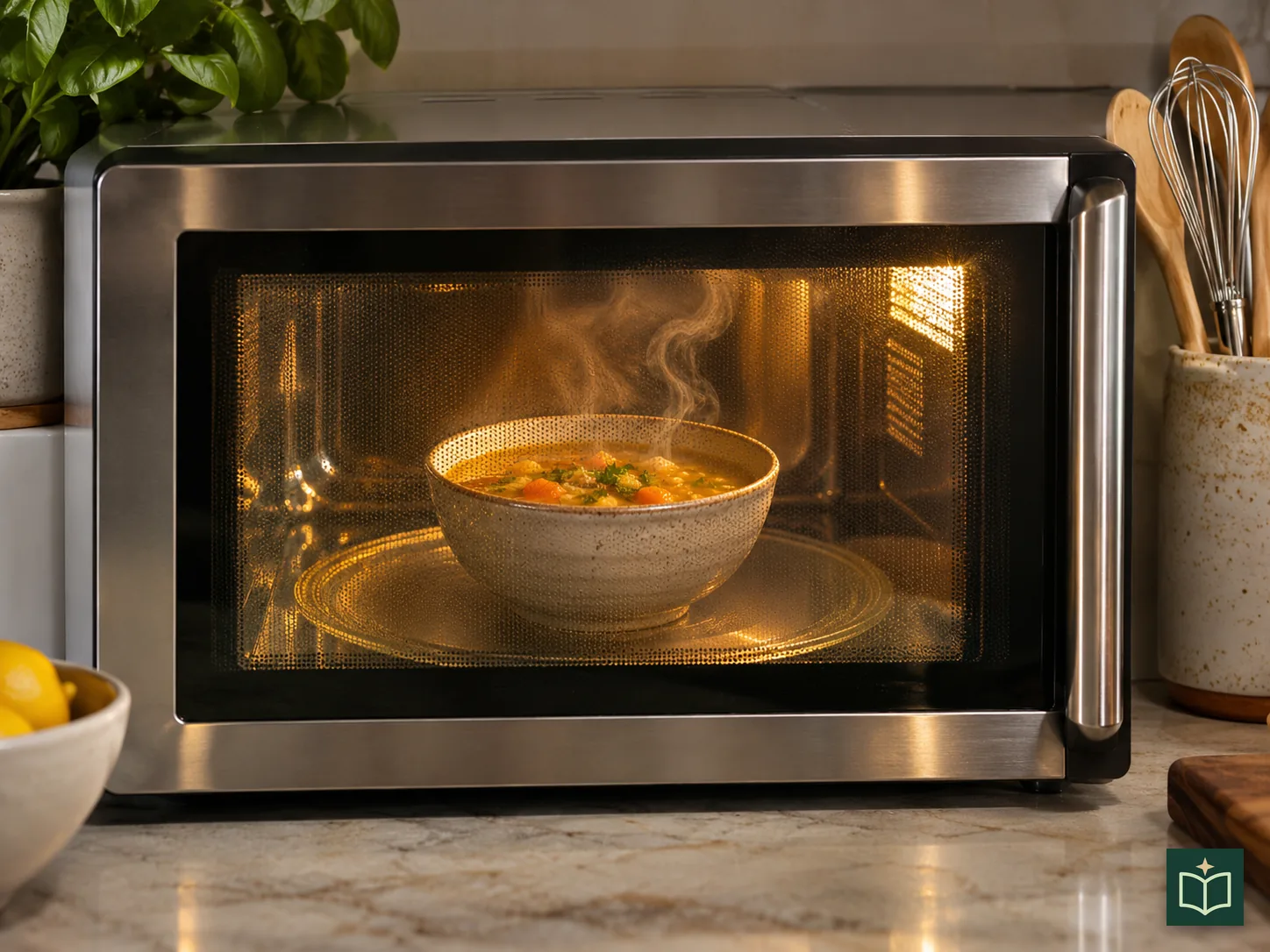
Microwaves are non-ionising radiation: they do not have enough energy to break chemical bonds or make food radioactive. The metal mesh in the door has holes smaller than the wavelength, about 12 centimetres, so microwaves stay inside while visible light passes through. Standards limit any leakage to very low levels, and ovens switch off when the door opens.
Sources & further reading
Figures are rounded and widely published; check the linked organisations for the latest editions. These organisations do not endorse this website.