Storage without moving parts
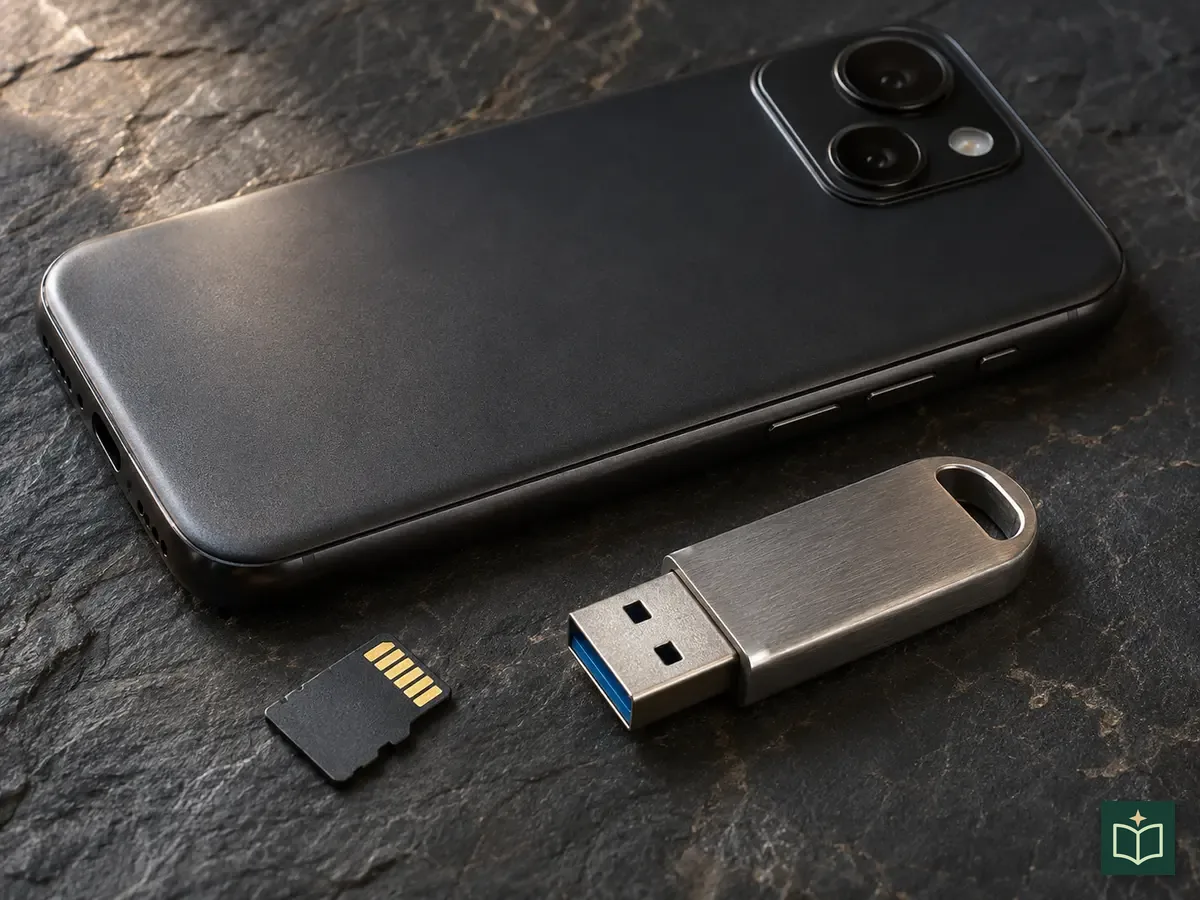
For decades, permanent computer storage meant spinning magnetic disks. Flash memory changed that. Today it is in almost every phone, tablet, camera card, USB stick and modern laptop, and it underpins many cloud servers too. It has no moving parts, so it is silent, light and tolerant of being dropped, and it can be read far more quickly than a mechanical drive. The name reportedly came from the way a whole block of cells could be erased at once, 'in a flash'. Understanding how it works explains both its advantages and its quirks, such as why drives sometimes slow down when nearly full.
The floating cage
A flash cell is a transistor with an extra layer. Between the control gate and the channel that carries current sits a storage layer surrounded by thin insulation. In older designs this was a 'floating gate' of conductive material; many modern chips use a 'charge trap' made from an insulating film. To write, the chip applies a relatively high voltage, and electrons tunnel through the insulator into the storage layer, where they become stuck. Their charge shifts the voltage needed to switch the transistor on. Reading means testing that threshold gently, without disturbing the electrons, and translating the result into ones and zeros.
More bits per cell
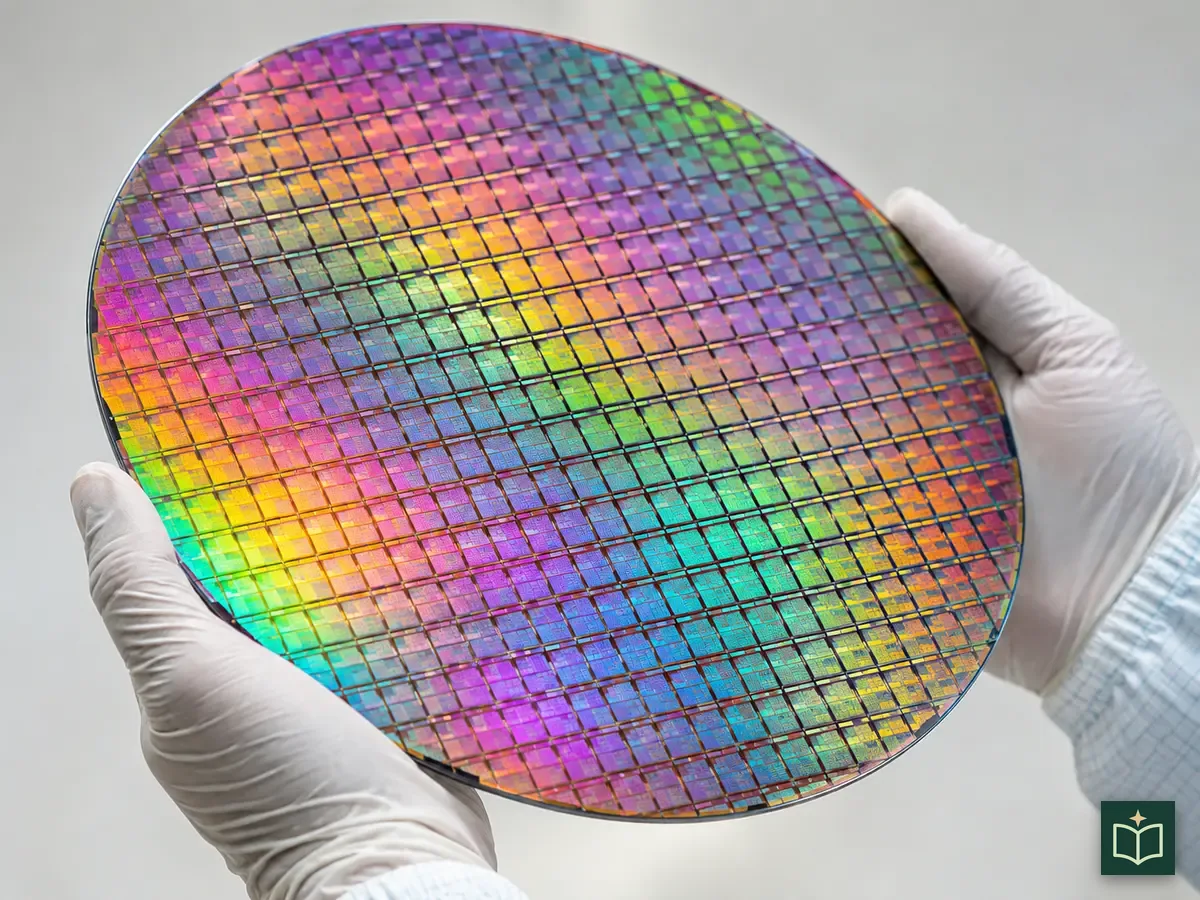
The simplest cells store one bit: charged or not. To cut costs, manufacturers learned to store several levels of charge in each cell. Two bits require four distinguishable levels, three bits need eight and four bits need sixteen. These are known as multi-level, triple-level and quad-level cells. Packing more levels raises capacity per chip but narrows the margin between them, so reading is slower and cells tolerate fewer rewrites. Chipmakers also now stack cells vertically in many layers, building tall three-dimensional structures inside the silicon. These two tricks explain why a phone today can hold a terabyte in a sliver of chip.
Why flash wears out
Every time a cell is erased and rewritten, electrons are forced through the insulating layer, and that slowly damages it. After enough cycles, the cell can no longer hold charge reliably. Endurance varies widely by cell type, from many thousands of cycles for simpler cells to far fewer for dense ones. Drives cope with this through a controller chip that spreads writes evenly across all cells, a process called wear levelling, and keeps spare cells in reserve. Error-correcting codes repair small mistakes. For typical home use, a modern drive is likely to be replaced for other reasons long before it wears out.
The erase problem
Flash can write small units called pages, but it can only erase much larger blocks. To change one page, the controller usually writes the new version elsewhere and marks the old one as stale. Later, in a process called garbage collection, it copies the still-valid pages out of a block and erases the whole block for reuse. When a drive is nearly full there is less free space for this shuffling, so writing can slow noticeably. Operating systems help by telling the drive which data has been deleted, using a command commonly called TRIM, so stale pages can be cleared in advance.
Limits and good habits
Flash is robust, but not a perfect archive. A cell's trapped charge leaks very slowly, so a drive left unpowered for many years, especially in heat, may lose data; this matters in a hot climate such as the Gulf, where cars and storerooms can become extremely warm. Deleted files on flash are often hard to recover, yet sensitive data should still be wiped using the device's built-in secure erase or encryption. The safest approach combines flash for everyday speed with backups in at least one other place. As cells get denser, controllers grow more sophisticated, quietly managing an ever more delicate physical process.
Sources & further reading
Figures are rounded and widely published; check the linked organisations for the latest editions. These organisations do not endorse this website.