Before the box
Until the 1950s, ships were loaded piece by piece—sacks, barrels and crates handled by large teams of dockworkers. A ship could spend more time in port than at sea. In 1956, trucking entrepreneur Malcom McLean sent a converted tanker carrying 58 truck-sized boxes from New Jersey to Texas. Standardised containers soon spread worldwide, transforming the cost of trade.
Why one size matters
International standards fixed container dimensions and the corner fittings that cranes, ships, trucks and trains all use. Capacity is measured in twenty-foot equivalent units (TEU); the largest container ships can now carry more than 24,000 TEU. Because every box fits every system, goods can be sealed at a factory and opened only at the destination warehouse.
Inside the terminal
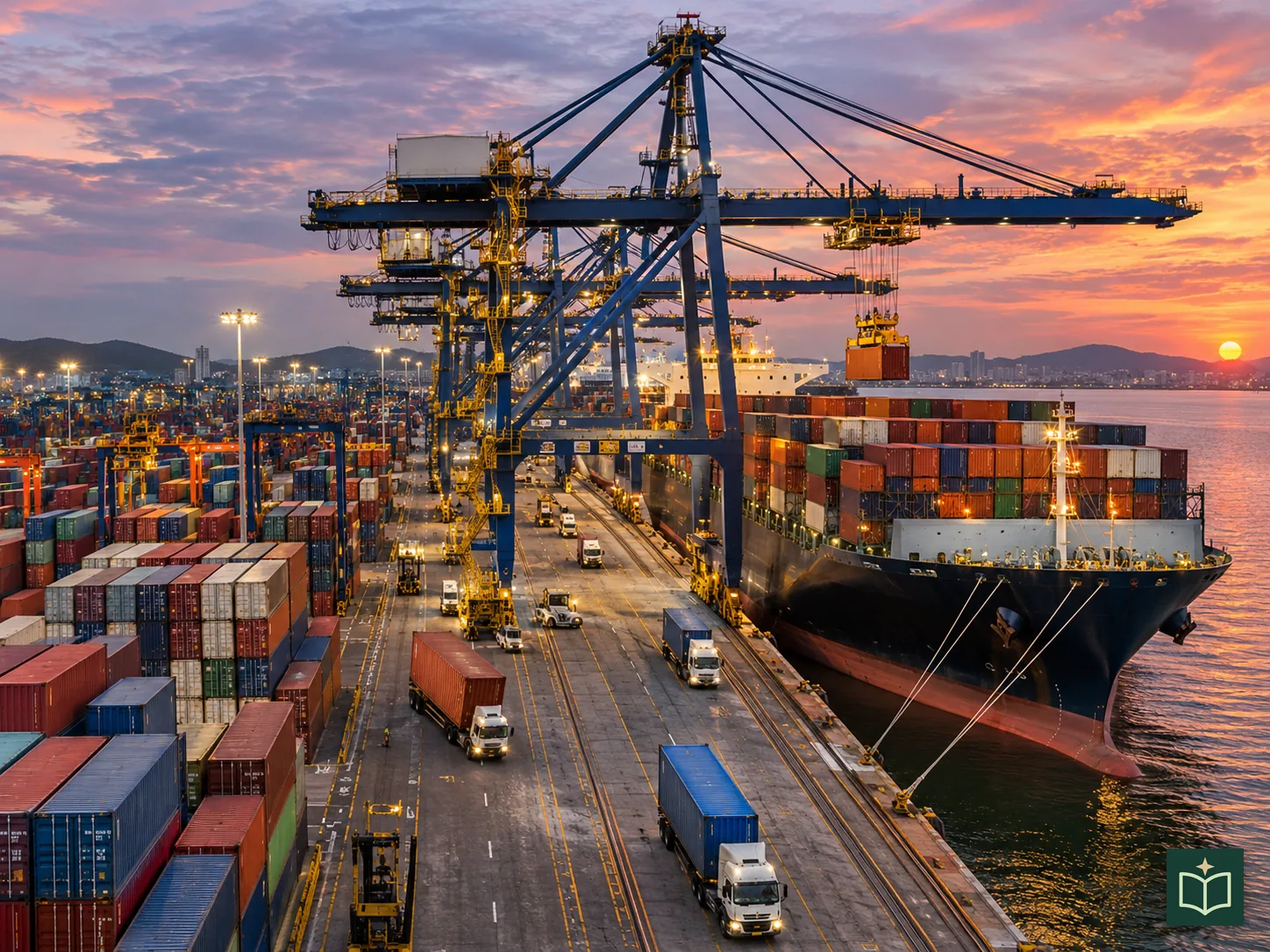
At a modern terminal, a crane operator can move a container every one to two minutes. Software plans the order of loading so heavy boxes sit low and boxes for the next port sit on top. In the yard, containers are stacked by destination and weight. Some terminals, such as parts of Jebel Ali, Rotterdam and Shanghai, use automated vehicles and remotely operated cranes.
Why disruptions spread
Because the system is tightly scheduled, delays ripple. A closed canal, a congested port or a shortage of empty boxes can strand containers far from where they are needed. During the pandemic, freight rates rose sharply as ships queued outside ports. The same efficiency that makes shipping cheap also makes it sensitive to bottlenecks.
Sources & further reading
Figures are rounded and widely published; check the linked organisations for the latest editions. These organisations do not endorse this website.