Heated from below
In volcanic regions, magma lies relatively close to the surface. Groundwater percolating down through cracks is heated by hot rock and rises back up, emerging as hot springs, steaming vents called fumaroles, or bubbling mud pots.
How a geyser erupts
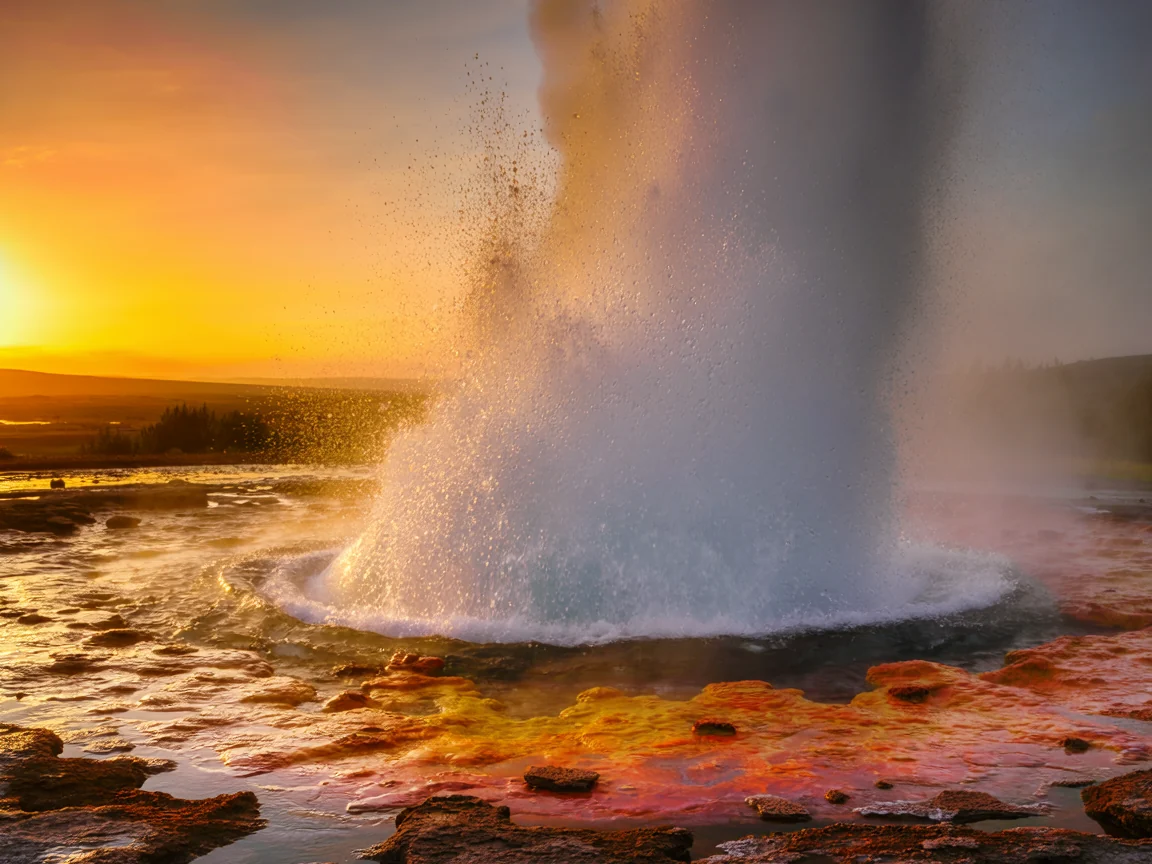
In a geyser, water collects in narrow underground chambers. The weight of water above raises the pressure, so deep water can heat well above its normal boiling point. When some water flashes to steam, it pushes water out, lowering pressure and triggering a violent eruption.
Colourful pools
Minerals dissolved from the rock, such as silica, form crusts called sinter around vents. Heat-loving microbes create bands of colour, from blue in the hottest centres to orange and brown at cooler edges, as at Yellowstone's Grand Prismatic Spring.
Using the heat
Iceland and New Zealand use geothermal heat for electricity and for heating homes and greenhouses. The word geyser itself comes from Geysir, a famous spring in Iceland.
Sources & further reading
Geyser counts are approximate. Photograph: original AI-generated illustration (Adobe Firefly). Reference organisations do not endorse this website.