A long belt
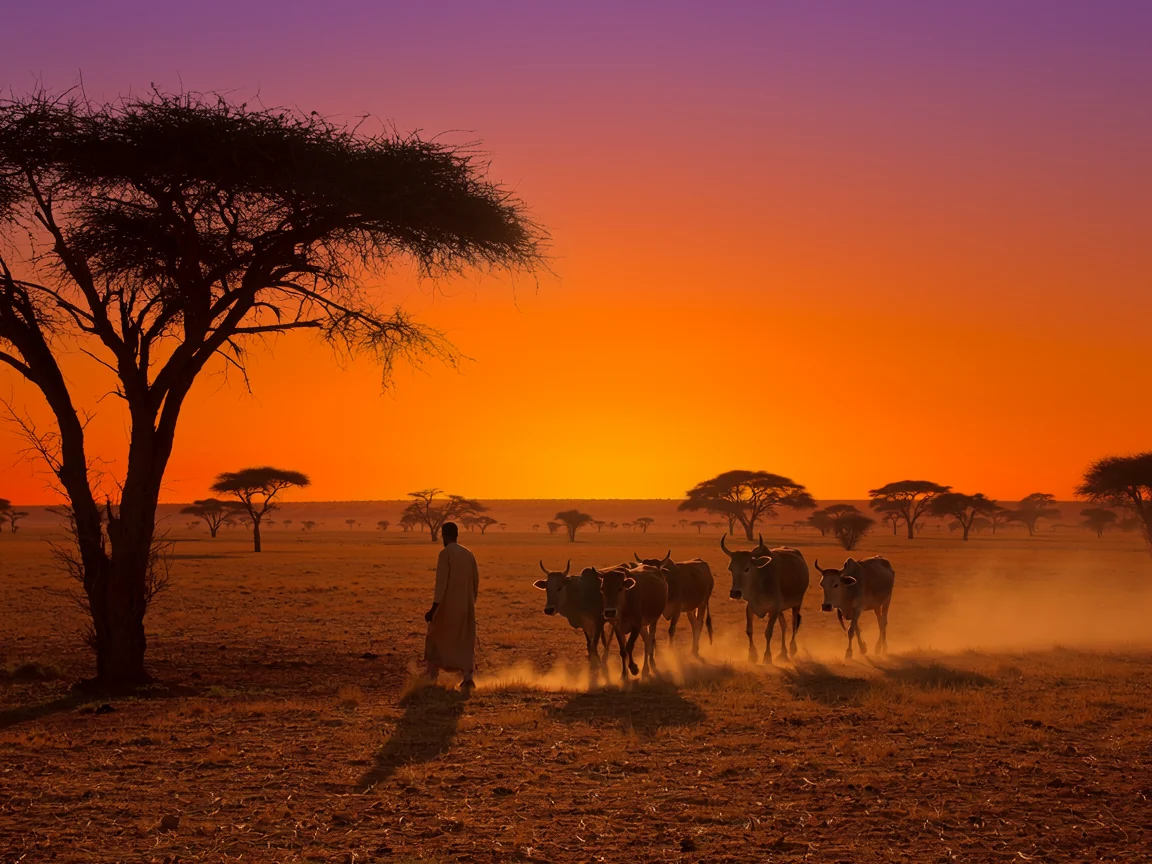
The Sahel stretches more than 5,000 kilometres across Africa, including parts of Senegal, Mauritania, Mali, Burkina Faso, Niger, Nigeria, Chad, Sudan and Eritrea. Grasses, shrubs and acacia trees dominate the landscape.
Livelihoods
Many people raise livestock, moving herds seasonally to find water and pasture, while others farm millet, sorghum and other drought-tolerant crops. Markets and trade routes have long linked the Sahel with the Sahara and the coast.
Drought and recovery
Severe droughts in the 1970s and 1980s caused famines and widespread hardship. Rainfall has partly recovered since, and satellite images show some regreening, but year-to-year variability remains high.
Pressures
Rapid population growth, land degradation, climate change and conflict put pressure on the region. Initiatives such as the Great Green Wall aim to restore degraded land across the Sahel.
Sources & further reading
Rainfall figures are approximate. Photograph: original AI-generated illustration (Adobe Firefly). Reference organisations do not endorse this website.