Course
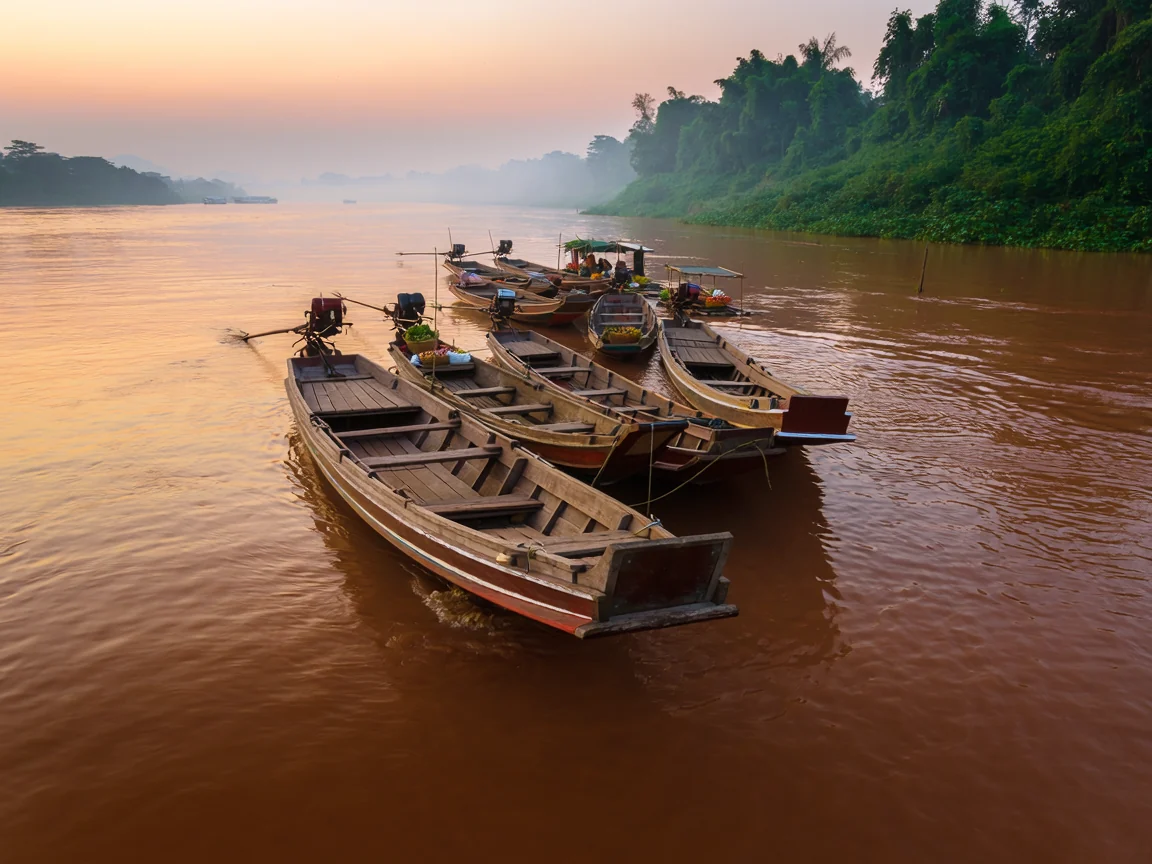
From its source in China, where it is called the Lancang, the Mekong cuts through deep gorges, then forms much of the border between Laos and Thailand before crossing Cambodia and reaching Vietnam's delta.
The flood pulse
Monsoon rains cause the river to rise dramatically each year. In Cambodia, the flood is so large that the Tonlé Sap river reverses direction, filling the Tonlé Sap lake, which becomes a vast nursery for fish.
Food and livelihoods
The Mekong's fisheries are among the largest inland fisheries in the world, and its delta produces large amounts of rice. Tens of millions of people depend on the river for food and income.
Dams and change
Hydropower dams built in China and Laos generate electricity but alter flows and trap sediment and fish migration. Combined with sand mining and sea level rise, this threatens the delta, which is sinking and becoming saltier.
Sources & further reading
Length estimates vary by source. Photograph: original AI-generated illustration (Adobe Firefly). Reference organisations do not endorse this website.