Two bulges
The Moon pulls more strongly on the side of Earth nearest to it than on Earth's centre, and more strongly on the centre than on the far side. This difference stretches the oceans into two bulges: one facing the Moon and one opposite.
Why twice a day
As Earth rotates once a day, most coastlines pass through both bulges, experiencing two high tides and two low tides. Because the Moon moves along its orbit, the cycle takes about 24 hours and 50 minutes.
Springs and neaps
When the Sun, Moon and Earth line up at new and full moons, their pulls combine to produce spring tides with the greatest range. At quarter moons, they partly cancel, producing smaller neap tides.
Local shapes matter
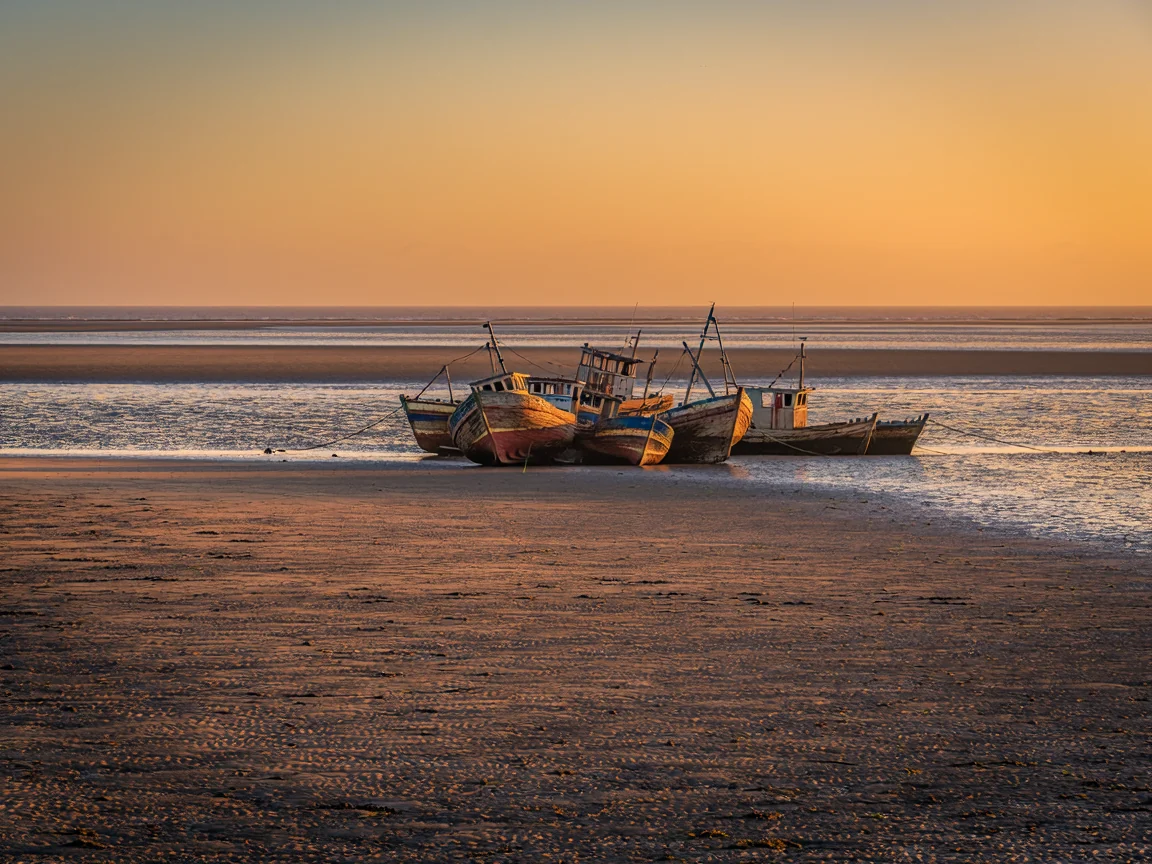
Coastline shape, sea depth and basin size strongly affect tides. Some places have only one tide a day, while funnel-shaped bays such as Canada's Bay of Fundy have some of the world's largest tidal ranges.
Sources & further reading
Tidal ranges are approximate averages. Photograph: original AI-generated illustration (Adobe Firefly). Reference organisations do not endorse this website.