A definition based on water
Ask most people to picture a desert and they imagine sand dunes under a blazing sun. Geographers use a different test: how much water the land receives. A common rule of thumb is that a desert gets less than about 250 millimetres of rain or snow a year, and that more water could evaporate than actually falls. Temperature is not part of the definition. That is why scientists divide deserts into hot and cold types, plus coastal and rain-shadow deserts, all sharing one feature, chronic dryness. Plants and animals in every one of them face the same basic problem: surviving long periods with almost no water.
Hot deserts: the Arabian example
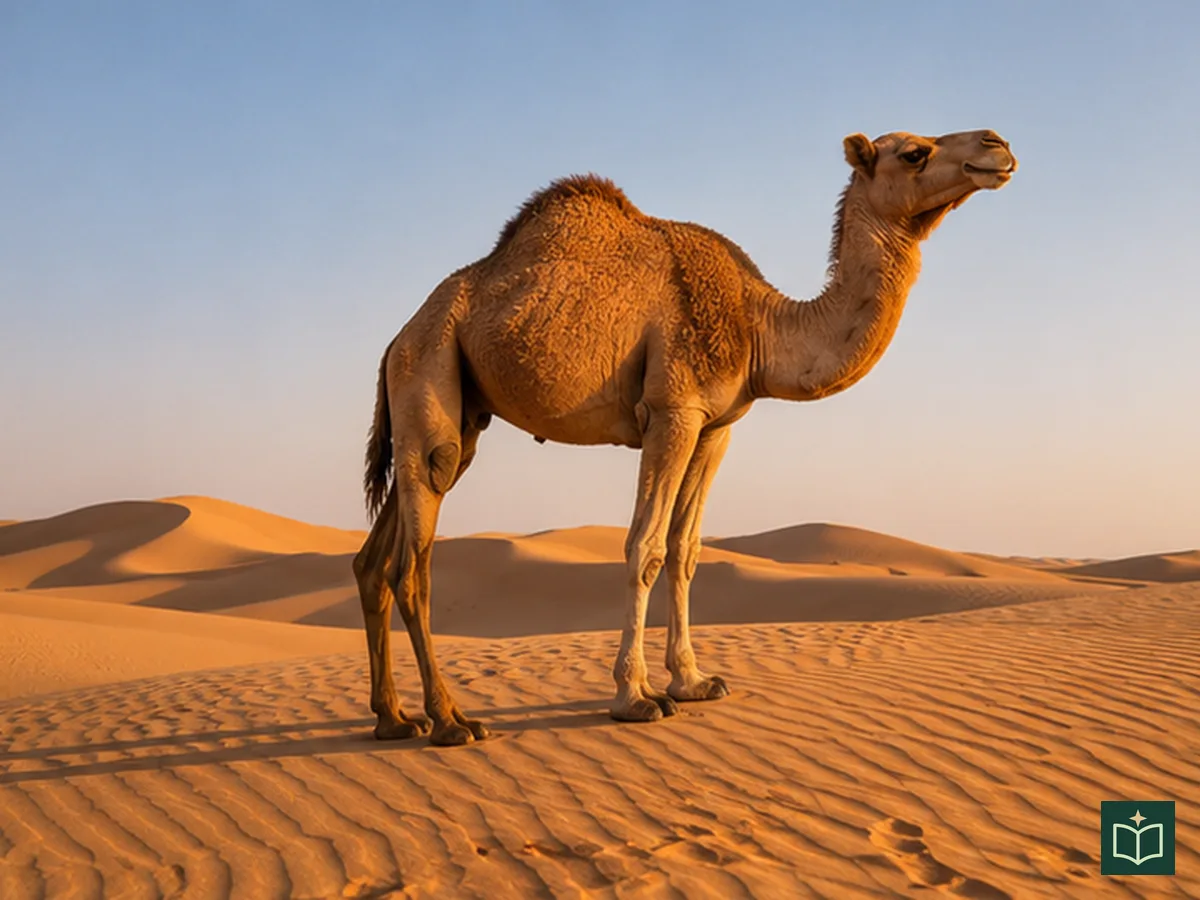
Hot deserts lie mostly in the subtropics, where sinking air suppresses cloud and rain. The Arabian Desert, covering most of the Arabian Peninsula, is a classic case. It includes the Rub' al Khali, the Empty Quarter, one of the largest continuous sand seas in the world. Summer air temperatures across the region often pass 45°C, and the ground can be much hotter. Rain is rare and irregular: much of the UAE typically receives under 100 millimetres a year, sometimes falling in a few heavy storms. Winters are mild rather than cold. Night-time temperatures can still drop sharply, because dry air and clear skies let heat escape quickly after sunset.
Cold deserts: the Gobi
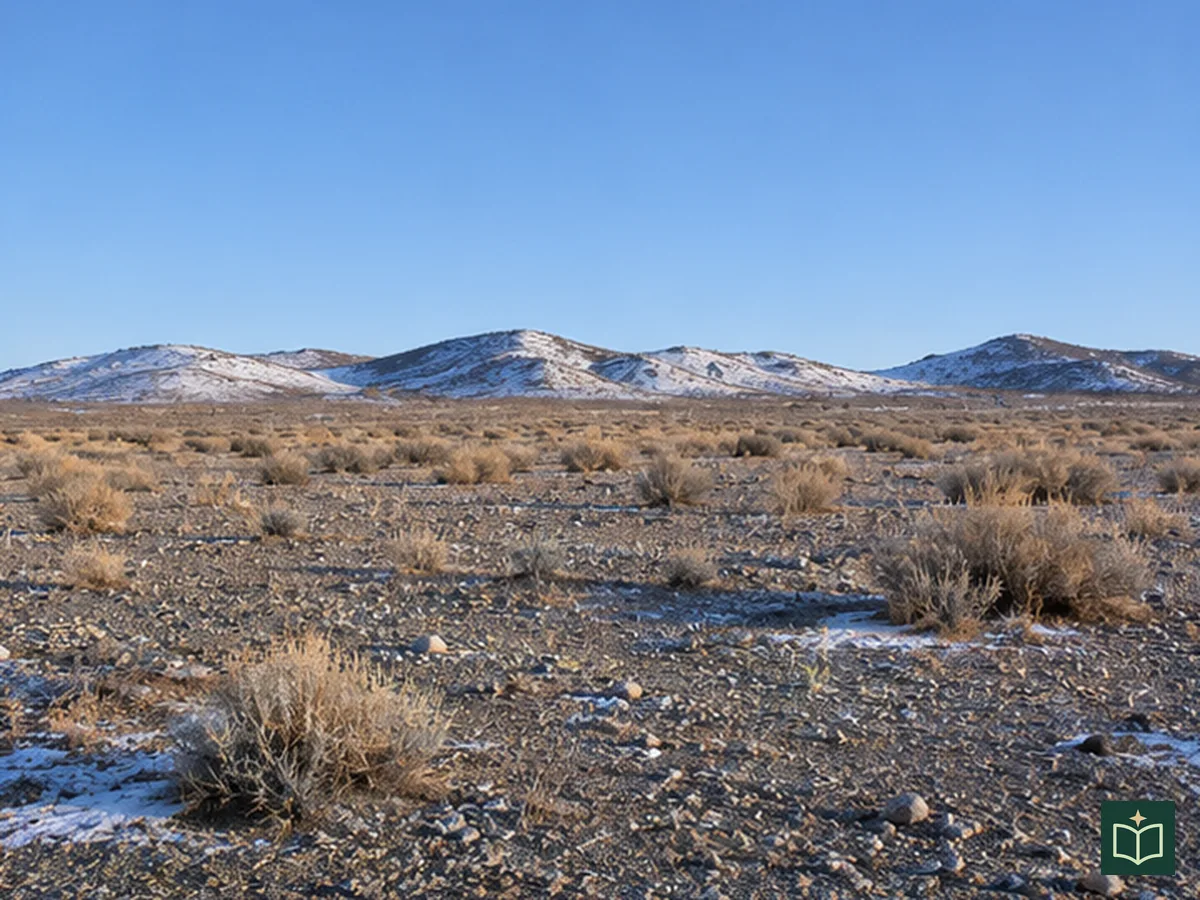
The Gobi, stretching across southern Mongolia and northern China, is dry for a different reason. It sits far from the ocean and in the rain shadow of high mountains and the Tibetan Plateau, which strip moisture from incoming air. It is also at high latitude and altitude, so its winters are bitter. Temperatures can fall below minus 30°C, while summers can still be hot. Much of the Gobi is bare rock and gravel rather than sand. Light snow falls in winter but is often blown away or turns straight to vapour in the dry air. The two-humped Bactrian camel, with its thick winter coat, is adapted to these extremes.
Antarctica: the biggest desert
By the precipitation test, Antarctica is the largest desert on Earth, about 14 million square kilometres. That surprises people, because it holds roughly 70% of the world's fresh water as ice. The ice is the accumulation of very small snowfalls over hundreds of thousands of years, preserved because it is too cold to melt. The high interior receives only a few centimetres of water-equivalent precipitation each year, comparable to the driest hot deserts. In the McMurdo Dry Valleys, strong, dry winds keep the ground largely free of ice and snow. The Arctic is also classed as a polar desert, which is why the largest deserts rankings are topped by the two polar regions.
Common misconceptions
The first myth is that deserts are always hot. The second is that they are mostly sand. Only about a fifth of the world's desert area is covered by sand dunes; the rest is rock, gravel, salt flats and, at the poles, ice. A third misconception is that deserts are lifeless. Hot and cold deserts support specialised plants, insects, reptiles and mammals, from the Arabian oryx to Gobi gazelles and Antarctic mosses and lichens. Finally, not every dry place with sparse rain is a full desert. Regions with somewhat more rainfall, such as steppes and dry grasslands, are classed as semi-arid, a transition between deserts and wetter lands.
Why the distinction matters
Separating hot from cold deserts helps explain how life, water and people cope in each. In hot deserts the main stresses are heat and evaporation, so traditional Gulf architecture used thick walls, shaded alleys and wind towers. In cold deserts, people and animals must survive freezing winters as well as drought, so herding cultures in Mongolia rely on felt-lined tents and seasonal moves. Scientists also watch how both types may change with a warming climate, since shifts in rainfall patterns could expand dry zones. For travellers, the lesson is practical: pack for dryness first, then check whether you also need sun protection, warm layers, or both.
Sources & further reading
Figures are rounded and widely published; check the linked organisations for the latest editions. These organisations do not endorse this website.