Two camels, one family
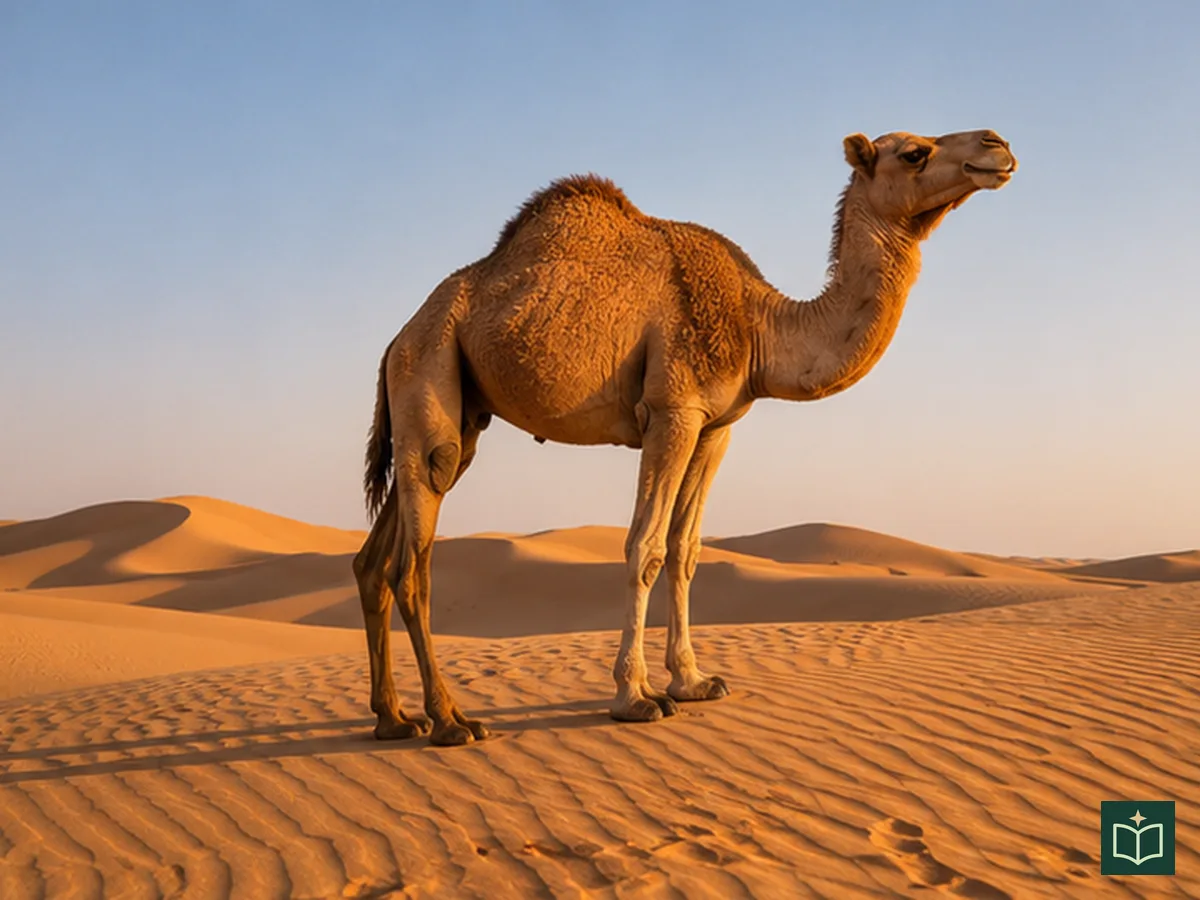
The word camel covers three species. The dromedary, Camelus dromedarius, has a single hump and is the camel of Arabia, North Africa and the Horn of Africa. The domestic Bactrian camel, Camelus bactrianus, has two humps and is found mainly in Mongolia, northern China and Central Asia. A third species, the wild Bactrian camel, survives in small numbers in the Gobi Desert and is critically endangered. Dromedaries are by far the most numerous, accounting for roughly nine in ten of the world's camels. The two domestic species are close enough that they can interbreed, and hybrids have long been bred along trade routes for strength.
Built for heat or for cold
Their bodies reflect very different deserts. Dromedaries are tall and long-legged, with a short coat that thickens only modestly in winter, a build that is ideal for shedding body heat in places where summer temperatures pass 45°C. Bactrian camels are shorter-legged and stockier, with dense, shaggy wool that lets them survive winters in the Gobi when temperatures fall below minus 30°C. Each spring they moult in great clumps, which herders collect as camel hair. Both species have bushy eyebrows, double rows of eyelashes and nostrils that can close against blowing sand, and broad padded feet that spread their weight on sand, gravel or snow.
What a hump really holds
The most persistent myth is that a hump is full of water. It is mostly fat, a concentrated store of energy that a camel can draw on when food is scarce. Packing fat in one place, rather than spreading it under the skin as many mammals do, also helps the rest of the body lose heat more easily. A well-fed camel's hump is firm and upright. After a long journey or a hard winter it shrinks and may flop to one side as the fat is used up. When fat is broken down some water is released, but camels survive drought mainly through efficient kidneys and their ability to tolerate dehydration.
Domestication and the caravans
Both camels were domesticated several thousand years ago, the dromedary probably in the Arabian Peninsula and the Bactrian in Central Asia. They transformed trade and travel. Dromedary caravans carried frankincense, dates and textiles across Arabia, and later linked the Sahara's trading towns. Bactrian camels carried silk, tea and other goods along the cold, high stretches of the Silk Road, where few other pack animals could cope with both the climate and the distances. Their names hint at that history. Bactria was an ancient region of Central Asia, roughly in today's northern Afghanistan, and dromedary comes from a Greek word meaning running, a nod to its speed.
Camels in the Gulf today
In the UAE and wider Gulf, the dromedary is woven into heritage and modern life. Camel racing is a major sport, using lightweight, fast breeds, and beauty contests at festivals judge features such as the shape of the head and hump. Camel milk is now sold in supermarkets alongside cow's milk. Bactrian camels, by contrast, are rarely seen in the region outside zoos. In Mongolia and Kazakhstan they remain working animals, providing transport, wool, milk and meat for herding families. The wild Bactrian camel, with perhaps around a thousand individuals left, is protected in reserves in Mongolia and China and is a separate species from domestic Bactrians.
A simple way to remember
A popular memory trick helps tell them apart. Turn a capital D on its side and it has one bump, for dromedary; turn a capital B on its side and it has two, for Bactrian. Beyond the humps, the differences are about climate. The dromedary is a specialist of heat, built to save water and shed warmth across sandy and rocky lowlands. The Bactrian is a survivor of extremes, built to endure both scorching summers and bitter winters. Each shows how one basic body plan, a large, long-legged grazer that can go without water for long periods, has been tuned for two very different kinds of desert.
Sources & further reading
Figures are rounded and widely published; check the linked organisations for the latest editions. These organisations do not endorse this website.