Unusual dark mountains
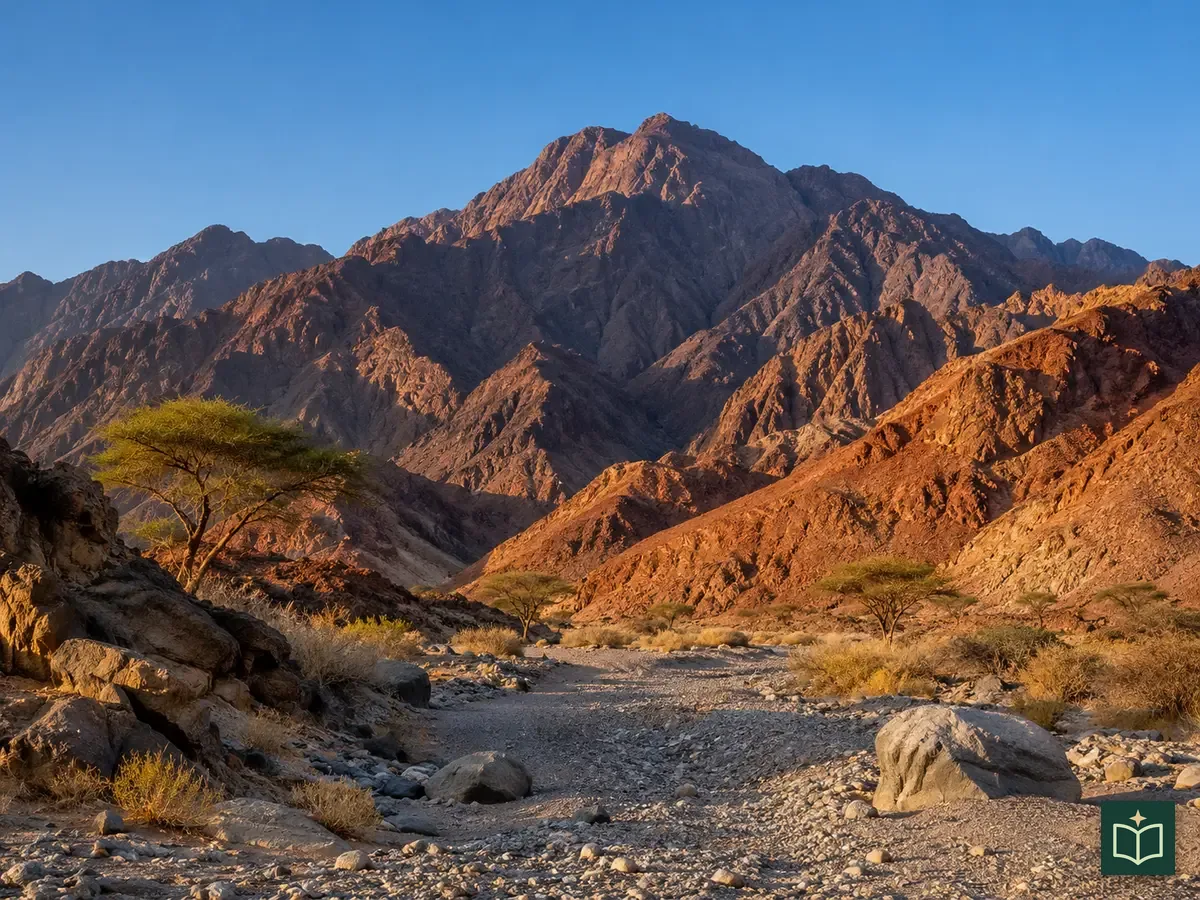
Driving from Dubai towards Hatta, Fujairah or Khor Fakkan, travellers notice the mountains changing from pale limestone to dark brown and rusty rock. Much of that darker rock is not continental at all. It belongs to the Semail ophiolite, a vast slab of oceanic crust and upper mantle that formed beneath an ancient ocean and now makes up a large part of the Hajar Mountains of Oman and the UAE. Ophiolites exist elsewhere, including Cyprus’s Troodos Mountains and parts of the Alps, but geologists widely regard the Oman–UAE example as the largest and best exposed on Earth, which draws researchers from around the world.
How ocean floor climbs onto land
Normally, when oceanic and continental plates converge, the denser ocean floor sinks beneath the continent and back into the mantle. Occasionally the process runs differently. Around 95 million years ago, in the Late Cretaceous, new ocean crust was forming in a branch of the Tethys Ocean, which then lay between Arabia and Eurasia. Shortly afterwards, as plates converged, a slab of that young, hot oceanic lithosphere was detached and thrust south-westward over the edge of the Arabian continent. Over millions of years it was pushed far onto land. Later uplift, linked to the continuing collision with Eurasia, raised and folded the range further.
A complete cross-section
What makes the ophiolite special is its completeness. It displays almost the entire structure of oceanic lithosphere, from mantle rocks called peridotite at the base, through layered gabbros and sheeted dykes, to pillow lavas that erupted onto the ancient seabed, capped in places by deep-sea sediments. In several wadis, geologists can stand on the Moho, the boundary between Earth’s crust and mantle, which elsewhere lies kilometres beneath the ocean floor. Copper ores formed by hot springs on that ancient seabed were mined from the third millennium BCE, when the region, widely identified with the land of Magan in Mesopotamian texts, exported copper.
Mountains of Oman and the UAE
The Hajar range stretches for around 700 kilometres from the Musandam Peninsula to the eastern tip of Oman, reaching about 3,000 metres at Jebel Shams, Oman’s highest peak. In the UAE, the mountains include Jebel Jais in Ras Al Khaimah, popular for its cooler air, and the rugged terrain around Hatta and Fujairah. Iron-rich minerals weather to the rusty colours typical of ophiolite, and the rocks are often poor in nutrients for plants, giving slopes a sparse look. Wadis cutting through the range expose the layers, attracting geology students, hikers and researchers from universities around the world. Spring and autumn are the most comfortable seasons to explore them.
A natural carbon sink
Mantle peridotite is unstable at Earth’s surface. When it meets water and carbon dioxide, its minerals react to form carbonate minerals, effectively turning carbon dioxide into stone. In Oman, white carbonate veins and alkaline springs show this reaction happening naturally. Scientists from the Oman Drilling Project and other teams have studied how fast it occurs and whether it could be accelerated to store captured carbon dioxide permanently. Pilot projects in Oman and the UAE have tested injecting carbon dioxide dissolved in water into these rocks. The potential is large in principle, but costs, water use and the scale required remain open questions.
Why it matters
The Semail ophiolite is one of the main natural laboratories for understanding how oceans form, how plates collide and how rock exchanges heat and chemicals with seawater. Its hot-spring deposits help explain how undersea ore bodies form, and its peridotites inform research on carbon storage and on the chemistry of hydrothermal vents, where some scientists think life may have begun. For the Gulf, it is also part of a distinctive heritage, from ancient copper working to modern mountain tourism. Protecting key exposures while allowing access for science and visitors is a growing priority as roads, quarries and resorts expand into the range.
Sources & further reading
Figures are rounded and widely published; check the linked organisations for the latest editions. These organisations do not endorse this website.