Most rain starts as ice
In many parts of the world, including much of the Gulf, rain begins high in clouds as ice. At altitudes where temperatures are well below freezing, tiny ice crystals grow by drawing water vapour from surrounding supercooled droplets, which stay liquid below 0°C. As crystals become heavy, they fall. What reaches the ground depends on the temperatures they meet along the way. If they melt fully in warm air and stay liquid, the result is rain. If they stay frozen, they arrive as snow. If the journey includes layers of warm and cold air, the result may be sleet or freezing rain. Hail follows an entirely different path, inside the strongest storms.
Snow: a cold path all the way
Snow needs the air to stay at or below roughly freezing from cloud to ground, or close to it. As ice crystals fall they collide and stick together, forming the flakes we recognise. Their six-sided shapes, from plates to feathery dendrites, depend on the temperature and humidity in which they grew. Snow can fall when the ground is slightly above freezing, if the air is dry enough for evaporation to cool the flakes. Wet, heavy snow forms near 0°C, while dry, powdery snow forms in colder air. In the UAE, snow is very rare, but a light dusting has occasionally been recorded on the peak of Jebel Jais in winter.
Sleet: depends where you live
Sleet has two meanings. In the United States, it means ice pellets: snowflakes that melt in a warm layer of air aloft and then refreeze into small, clear beads as they fall through a cold layer near the ground. They bounce on impact. If the cold layer near the ground is too shallow to refreeze them, the drops arrive as liquid and freeze on contact, forming freezing rain that glazes roads and power lines. In Britain and Ireland, sleet means a mix of rain and snow, or partly melted snowflakes, falling together. Both uses describe precipitation that has started to melt on its way down, but forecasters on either side mean different things.
Hail: built inside thunderstorms
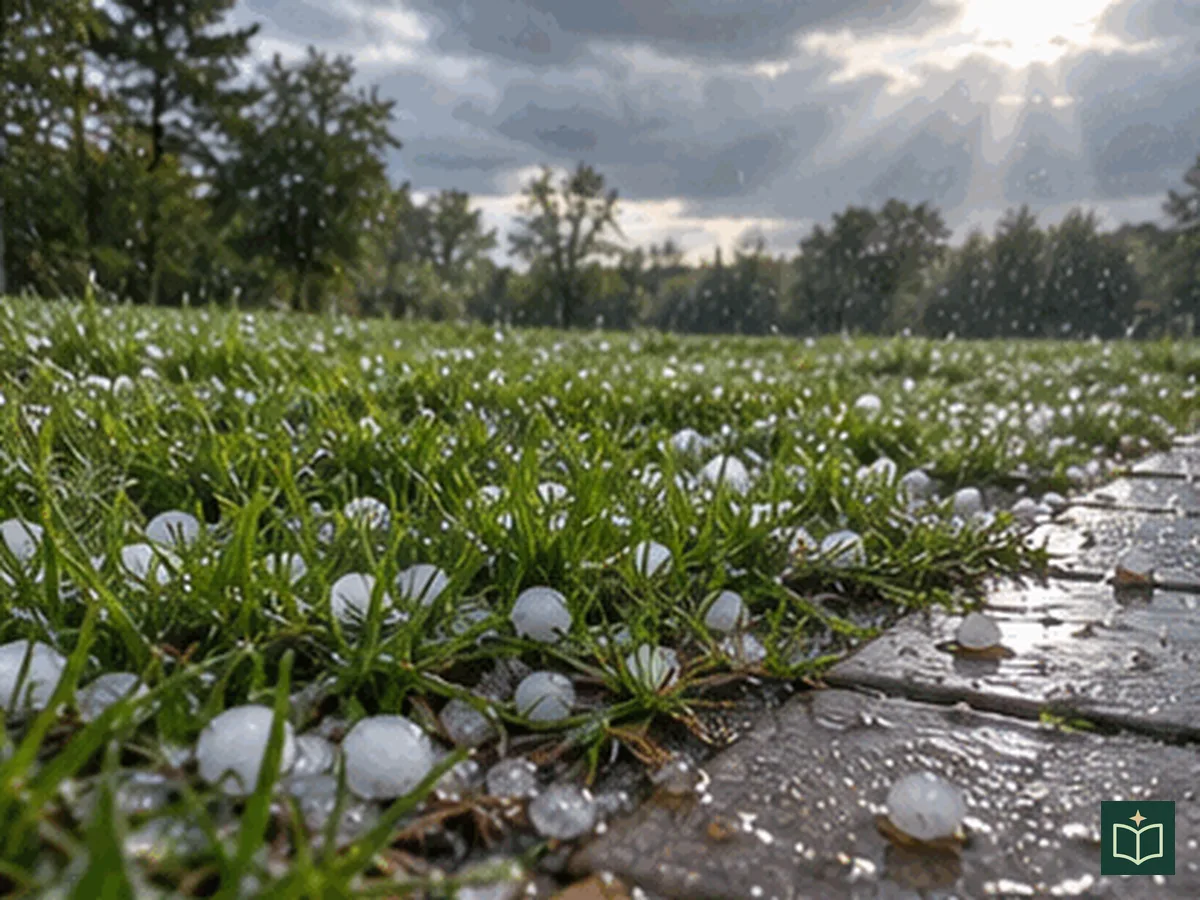
Hail forms only in cumulonimbus clouds with strong updrafts, the rising currents of air that power thunderstorms. A small ice pellet or frozen drop is carried upward into regions full of supercooled droplets, which freeze onto it. The stone may be swept up and down, gaining layers, until it becomes too heavy for the updraft to support and falls. Cutting a large hailstone in half often reveals rings of clear and cloudy ice, recording its journey. Hailstones range from pea-sized to larger than a cricket ball. Unlike snow and sleet, hail is mainly a warm-season event, because summer heat fuels the most powerful updrafts.
Why hail falls in hot places
It seems odd that ice can fall in a desert, but the ground temperature is not what matters. Air cools with height, so even on a summer day when the surface is above 40°C, the air several kilometres up is below freezing, and the tops of thunderclouds can be colder than minus 40°C. In the UAE, storms that form over the Hajar Mountains, especially near Al Ain and Ras Al Khaimah, sometimes produce hail, and brief hailstorms have hit other areas too. Hailstones also fall fast, so many reach the ground before they fully melt. Large hail is more common inland and at higher elevations, where it has less warm air to fall through.
Why the differences matter
Each type poses different hazards. Snow can block roads and collapse roofs under its weight. Ice pellets and freezing rain make surfaces treacherous, and freezing rain can bring down power lines and trees. Hail damages crops, cars, greenhouses and solar panels, and large stones can injure people and animals; in some regions hail causes billions of dollars of insured losses in a single year. Forecasters therefore watch the temperature profile of the whole atmosphere, not just the ground. Weather balloons and radar reveal warm layers aloft and the strength of updrafts. Knowing the journey of each particle explains why two nearby towns can receive completely different weather from the same cloud.
Sources & further reading
Figures are rounded and widely published; check the linked organisations for the latest editions. These organisations do not endorse this website.