What fibre is
Dietary fibre is the part of plant foods that human digestive enzymes cannot break down. Instead of being absorbed in the small intestine, it passes into the large intestine largely intact. For decades fibre was seen mainly as roughage, useful only for regularity. It is now understood to influence cholesterol, blood sugar, appetite and the community of microbes living in the gut. Nutritionists divide fibre into two broad types according to how it behaves in water: soluble and insoluble. The split is a simplification, since some fibres share properties of both, but it explains why different foods have different effects. Nearly every plant food contains a mixture, in varying proportions.
Soluble fibre: the gel
Soluble fibre dissolves in water to form a thick, gel-like substance. Examples include beta-glucan in oats and barley, pectin in apples and citrus fruit, and the fibres in beans, lentils and psyllium husk. In the gut this gel slows the emptying of the stomach and the absorption of sugar, which helps reduce sharp rises in blood glucose after meals. It also binds bile acids, which the body makes from cholesterol, so more cholesterol is used to replace them. That is why oat beta-glucan, at about three grams a day, is approved in several countries for claims about lowering cholesterol. Soluble fibre can also help people feel full.
Insoluble fibre: the bulk
Insoluble fibre does not dissolve. It includes cellulose and lignin, the structural material of plant cell walls, found in wheat bran, whole grains, nuts, seeds and the skins of fruit and vegetables. Insoluble fibre holds water and adds bulk to stool, which makes it softer and helps it move through the intestines more quickly. This helps prevent constipation and is associated with a lower risk of some digestive disorders. Wholemeal bread, brown rice and vegetables such as okra and green beans are good sources. Because insoluble fibre absorbs water, drinking enough fluid matters. In a hot climate such as the Gulf's, where people lose water through sweat, that is especially relevant.
The work of gut bacteria
Once in the large intestine, many fibres, especially soluble ones and a type called resistant starch, are fermented by gut bacteria. This produces short-chain fatty acids such as butyrate, which nourish the cells lining the colon and may influence inflammation and metabolism throughout the body. Fibre that feeds beneficial microbes is sometimes described as prebiotic. Fermentation also produces gas, which is why a sudden increase in fibre can cause bloating. Increasing intake gradually, over a couple of weeks, allows the gut to adjust. Insoluble fibre is fermented less, which is one reason it contributes more to bulk. Both kinds together support a healthy, varied gut ecosystem.
Reaching the target
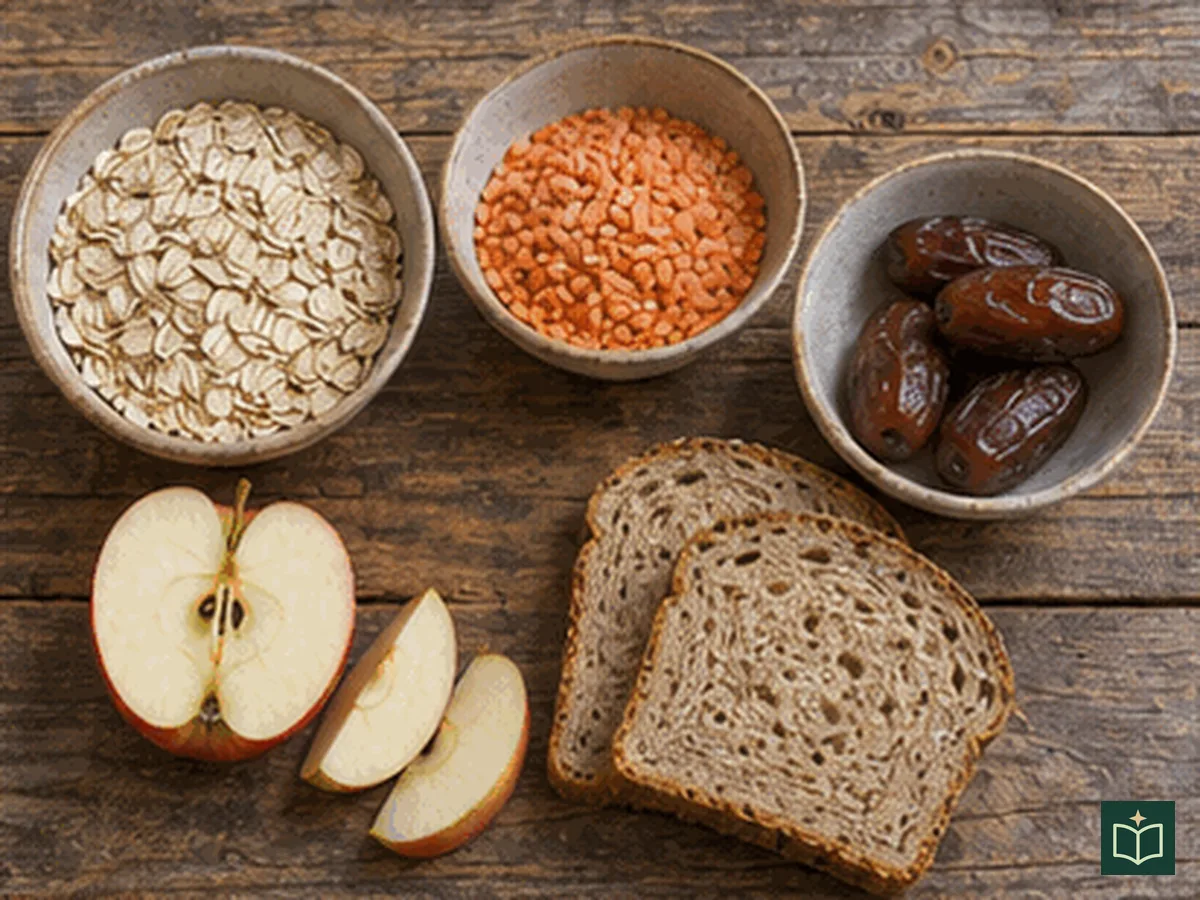
Guidance varies by country. The UK recommends 30 grams a day for adults, and the World Health Organization suggests at least 25 grams, yet average intakes in many countries are well below these levels. A day could reach roughly 30 grams with a bowl of porridge made from about 40 grams of oats, an apple with its skin, a serving of cooked lentils, two slices of wholemeal bread and a few dates. Dates, a Gulf staple, contain around seven grams of fibre per 100 grams. Swapping white bread and rice for wholegrain versions, leaving skins on vegetables and adding beans to dishes are simple ways to increase both types at once.
Supplements and caveats
Fibre supplements such as psyllium can help some people, particularly with constipation or as part of cholesterol management, but whole foods supply a wider mix of fibres along with vitamins, minerals and other plant compounds. Food labels usually list total fibre without separating the two types, so variety is the most practical strategy. Some people, including those with irritable bowel syndrome or certain bowel conditions, may need to adjust which fibres they eat, and very high intakes can interfere with mineral absorption. This article is general information. Anyone with digestive symptoms, diabetes or a medical condition affecting the gut should seek advice from a doctor or registered dietitian before making major changes.
Sources & further reading
- NHS · How to get more fibre into your diet ↗
- Harvard T.H. Chan School of Public Health · Fiber ↗
- Mayo Clinic · Dietary fiber ↗
Figures are rounded and widely published; check the linked organisations for the latest editions. These organisations do not endorse this website.