The textbook distinction
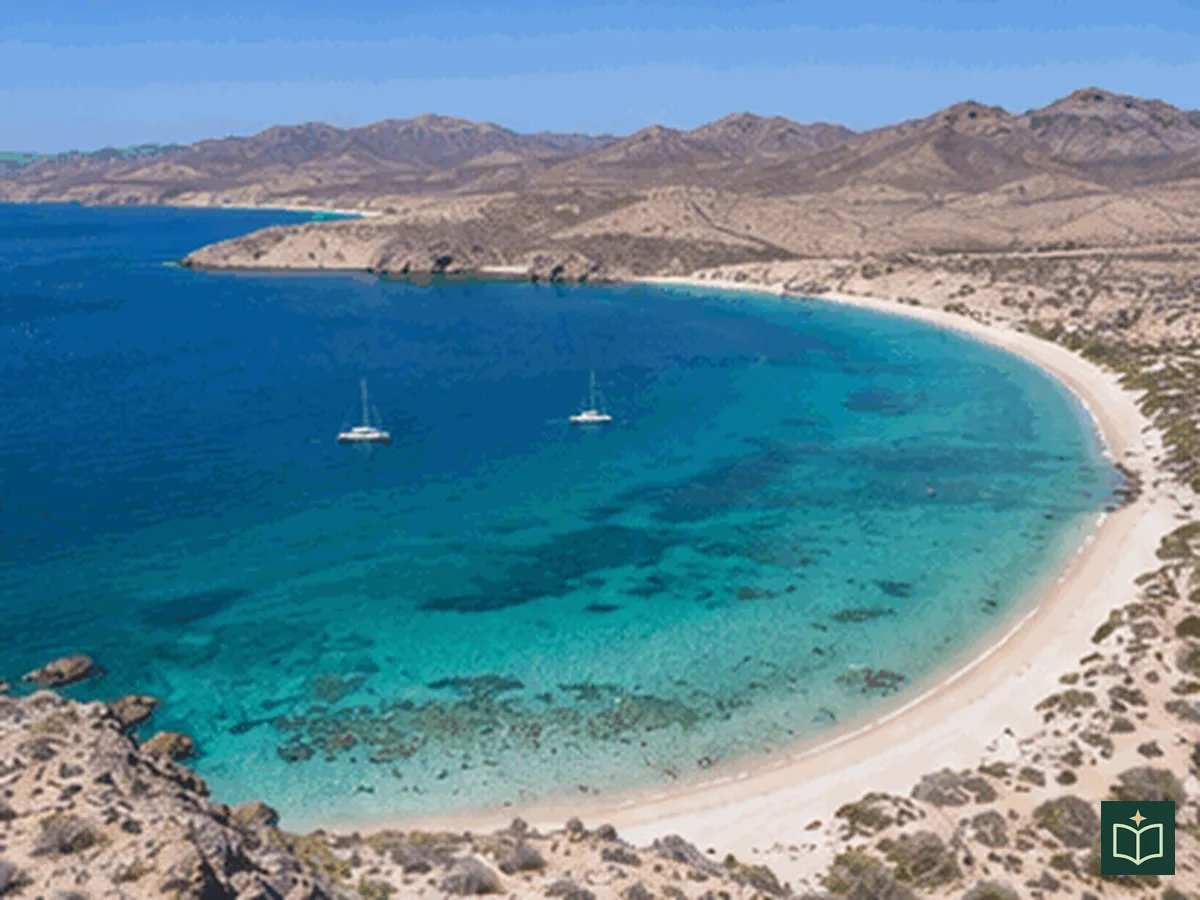
Both gulfs and bays are parts of a sea or ocean that reach into the land, enclosed on several sides by coast. The usual teaching is that a gulf is larger and pushes deeper inland, with a mouth that is narrow relative to its size, so it feels almost like an enclosed sea. A bay is generally smaller and more open, a broad curve in the coastline with a wide entrance. On that model, the Gulf of Mexico, nearly surrounded by land with entrances between Florida, Cuba and the Yucatán, is a classic gulf. A gentle crescent of coast with a beach along it is a classic bay. Coves are smaller still, often with a tight, rounded entrance.
Where the rule breaks
Real maps ignore the textbook constantly. The Bay of Bengal covers about 2.2 million square kilometres, making it larger than the Gulf of Mexico, at roughly 1.6 million. Hudson Bay in Canada is enormous and almost entirely enclosed, which by shape alone should make it a gulf. Meanwhile some features called gulfs are modest in size. The reason is that most of these names were given by sailors, mapmakers and traders centuries ago, in many languages, long before geographers tried to standardise terms. Once a name appears on charts and in treaties, it tends to stick. Bodies such as the International Hydrographic Organization describe the limits of seas, but they do not rename them to fit a definition.
Gulfs close to home
The Gulf region offers several examples. The body of water between the Arabian Peninsula and Iran is a textbook gulf: about 250,000 square kilometres, more than 900 kilometres long, and joined to the open ocean only through the narrow Strait of Hormuz, roughly 40 kilometres wide at its narrowest. That narrow entrance helps explain its high salinity, since water exchanges slowly with the Indian Ocean. Beyond Hormuz lies the Gulf of Oman, more open, which leads to the Arabian Sea. To the west, the Gulf of Aden links the Red Sea to the Indian Ocean. The Gulf's name itself differs between neighbouring countries, an example of how naming can carry political meaning.
Bays in law
International law does have a precise definition, though only for one purpose. The UN Convention on the Law of the Sea sets a test for when a coastal state may treat a bay as internal waters. The area of the indentation must be at least as large as a semicircle drawn on a line across its mouth, so a shallow curve in the coast does not qualify. If the mouth is no more than 24 nautical miles wide, about 44 kilometres, a closing line can be drawn across it and the waters inside belong to the state. Wider bays are treated differently. Some historic bays are claimed on other grounds, which sometimes leads to disputes.
Other words for inlets
English has a crowded vocabulary for water reaching into land. A sound can be a wide inlet or a channel between an island and the mainland. A fjord is a long, steep-sided inlet carved by glaciers, as in Norway, and the Musandam Peninsula has similar drowned valleys often called khors. An estuary is where a river meets the sea and fresh and salt water mix. A lagoon is shallow water separated from the sea by a sandbar or reef, common along the UAE coast. A bight is a broad, gently curving bay, such as the Great Australian Bight. Like gulf and bay, these words describe tendencies rather than strict categories.
Why the difference matters
For most purposes the exact label matters less than the physical features it hints at. A narrow-mouthed gulf exchanges water slowly with the ocean, which affects salinity, temperature, tides and how long pollution lingers. That makes semi-enclosed seas such as the Gulf especially sensitive to oil spills and coastal development. Wide bays are more open to ocean swells and storms. In law, whether an indentation counts as a juridical bay can shift maritime boundaries and fishing rights. For map readers, the best approach is to treat gulf and bay as rough hints about size and enclosure, and to remember that history, language and tradition often decided the name long before geographers arrived.
Sources & further reading
- National Geographic Education · Bay ↗
- National Geographic Education · Gulf ↗
- United Nations · Convention on the Law of the Sea ↗
Figures are rounded and widely published; check the linked organisations for the latest editions. These organisations do not endorse this website.