One direction, three routes
Heat is energy on the move from a warmer object to a cooler one, and it always flows in that direction unless something such as a refrigerator pump forces it the other way. What varies is the route. In conduction, energy passes between particles that are touching. In convection, a fluid, meaning a liquid or a gas, physically carries the energy as it moves. In radiation, energy travels as electromagnetic waves, mostly infrared at everyday temperatures, and needs no material at all. Cooking, weather, clothing and building design all depend on which route dominates. Understanding the three explains why a metal spoon burns your fingers while a wooden one does not, and why shade feels so much cooler.
Conduction: the hot pan
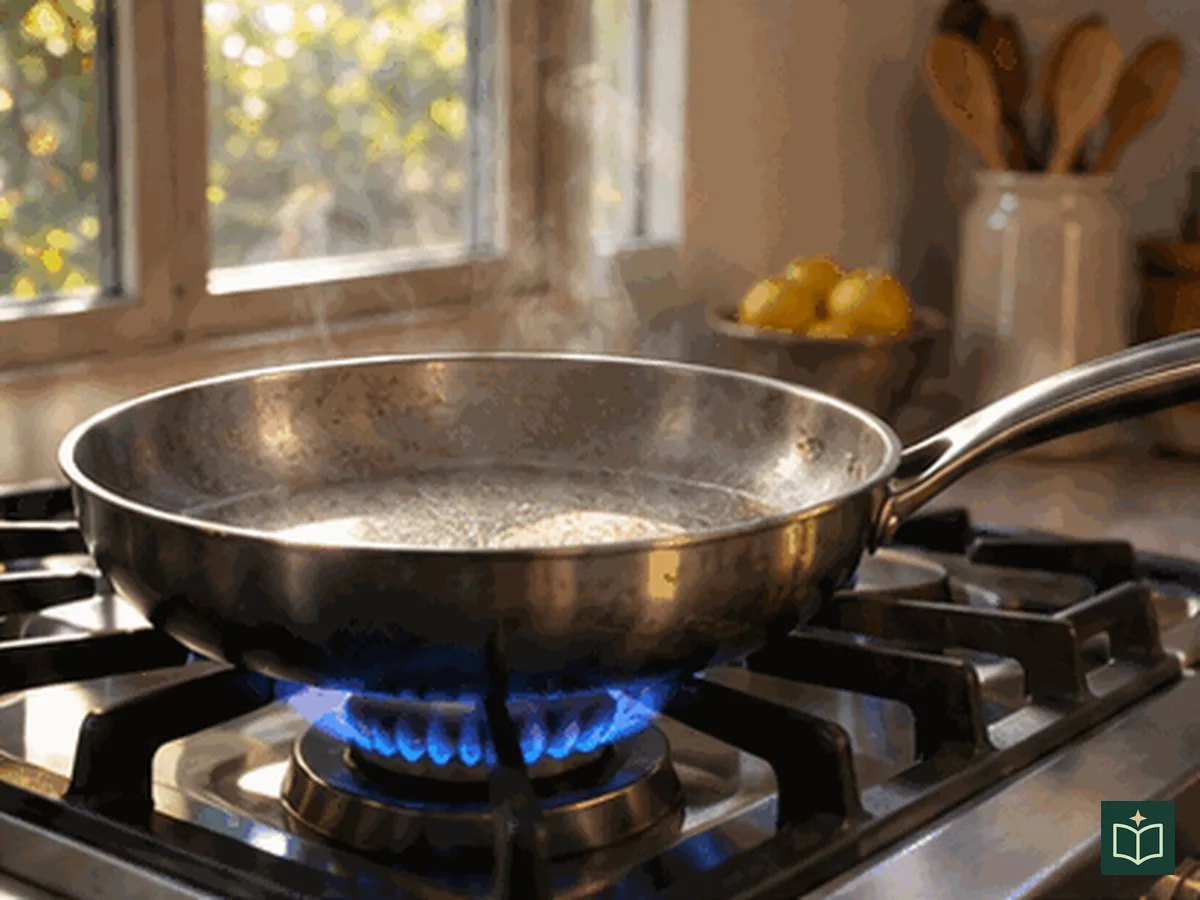
Put a steel pan on a hob and the metal touching the heat starts to vibrate faster. Those particles jostle their neighbours, and in metals free electrons also carry energy rapidly through the structure. Heat creeps across the base and up the handle. Materials differ enormously in how well they conduct. Copper conducts heat roughly 25 times better than stainless steel, which is why good pans often have copper or aluminium cores. Air conducts very poorly, which is why still air trapped in wool, foam or double glazing makes good insulation. A tiled floor feels colder than a rug at the same temperature because the tile conducts heat away from your feet faster.
Convection: the sea breeze
On a sunny afternoon on the Gulf coast, the land heats faster than the sea. Air over the hot sand warms, expands, becomes less dense and rises. Cooler, denser air from over the water flows in to replace it, creating the sea breeze that often arrives in the afternoon in coastal cities such as Abu Dhabi and Dubai. At night the pattern can reverse, as land cools faster than water, producing a gentler land breeze. The same loop happens in a pot of boiling water, where hot water rises from the base and cooler water sinks. Convection drives ocean currents, thunderstorm clouds and the slow churning of rock deep inside the Earth.
Radiation: desert sunshine
Between the Sun and Earth lies about 150 million kilometres of near-empty space, so neither conduction nor convection can carry the Sun's heat. Radiation does. The Sun emits visible light, infrared and ultraviolet, and at the top of the atmosphere this delivers about 1,361 watts on every square metre facing it. Sand absorbs much of the energy reaching the ground and warms quickly, then re-radiates infrared. Every object radiates, and hotter objects radiate far more. Dark, matt surfaces absorb and emit well, while shiny, pale ones reflect. That is why white roofs, reflective window films and light-coloured clothing help in a Gulf summer, and why stepping into shade brings immediate relief.
Usually all three at once
Real situations rarely involve a single route. A car parked in the sun is heated by radiation through the windows, the dashboard warms by absorbing it, the hot dashboard conducts heat to anything touching it, and the air inside circulates by convection. A traditional wind tower, or barjeel, uses convection to draw breezes into a house, while thick walls slow conduction and shaded courtyards block radiation. The human body loses heat by all three routes too, and also by sweat evaporating from the skin. In hot weather, when the surrounding air and surfaces are warmer than the skin, conduction and radiation can add heat rather than remove it.
Why it matters
Engineers and designers manipulate each route deliberately. Insulation slows conduction, fans and air conditioners speed convection, and reflective coatings cut radiation. A vacuum flask fights all three at once: a vacuum between two walls stops conduction and convection, and silvered surfaces reduce radiation. Climate science rests on radiation, because Earth's temperature depends on the balance between incoming sunlight and outgoing infrared, which greenhouse gases partly absorb. In the kitchen, ovens cook mainly by convection and radiation, frying by conduction, and grilling by radiation. Recognising which route is at work turns everyday puzzles, from a burnt hand to a cool courtyard, into simple physics.
Sources & further reading
- Britannica · Heat transfer ↗
- Britannica · Convection ↗
- NASA Earth Observatory · Climate and Earth's energy budget ↗
Figures are rounded and widely published; check the linked organisations for the latest editions. These organisations do not endorse this website.