A grid that spins together
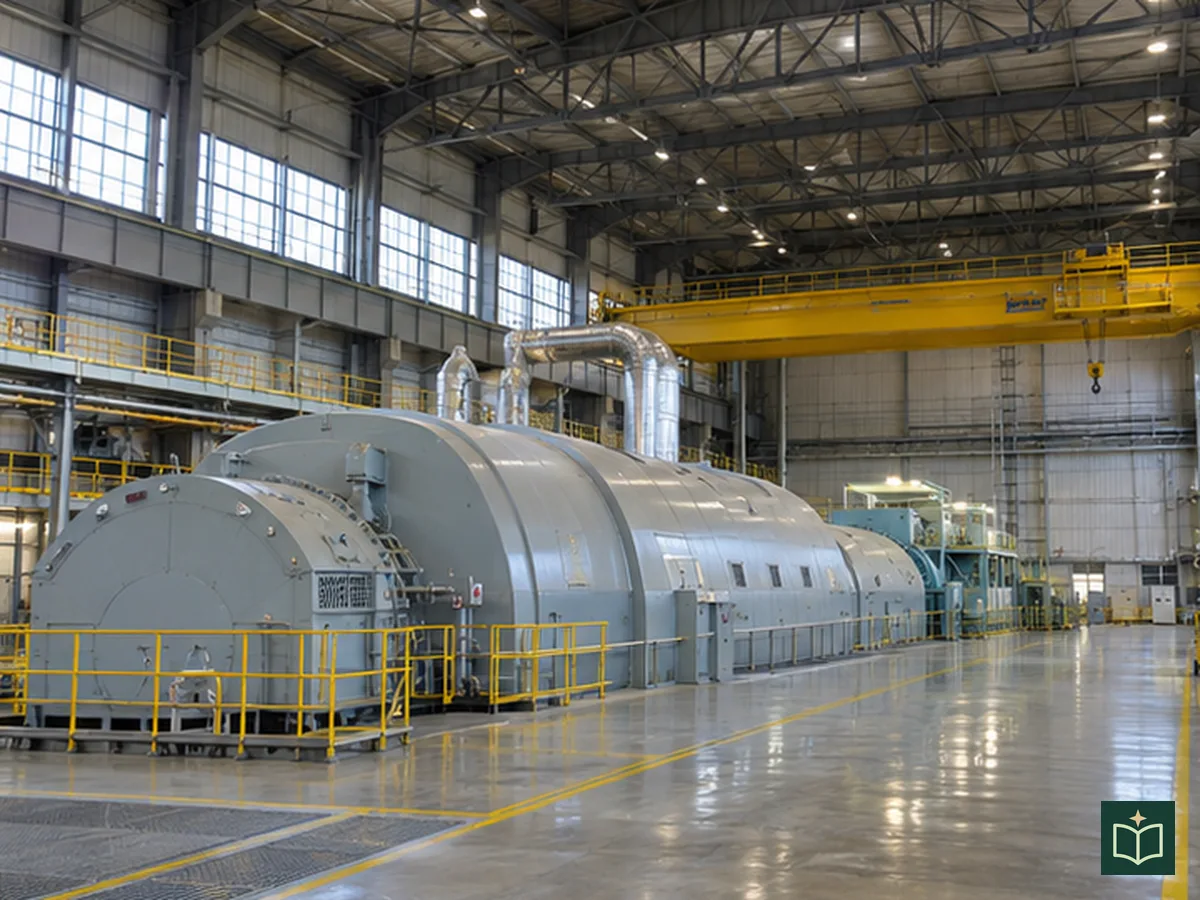
An alternating-current grid runs at a fixed frequency, 50 hertz in the UAE and most of the world, 60 hertz in the Americas and Saudi Arabia. In a conventional power station, a turbine and generator weighing hundreds of tonnes spin in exact step with that frequency. Every such machine on the network is magnetically locked to the others, so together they behave like one enormous flywheel. The kinetic energy stored in all that rotating steel is called inertia. It is not a form of generation; it is a cushion. Its job is to resist sudden change, buying the system precious seconds whenever supply and demand fall out of balance.
What happens when a plant trips
Suppose a large generator suddenly disconnects. Demand now exceeds supply, and the missing energy is drawn, instantly and automatically, from the rotating machines that remain. As they give up kinetic energy they slow down, and the grid frequency falls. The more inertia there is, the slower that fall. Within seconds, governors on power plants open their valves and fast reserves inject power, arresting the decline. If frequency falls too far, protective relays begin disconnecting blocks of customers to save the rest of the system. Inertia therefore does not prevent the drop, but it determines how much time controls have to act before automatic protection takes over.
Putting numbers on it
Engineers express inertia with a constant, often written H, measuring how many seconds a machine's stored energy could supply its rated output. Large thermal units typically have values of around 2 to 9 seconds. Take a grid with 10,000 megawatts of online generation averaging 5 seconds: it stores about 50,000 megawatt-seconds. Lose a 1,000-megawatt unit and the initial rate of change of frequency is roughly 1,000 × 50 ÷ (2 × 50,000), or 0.5 hertz per second. Halve the inertia and the fall doubles to 1 hertz per second. That gives controls only half as long to respond before frequency reaches the level at which customers are disconnected.
Why solar and wind differ
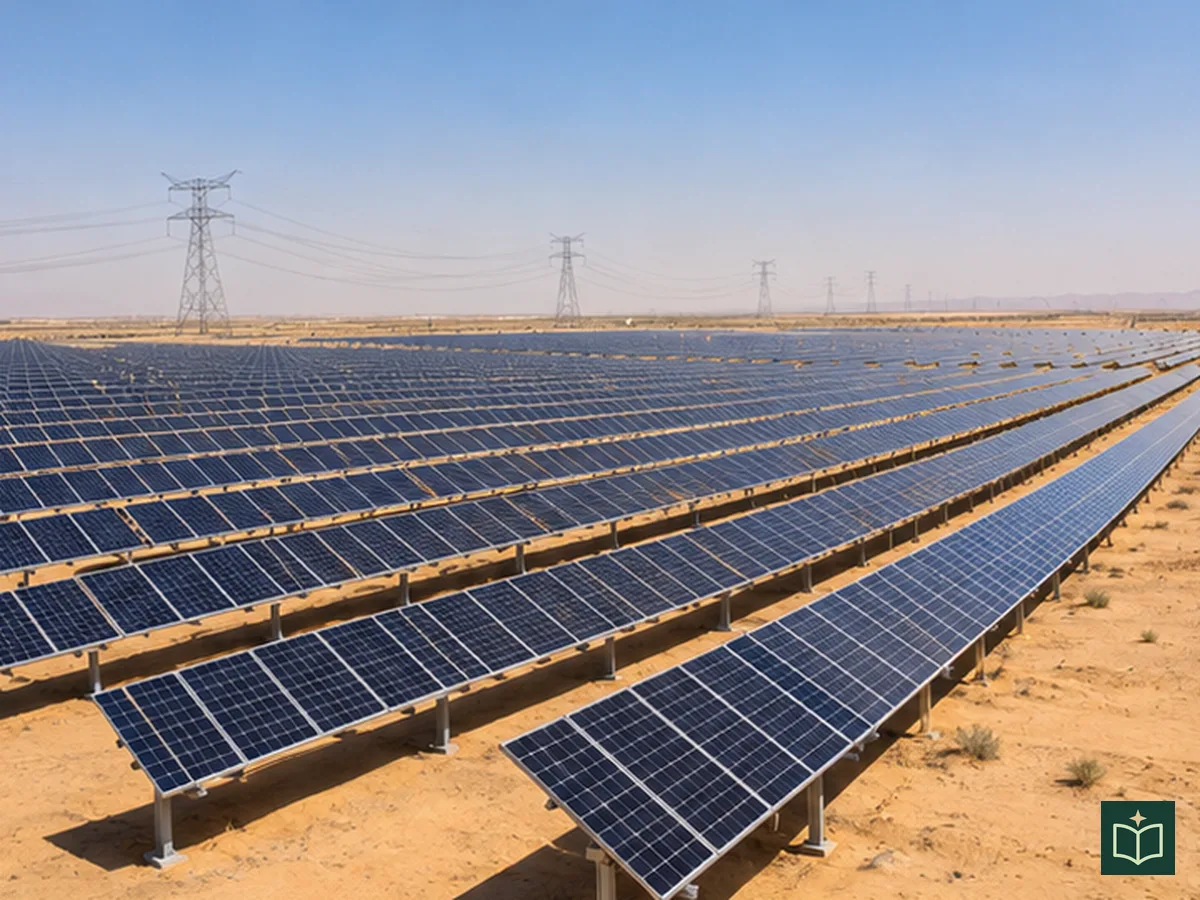
Solar panels and batteries produce direct current and connect through power-electronic inverters, which have no spinning mass. Most modern wind turbines also connect through converters, so their rotors are not locked to grid frequency. As these sources displace thermal plants at certain hours, especially sunny middays, the grid's inertia can drop sharply even though plenty of power is available. Islands and weakly connected systems feel this first. Grids such as those in Ireland, Great Britain and South Australia have set minimum inertia levels or limits on the share of inverter-based power at any moment, adjusting them as new tools prove themselves in operation.
Replacing the spinning mass
Several solutions are now in service. Synchronous condensers are generators without turbines: large rotating machines connected to the grid purely to provide inertia and voltage support, sometimes built by converting retired power-plant generators. Batteries can deliver fast frequency response, injecting power within a fraction of a second once they detect a change, which reduces how much inertia is needed. Newer grid-forming inverters go further, using control software to imitate the behaviour of a spinning machine, an approach sometimes called synthetic or virtual inertia. Wind turbines can also be programmed to release some energy from their rotating blades for a few seconds when frequency drops.
Why it matters
Inertia used to come free with every coal, gas, nuclear and hydro plant, so few people outside control rooms thought about it. As grids decarbonise it has become a service that must be planned, measured and sometimes paid for. Operators now estimate system inertia in real time and schedule enough of it, alongside fast reserves, to survive the loss of their largest unit or interconnector. Large synchronous areas, such as continental Europe's, share inertia across many countries' machines. The engineering challenge is not that renewable grids cannot be stable, but that stability must now be designed in deliberately rather than inherited from heavy machines.
Sources & further reading
Figures are rounded and widely published; check the linked organisations for the latest editions. These organisations do not endorse this website.