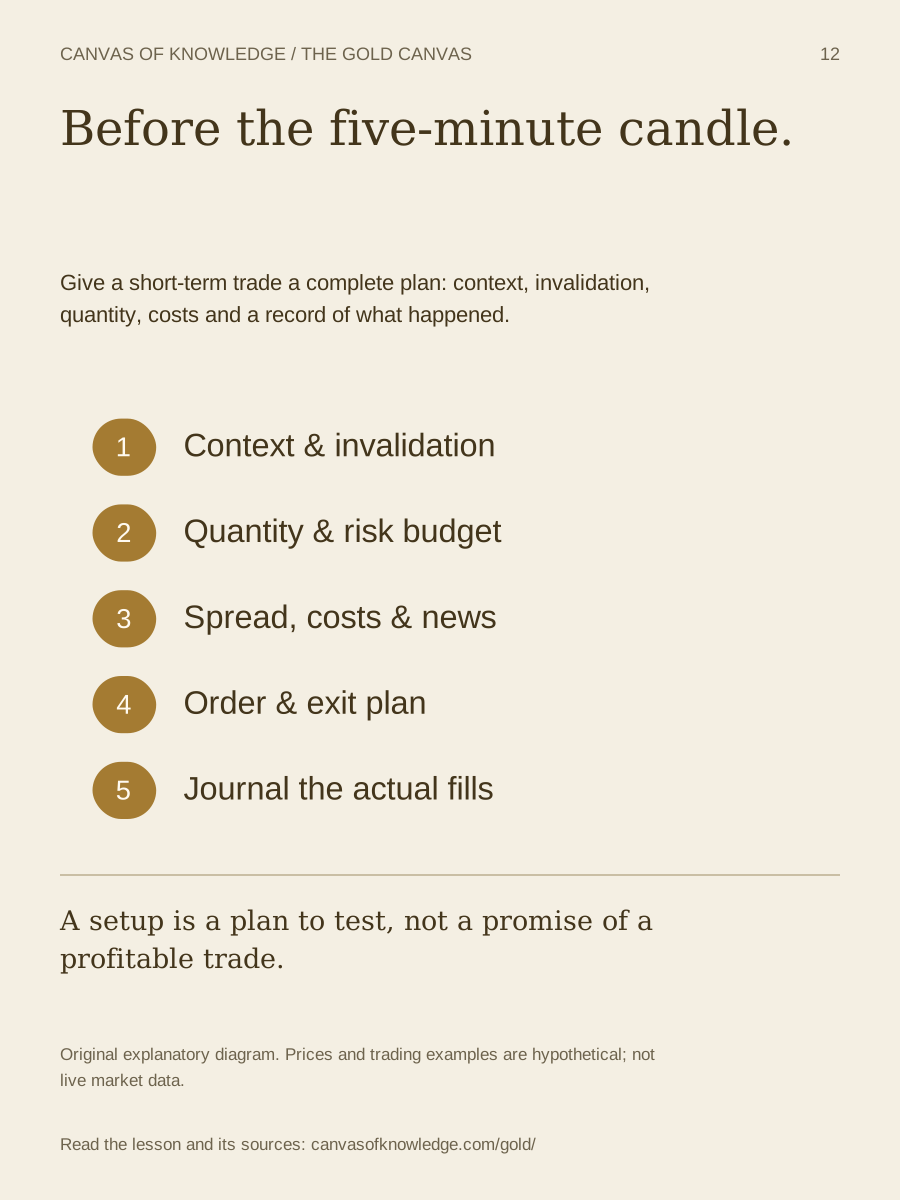
Write the context and invalidation
Record the market context and the observable condition that would invalidate the idea. A 15-minute context chart and a five-minute execution chart are examples of workflow, not a proven edge.
Translate the plan into quantity
Choose an explicit risk budget, measure entry-to-stop distance and account for costs. Convert the product’s contract size into ounces. If the minimum trade is too large for the budget, the plan does not fit that product.
Check the execution environment
Review current bid and ask, order type, liquidity, financing and scheduled announcements. Check official economic calendars; release times and time-zone conversions can change. Stops do not guarantee fills at their trigger price.
Close the learning loop
Record intended and actual fills, costs, outcome in R and any deviation from the plan. Compare many observations rather than treating one winning trade as proof. This is a record-keeping framework, not an entry signal.
Sources & further reading
- U.S. SEC · Stop and stop-limit orders ↗
- BLS · Economic release calendar ↗
- Federal Reserve · FOMC calendars ↗
Sources checked 13 November 2026. These organisations provide reference material and do not endorse this website.