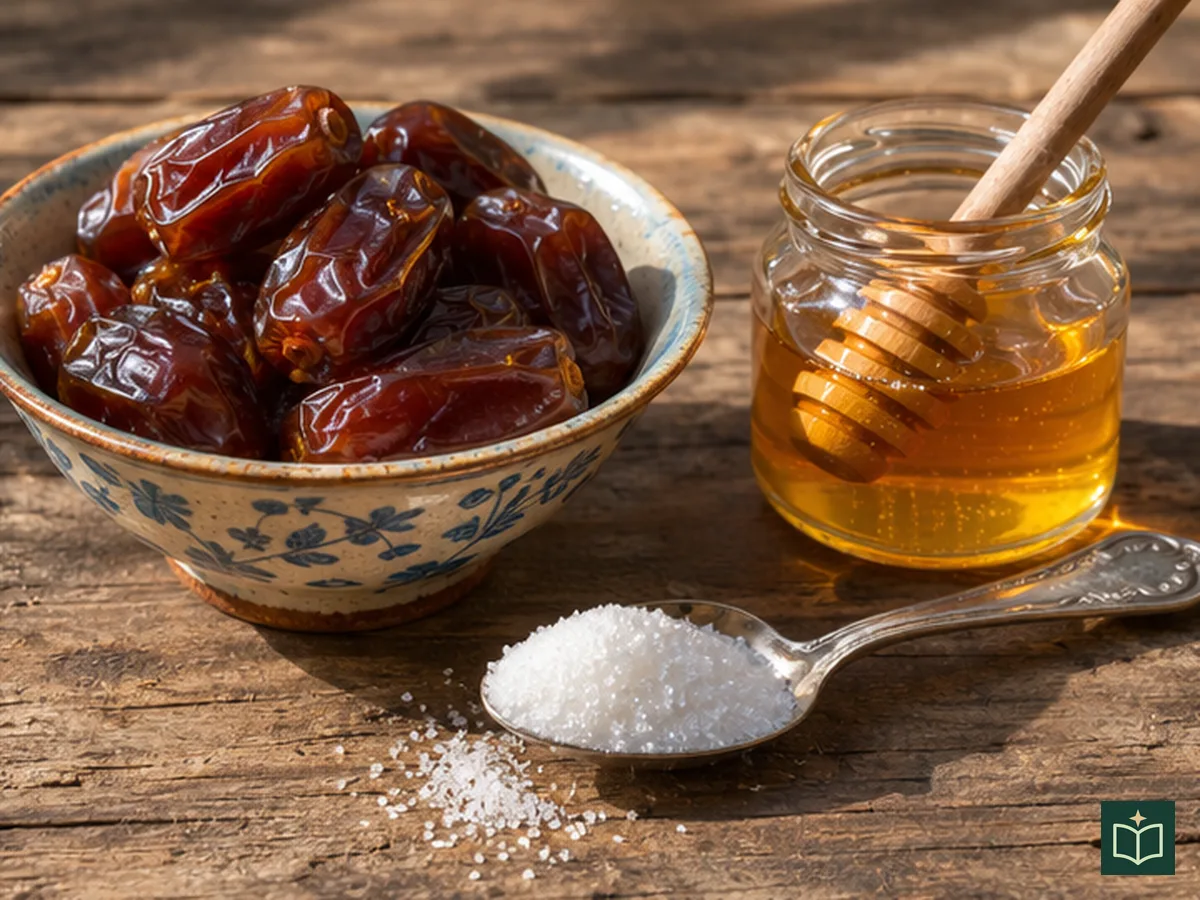
Three sugars, one family
Sugars are carbohydrates, built from carbon, hydrogen and oxygen. Glucose and fructose are monosaccharides, or single sugar units, and they share exactly the same chemical formula: six carbon atoms, twelve hydrogen atoms and six oxygen atoms. What differs is how those atoms are arranged, which changes their shape, their sweetness and how the body treats them. Sucrose, the white sugar in the bowl, is a disaccharide: one glucose unit and one fructose unit joined by a chemical bond. Other common sugars include lactose in milk, which is glucose joined to galactose, and maltose, two glucose units, found in malted grains.
Where each is found
Glucose is the most common sugar in nature. Plants make it through photosynthesis and link it into long chains to form starch, which is why bread, rice and potatoes become glucose during digestion. Fructose is found in fruit, honey and some vegetables, and it is the sweetest of the natural sugars. Honey is mostly a mix of fructose and glucose. Dates, a staple across the Gulf, are rich in sugar, with ripe soft dates containing mainly glucose and fructose, while some drier varieties retain more sucrose. Table sugar is refined from sugar cane or sugar beet and is almost pure sucrose, and many processed foods add it in large amounts.
How the body handles glucose
Once absorbed from the gut, glucose passes into the bloodstream and raises blood sugar. The pancreas responds by releasing insulin, the hormone that allows muscle, fat and liver cells to take glucose in. The brain relies heavily on a steady glucose supply. Excess glucose is stored as glycogen in the liver and muscles, and when those stores are full, it can be converted to fat. Because glucose enters the blood so readily, it is the reference point for the glycemic index, which ranks foods by how quickly they raise blood sugar. Pure glucose is assigned a value of 100, and other foods are compared with it.
How fructose and sucrose differ
Fructose takes a different route. Most of it is taken up by the liver, which converts it into glucose, glycogen, lactate or fat, so it causes only a small rise in blood sugar and has a low glycemic index. That once made it seem like a healthier sweetener, but large, regular intakes, especially from sugary drinks, are linked to fat building up in the liver. Sucrose cannot be absorbed whole. An enzyme called sucrase, on the lining of the small intestine, splits it into glucose and fructose, which are then absorbed separately. In practical terms, eating table sugar means taking in equal amounts of the two simpler sugars.
A worked example
The World Health Organization advises that free sugars, meaning sugars added to food plus those naturally present in honey, syrups and fruit juices, should provide less than 10% of daily energy, and ideally less than 5%. Each gram of sugar supplies about four kilocalories. For an adult eating 2,000 kilocalories a day, 10% is 200 kilocalories, or about 50 grams of sugar; the stricter 5% target is about 25 grams. A single can of regular soft drink can contain more than 30 grams. Sugars inside whole fruit do not count as free sugars, because the fibre and water slow digestion and make it hard to eat large amounts.
Myths and what matters
A common belief is that natural sugars, such as honey or date syrup, are fundamentally different from table sugar. Chemically, they are mostly the same glucose and fructose, and the body processes them in the same way, although whole dates also supply fibre, potassium and other nutrients. Another myth is that fructose from fruit is harmful; the problem lies with large amounts of concentrated added sugar, not with eating whole fruit. What matters most for health is the total amount of free sugar consumed and how often. People with diabetes or other conditions affecting blood sugar should take advice from a doctor or dietitian rather than rely on general guidance.
Sources & further reading
- WHO · Guideline: sugars intake for adults and children ↗
- Britannica · Sucrose ↗
- Harvard T.H. Chan School of Public Health · Carbohydrates ↗
Figures are rounded and widely published; check the linked organisations for the latest editions. These organisations do not endorse this website.