Same toxins, different delivery
In everyday speech, a dangerous snake is often called poisonous, but biologists draw a careful line. Both venoms and poisons are toxins, chemicals that disrupt the body. The difference lies in how they reach a victim. Venom is delivered actively, through a wound made by fangs, a stinger, spines or specialised teeth. Poison is passive: it sits in or on the animal's body and harms whoever touches, swallows or sometimes breathes it in. The popular shorthand is that if it bites you and you get sick, it is venomous; if you bite it and you get sick, it is poisonous. The rule works remarkably well.
How venom is used
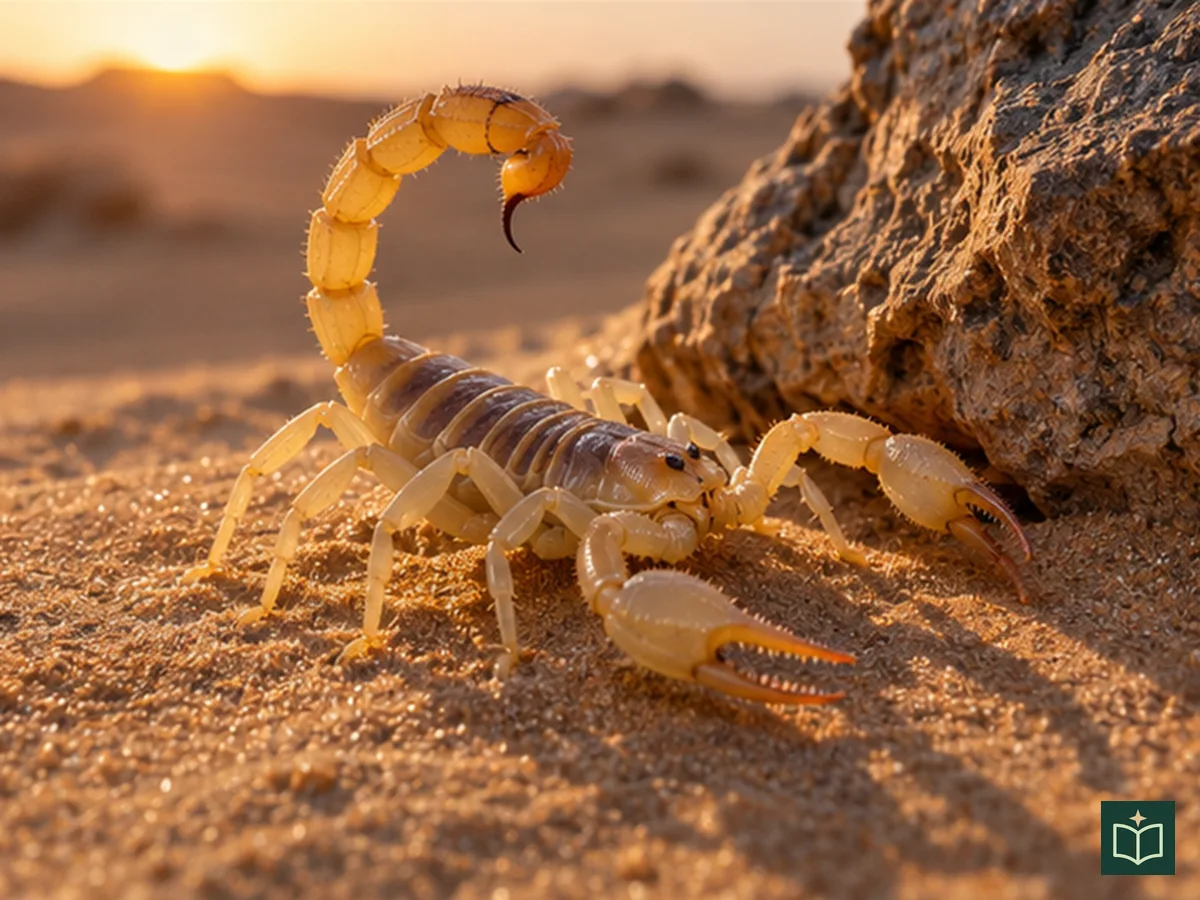
Venom has evolved independently many times, in snakes, scorpions, spiders, jellyfish, cone snails, some fish and even a few mammals such as the platypus. It is usually a complex cocktail of proteins and peptides, and its main jobs are to subdue prey quickly and to defend against predators. In the Arabian Peninsula, the saw-scaled viper and several large scorpions, including the fat-tailed scorpion, are among the venomous species most likely to be encountered in the wild. In Gulf waters, stonefish carry venom in their dorsal spines and are a hazard to people walking barefoot over rocks and reefs. Anyone stung or bitten should seek medical help promptly.
How poison protects
Poison is mainly a defence. An animal that tastes or feels dangerous is less likely to be eaten twice, and many poisonous species advertise themselves with bright colours, a strategy called aposematism. The poison dart frogs of Central and South America carry powerful skin toxins that they obtain from the ants and mites they eat, which is why many lose their toxicity in captivity. Pufferfish contain tetrodotoxin, concentrated in organs such as the liver and ovaries; in Japan, only specially licensed chefs may prepare fugu. Monarch butterflies store bitter compounds from the milkweed plants they feed on as caterpillars, making them unpleasant for birds.
The exceptions
Nature rarely respects tidy categories. Some animals are both venomous and poisonous: certain Asian keelback snakes have a venomous bite and also store toxins taken from the toads they eat in glands on their necks. Spitting cobras spray venom at the eyes of attackers without biting, and some researchers have proposed a third term, toxungen, for toxins delivered without a wound. Plants and fungi are generally described as poisonous, though stinging nettles inject irritants through tiny hollow hairs. Context matters, too. Many venoms are proteins that are broken down by digestion, so a venomous animal can be safe to eat, while a poisonous one is never safe to bite.
Snakebite in numbers
Venomous snakes are a serious public health problem. The World Health Organization estimates that between 4.5 and 5.4 million people are bitten by snakes each year, and that roughly 80,000 to 140,000 die, with many more left with lasting disabilities. Most cases occur in rural parts of South Asia, sub-Saharan Africa and Latin America, among farmers and children. In 2017 the WHO added snakebite envenoming to its list of neglected tropical diseases. Antivenom, made from antibodies raised in animals such as horses, remains the main treatment, but it must match the snake species, and supplies are limited in many of the regions that need it most.
Why the words matter
Using the right word helps people understand the risk. A venomous animal is a danger mainly when it is provoked or stepped on, so the advice is to keep distance, watch where you put hands and feet, and wear shoes outdoors. A poisonous animal is a danger mainly if it is handled or eaten, so the advice is not to touch or taste it. The distinction is also a reminder that toxins have value. Compounds from snake venom led to blood pressure medicines, and a drug for type 2 diabetes was developed from a hormone in Gila monster venom, showing how dangerous chemicals can become useful medicines.
Sources & further reading
Figures are rounded and widely published; check the linked organisations for the latest editions. These organisations do not endorse this website.