Two steps in one story
The words weathering and erosion are often used together, and the processes do work as a team, but they describe different stages. Weathering is the breakdown of rock where it stands, either into smaller fragments or into new minerals, without the material moving far. Erosion is the removal of that broken material and its transport elsewhere by flowing water, wind, glaciers or simply gravity. A useful way to remember it: weathering prepares the material and erosion carries it away. Eventually the carried material settles, a step called deposition, building beaches, deltas and sand dunes, and over very long periods it may be pressed into new sedimentary rock.
Physical weathering
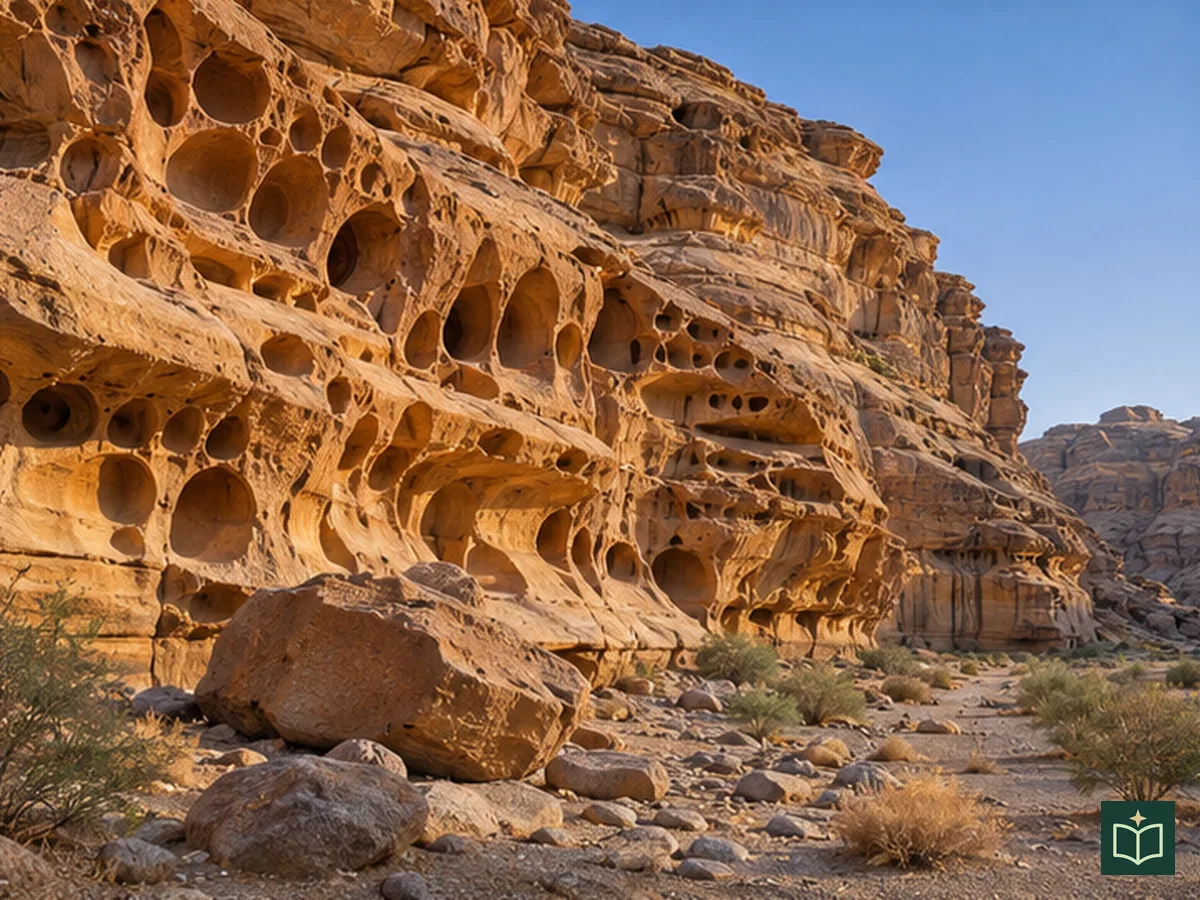
Physical, or mechanical, weathering breaks rock into pieces without changing its chemistry. In cold places, water seeps into cracks, freezes and expands by about 9%, levering the rock apart. In hot deserts, rocks heat strongly by day and cool at night, and repeated expansion and contraction may help loosen surface layers, especially when moisture is present. Salt is a powerful agent near coasts and in desert basins. Salty water enters pores in the rock, evaporates and leaves crystals that grow and push grains apart. This process carves honeycomb-like hollows, known as tafoni, into exposed rock faces in the UAE, Oman and other arid regions.
Chemical and biological weathering
Chemical weathering changes the minerals themselves. Rainwater absorbs carbon dioxide and becomes slightly acidic, slowly dissolving limestone and creating caves and sinkholes. Iron-rich minerals react with oxygen, giving rocks red and orange stains. Feldspar, common in granite, gradually turns into clay. Chemical weathering is fastest in warm, wet climates and slowest in cold or dry ones, such as Arabia's. Living things contribute too. Plant roots wedge into cracks and widen them as they grow, burrowing animals expose fresh rock, and lichens release acids that etch the surface. Together these processes turn solid bedrock into the loose material from which soil eventually forms.
Agents of erosion
Once rock is broken down, something must move it. Running water is the most powerful erosional force on Earth, carrying sediment from mountains to the sea. In the Hajar Mountains, rare but intense storms send flash floods down wadis that roll boulders and scour channels in hours. Wind matters more in deserts, lifting fine dust and bouncing sand grains along the ground. Wind-blown sand acts like sandblasting, polishing stones and carving streamlined ridges called yardangs. Glaciers grind and pluck rock in cold regions, waves batter coastlines, and gravity pulls material downhill in landslides and rockfalls. Each agent leaves characteristic landforms that geologists can read.
When people speed it up
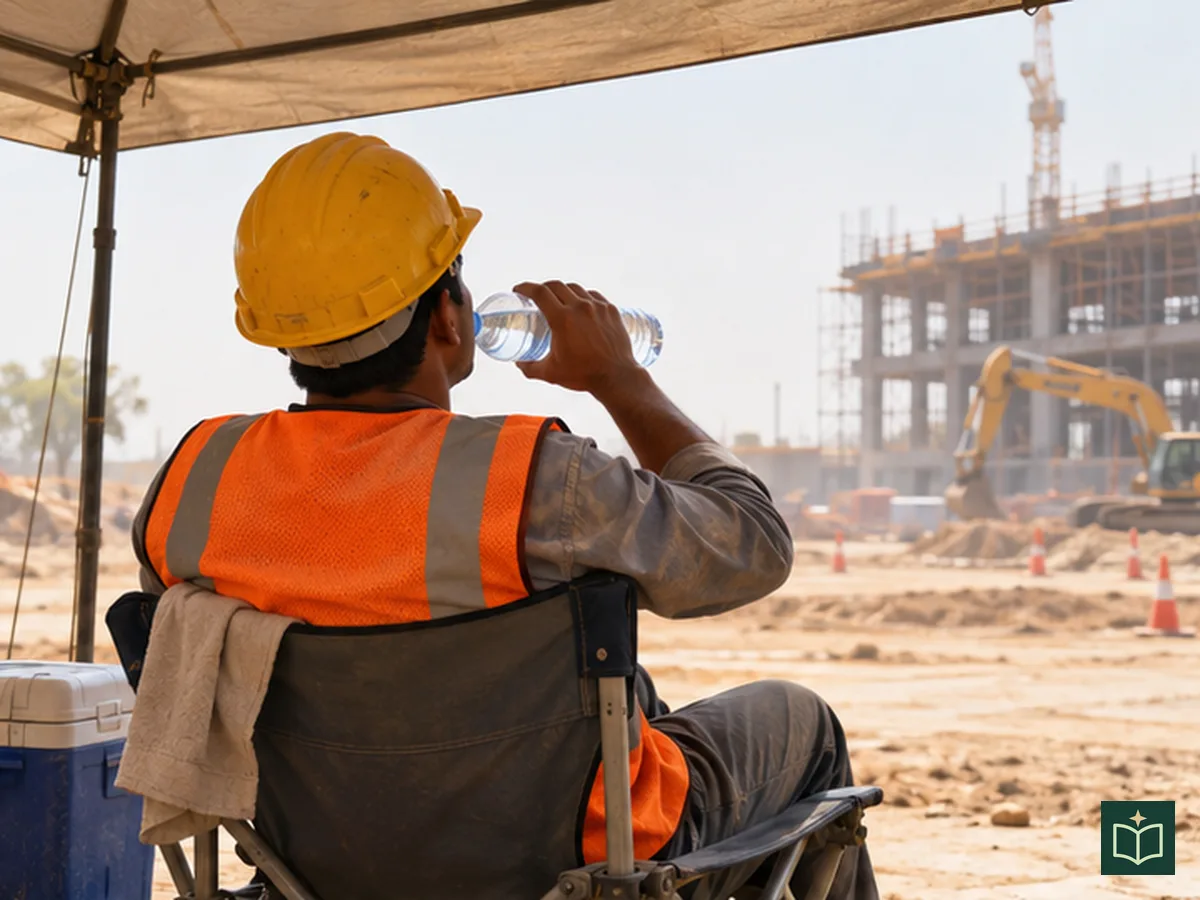
Human activity has greatly accelerated erosion in many places. Clearing forests, ploughing slopes and overgrazing remove the plant cover that holds soil in place, so rain and wind can strip it away far faster than weathering can replace it. According to the UN Food and Agriculture Organization, it can take up to a thousand years to form a single centimetre of soil, which makes soil effectively non-renewable on human timescales. Construction exposes bare ground to wind and flash floods, and coastal development can disturb the movement of sand along beaches. Terracing, windbreaks, planting and careful drainage design are among the most effective ways to slow these losses.
Mixing up the terms
A common mistake is to call any worn-looking rock eroded, when much of the change may be weathering that has happened in place. Another is to imagine that weathering and erosion only destroy landscapes; they also create soil, fertile river plains, beaches and dunes, and supply the sediment that forms new rock. The processes depend heavily on climate. In the dry Arabian interior, chemical weathering is slow and wind dominates erosion, while in humid tropical regions deep chemical weathering can rot rock tens of metres below the surface. Understanding which process is at work helps engineers protect roads, buildings and coastlines from slow but relentless natural forces.
Sources & further reading
Figures are rounded and widely published; check the linked organisations for the latest editions. These organisations do not endorse this website.