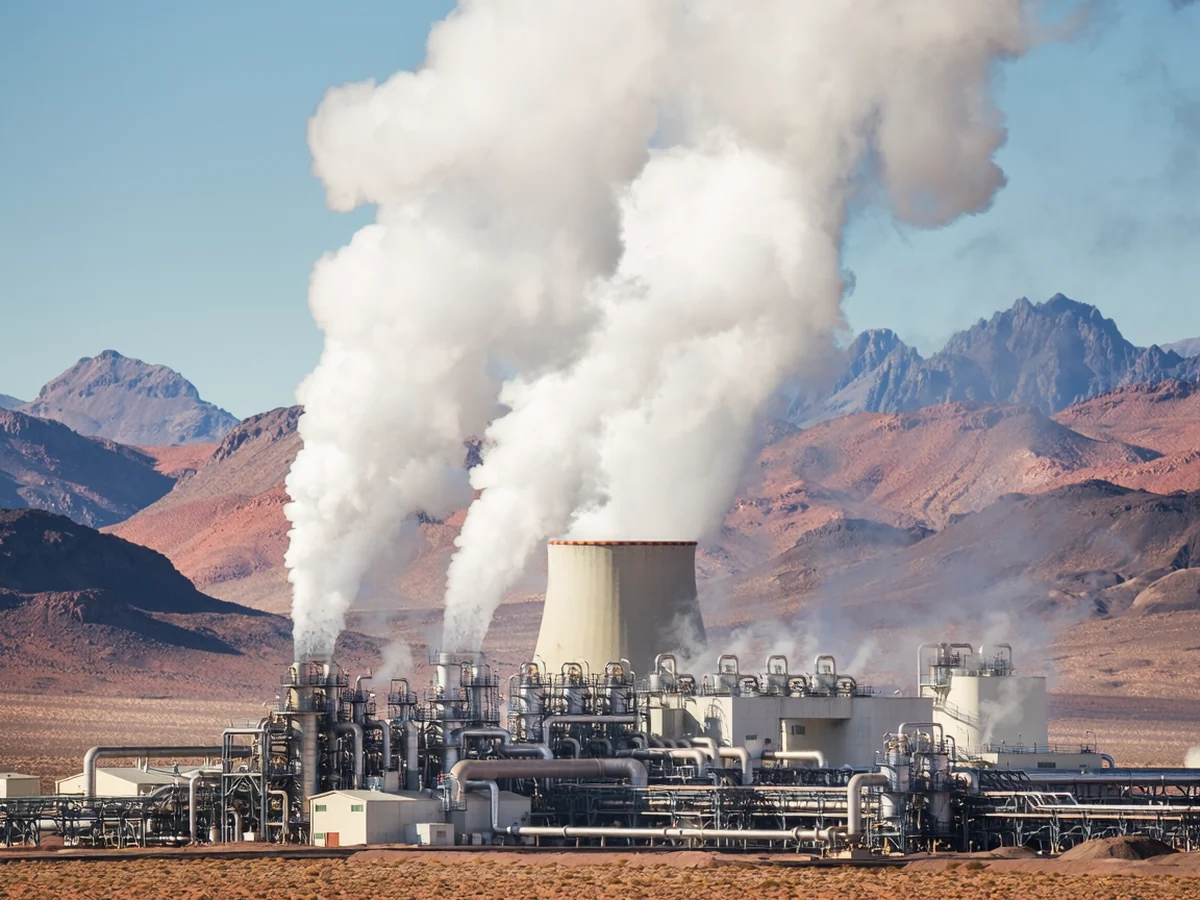
Heat beneath our feet
The Earth's interior is extremely hot, and that heat slowly flows outwards. In a few places, such as Iceland, Kenya and parts of the western United States, hot water and steam come close to the surface and have been used to generate electricity for decades. Geothermal power plants produce electricity day and night with very low emissions. But conventional geothermal has been limited to locations where hot water naturally circulates through permeable rock.
Enhanced geothermal
Enhanced geothermal systems aim to create these conditions artificially. Engineers drill deep into hot but dry rock and pump water down under pressure to open small cracks, creating pathways. Water injected into one well flows through the hot rock, heats up and is brought back to the surface through another well, where its heat drives turbines. The concept has existed since the 1970s, but high costs and technical challenges long prevented commercial success.
Borrowing from oil and gas
Fervo Energy, founded in 2017, applies techniques developed for shale oil and gas, including horizontal drilling and multi-stage well stimulation, to geothermal. Horizontal wells can run sideways through hot rock for long distances, greatly increasing the area from which heat can be extracted. Improvements in drilling speed and equipment, many driven by the oil industry, have sharply cut the cost and time of drilling, making enhanced geothermal more competitive.
Project Red
In 2023, Fervo began operating Project Red, a commercial pilot in Nevada, which delivered about 3.5 megawatts to the grid serving Google's data centres in the state. It demonstrated that the company's approach could work at commercial scale, with strong flow rates and temperatures. Google had partnered with Fervo since 2021, including on using AI and machine learning to improve the analysis of underground data and the productivity of the wells.
A new kind of contract
In 2024, Google and the Nevada utility NV Energy announced a Clean Transition Tariff, a new type of electricity rate under which Google pays a premium for new clean firm power. Under the agreement, NV Energy would buy 115 megawatts of geothermal power from Fervo's Corsac Station project and supply it to Google's data centres. Nevada's regulators later approved the arrangement, which Google says could be replicated by other utilities and large customers.
Scaling up in Utah
Fervo is building a much larger project, Cape Station in Utah, with an initial phase of about 100 megawatts and plans to expand to several hundred megawatts. The company announced a 396-megawatt power purchase agreement with Google to support its expansion, with an option for Google to increase its purchase to nearly one gigawatt by 2030. Fervo also signed agreements with other buyers, including utilities in California.
Why tech companies care
AI data centres need large amounts of electricity at all hours. Solar and wind are cheap but variable, and batteries can only store a limited amount. Geothermal, like nuclear power, provides firm clean energy that runs continuously, making it valuable for companies seeking to match their consumption with carbon-free power around the clock. Meta has also signed agreements with geothermal developers, and other tech firms are exploring the technology.
Challenges
Enhanced geothermal still faces hurdles. Drilling deep wells is expensive, and costs must fall further to compete widely. Stimulating rock with pressurised water can trigger small earthquakes, which must be carefully monitored and managed; a project in South Korea was halted after a damaging earthquake in 2017 was linked to it. Projects require water, permits and transmission lines. Experts say continued innovation and supportive policy are needed for geothermal to reach its potential.
Potential in the Gulf
The Gulf region is not known for geothermal resources, but deep wells could reach hot rock in many places, and the region has extensive drilling expertise from its oil and gas industries. Saudi Arabia and the UAE have explored geothermal potential, including for cooling. Masdar has studied geothermal resources in Abu Dhabi, and the UAE's oil industry skills could be useful if enhanced geothermal technologies become cheaper.
Why it matters
If enhanced geothermal can be scaled up, it could provide large amounts of clean, reliable electricity in many more places than conventional geothermal, helping to power AI and the wider economy while cutting emissions. The partnership between Google and Fervo shows how demand from technology companies is helping to finance and accelerate new clean energy technologies that might otherwise take decades to reach the market.
Sources & further reading
- Google · Our first-of-its-kind partnership for clean energy has been approved in Nevada ↗
- Google · How we're working with utilities to create a new model for clean energy (2024) ↗
- JPT · Fervo, Google sign 396-MW agreement ↗
Project sizes and dates are as announced and may change. Photograph: original AI-generated illustration (Adobe Firefly). Reference organisations do not endorse this website.