Iron, steel and carbon
Pure iron is relatively soft. Steel is iron combined with a small, controlled amount of carbon, usually well under 2% and often far less, plus other elements that tune its properties. That small addition makes an enormous difference to strength and hardness. Cast iron, with more carbon, is hard but brittle; wrought iron, with very little, is tough but soft. Steel sits in between, and the ability to control its composition precisely made it the backbone of modern industry. The world produces close to 1.9 billion tonnes of crude steel a year, far more than all other metals combined, for buildings, bridges, ships, vehicles, pipelines, machinery and countless everyday objects.
Where the ore comes from
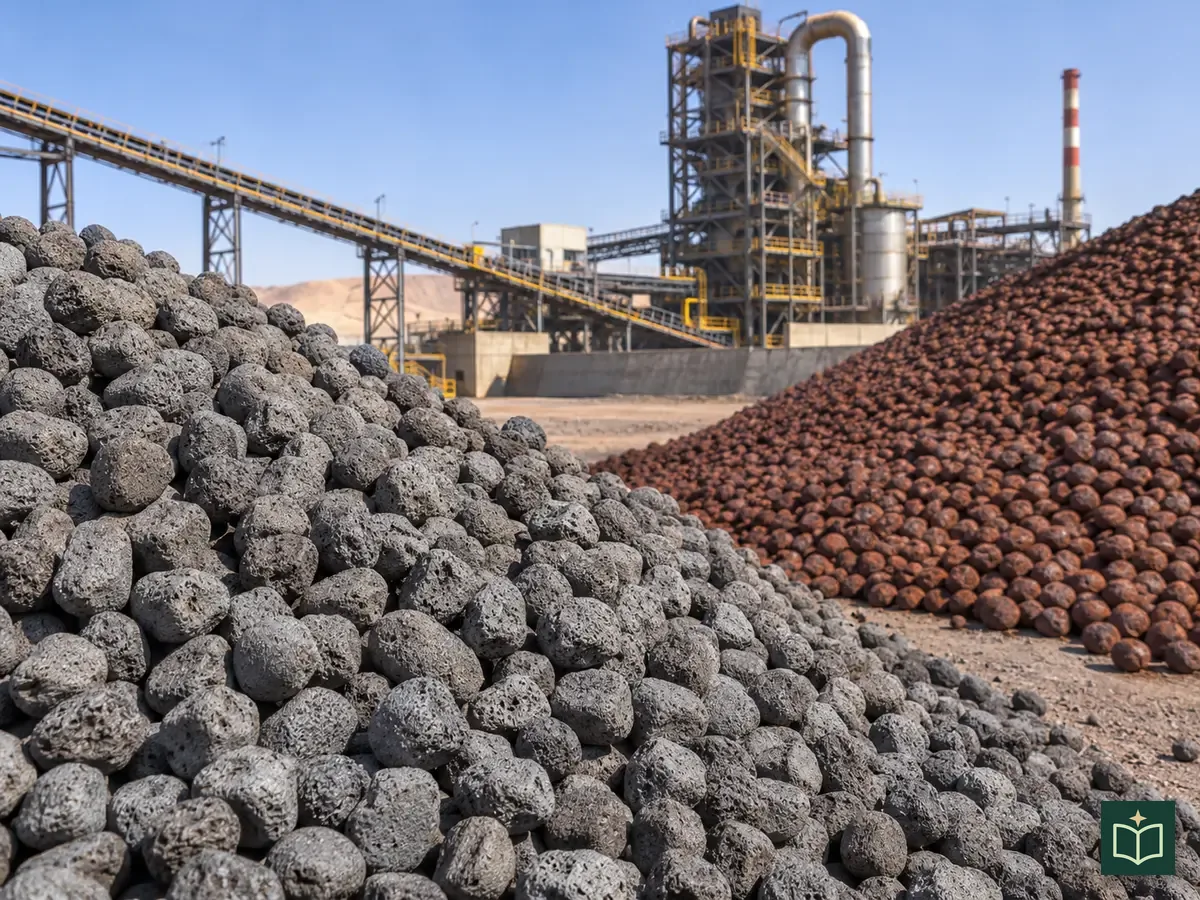
Iron makes up around 5% of Earth’s crust, but commercially mined ore is concentrated in minerals such as hematite and magnetite, often in ancient banded iron formations laid down billions of years ago when oxygen first accumulated in the oceans. Australia and Brazil are the largest exporters, with vast mines in Western Australia’s Pilbara region and Brazil’s Carajás and Minas Gerais. Ore is shipped in enormous bulk carriers, mostly to China, which produces more than half of the world’s steel. Some ore is processed into pellets, small hardened balls that suit certain furnaces. Gulf steelmakers import ore or pellets, since the region has limited domestic iron ore.
The blast furnace route
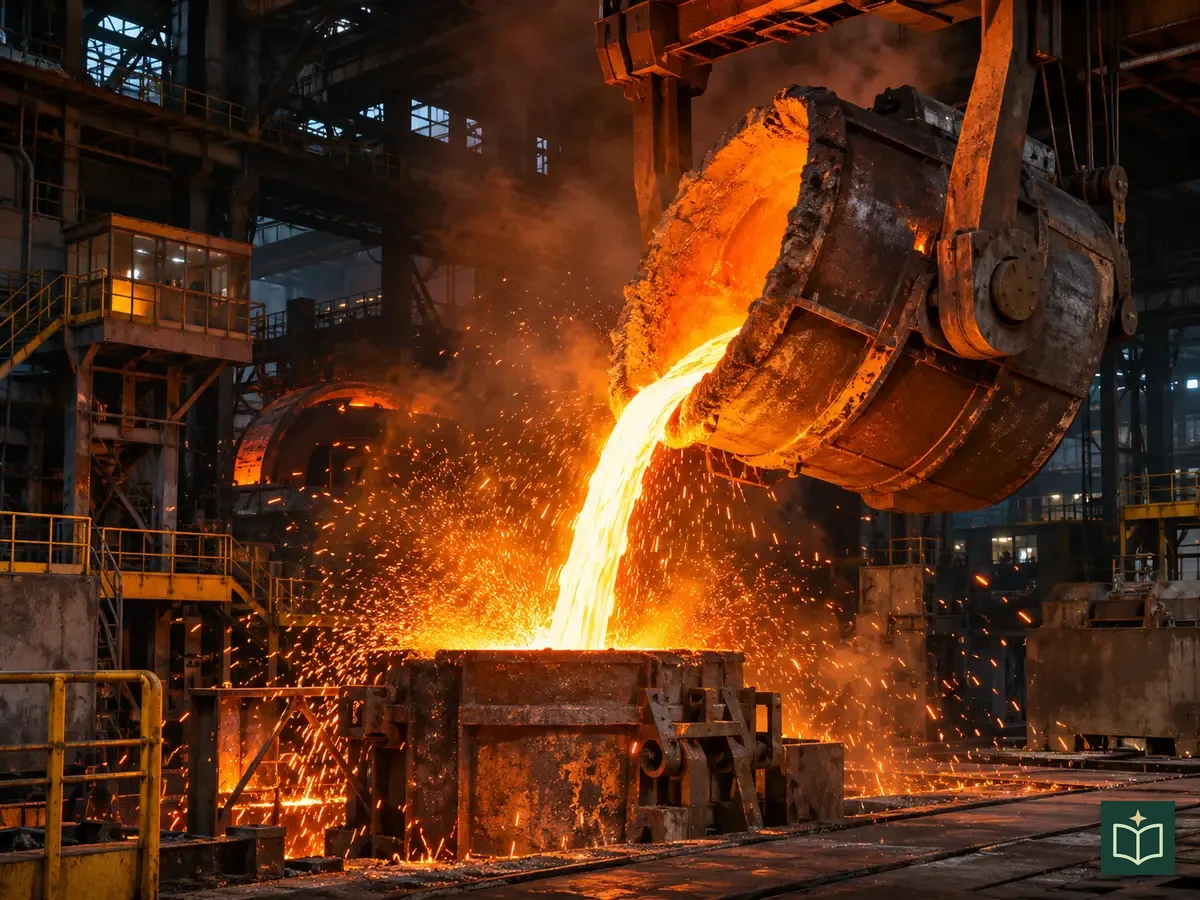
Most of the world’s steel still begins in a blast furnace. Iron ore, coke made from coal, and limestone are loaded at the top, while hot air is blown in near the bottom. Burning coke produces carbon monoxide, which strips oxygen from the ore, and the intense heat melts the resulting iron. Limestone combines with impurities to form slag, which floats and is removed. The product, called hot metal or pig iron, contains around 4% carbon. It is carried to a basic oxygen furnace, where pure oxygen is blown through it to burn off excess carbon. This combined route accounts for roughly 70% of global steel production.
The electric arc furnace
The second major route uses electric arc furnaces, which melt steel scrap, and sometimes directly reduced iron, using powerful electric arcs from graphite electrodes. Because scrap has already been refined once, this route needs far less energy and emits much less carbon dioxide per tonne, especially when the electricity comes from low-carbon sources. It accounts for most of the remaining global production and is dominant in countries with plentiful scrap, such as the United States. Steel is among the most recycled materials in the world: it is easy to separate magnetically, and it can be remelted repeatedly. Scrap availability, however, limits how far this route alone can meet global demand.
A brief history
Steel has been made for thousands of years, but only in small quantities until the nineteenth century. In 1856, Henry Bessemer patented a process that blew air through molten iron to remove carbon, making cheap steel possible on an industrial scale. The open-hearth process soon followed and dominated for decades, before the basic oxygen furnace took over from the 1950s. Cheap steel enabled railways, skyscrapers, large ships and mass-produced machinery. Alloy steels followed, including stainless steel, developed in the early twentieth century, which adds chromium to resist corrosion. Even stainless steel can stain or rust in harsh conditions, such as salty coastal air, if the grade is unsuitable.
Steel and emissions
Because blast furnaces rely on coal, steelmaking is one of the largest industrial sources of carbon dioxide, responsible for around 7% of global energy-related emissions according to the International Energy Agency. Reducing that figure is difficult, since carbon is not only a fuel but also the chemical agent that removes oxygen from the ore. Options include more scrap recycling, electric arc furnaces powered by clean electricity, carbon capture and new reduction methods using natural gas or hydrogen. Steel demand is expected to remain high as developing economies build infrastructure. How the industry adapts will shape both industrial competitiveness and climate goals, making steel one of the most closely studied sectors in energy policy.
Sources & further reading
Figures are rounded and widely published; check the linked organisations for the latest editions. These organisations do not endorse this website.