A different way to remove oxygen
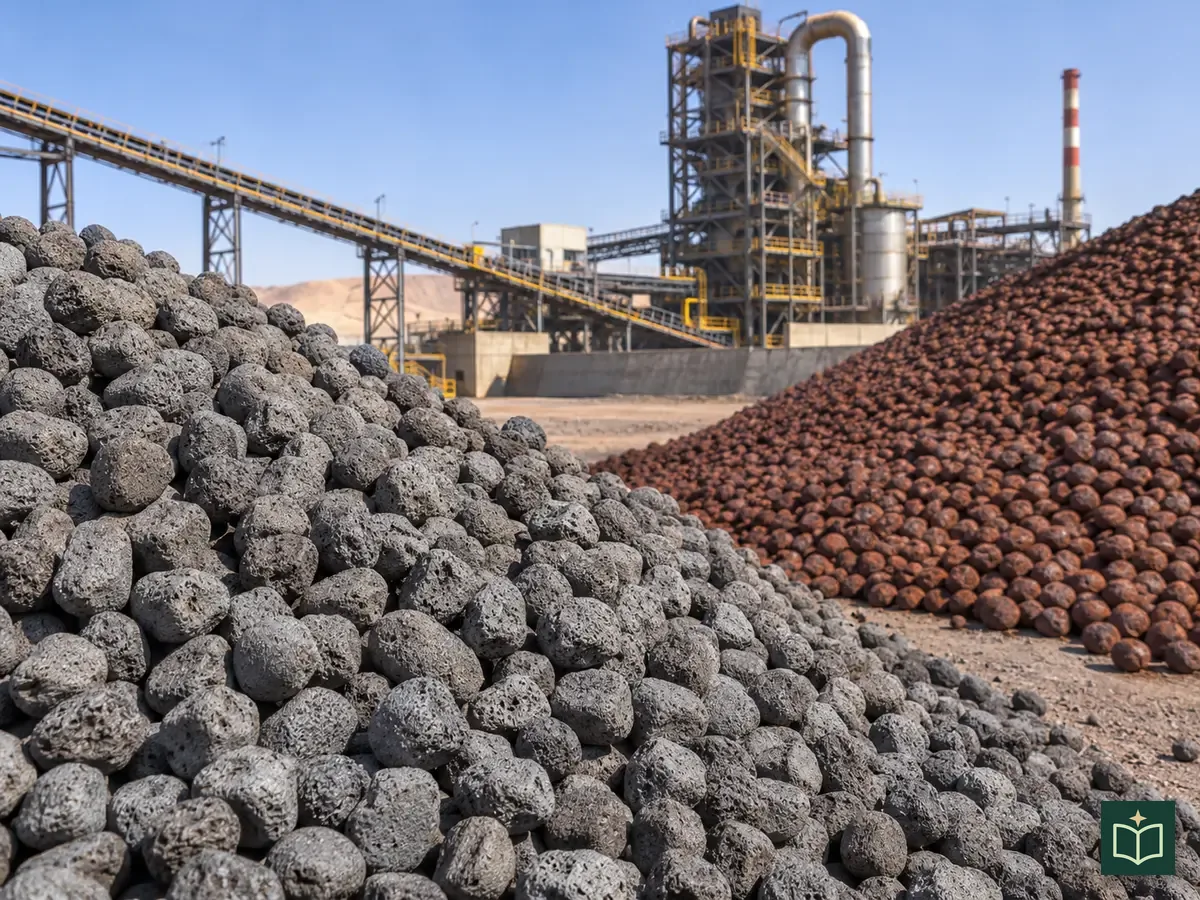
Iron ore is essentially iron combined with oxygen. In a blast furnace, carbon from coke removes that oxygen and the iron melts. Direct reduction takes another path. It removes the oxygen using hot reducing gases at roughly 800 to 1,050 °C, below the melting point of iron, so the iron stays solid throughout. The product is called direct reduced iron, or sponge iron, because removing oxygen leaves the pellets full of tiny pores. It is usually fed into an electric arc furnace, often together with scrap, to make steel. The combination offers a smaller, more flexible alternative to the integrated blast furnace and basic oxygen furnace complex.
How a shaft furnace works
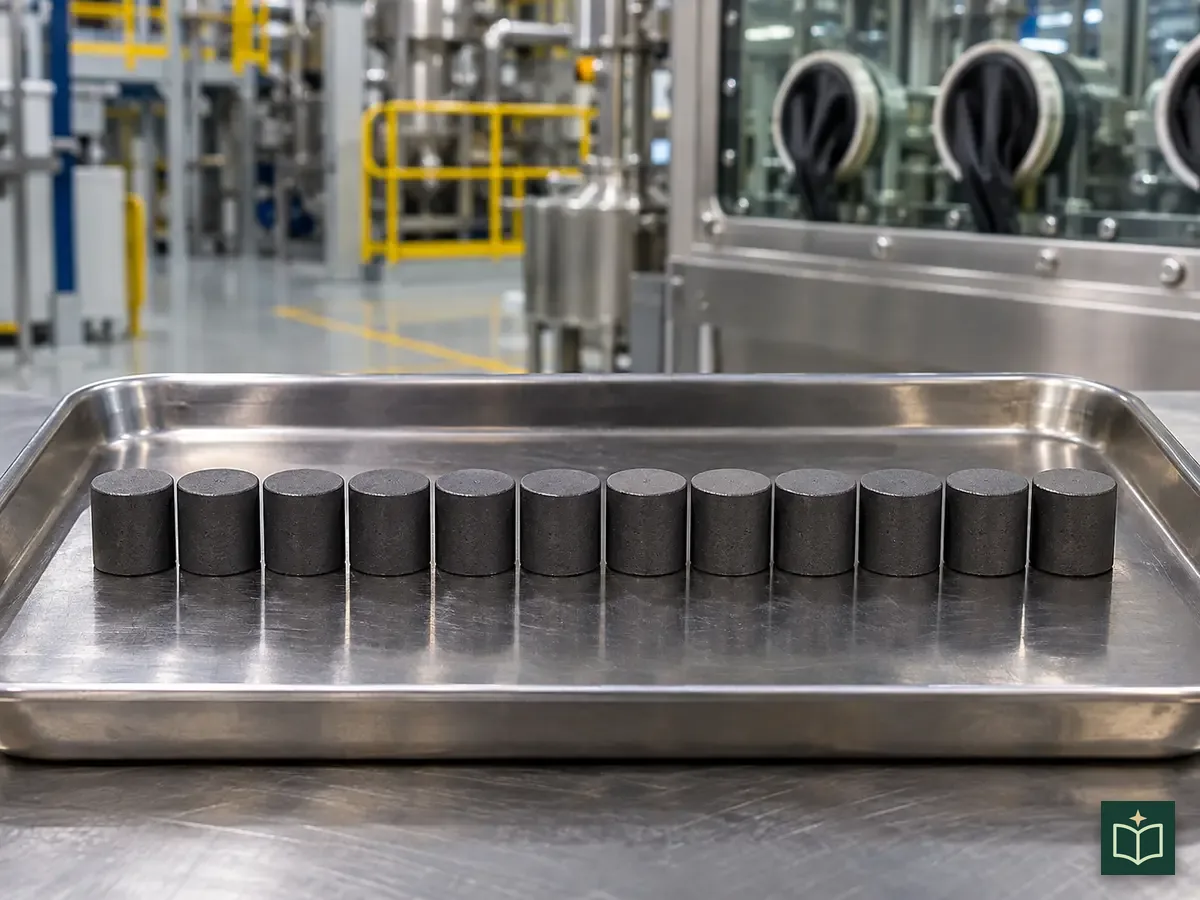
Most gas-based direct reduction plants use a tall shaft furnace. Iron ore pellets enter at the top and descend slowly under gravity. Natural gas is first reformed into a hot mixture of hydrogen and carbon monoxide, which is blown in lower down and flows upward against the falling pellets. As the gas passes through, its hydrogen and carbon monoxide react with the oxygen in the ore, forming water vapour and carbon dioxide. By the time pellets reach the bottom, most of their oxygen has gone. The iron may be cooled, compressed into briquettes for safer shipping, or charged hot directly into a nearby electric arc furnace to save energy.
Why the Gulf adopted it
Direct reduction suits regions with abundant natural gas and limited coking coal, which describes much of the Middle East. Gas-based plants operate in the UAE, Saudi Arabia, Qatar, Oman, Bahrain and Iran, and Iran is among the world’s largest producers of direct reduced iron. In Abu Dhabi, Emirates Steel built its steelmaking around direct reduction and electric arc furnaces. Since 2016, a carbon capture facility in Abu Dhabi has captured carbon dioxide from the Emirates Steel plant and transported it for use in enhanced oil recovery, one of the first commercial-scale projects of its kind in the steel industry. India also produces large volumes, mostly using coal-based kilns.
The hydrogen idea
The chemistry suggests an obvious next step. If the reducing gas were pure hydrogen, the reaction with iron ore would produce mainly water vapour rather than carbon dioxide. Steel made this way, with the electric furnace powered by low-carbon electricity, could have a fraction of the emissions of the blast furnace route. Existing gas-based plants can often run on gas mixtures with increasing proportions of hydrogen, which makes them a natural bridge. Pilot projects in Sweden and elsewhere have produced iron reduced with fossil-free hydrogen, and several larger plants have been planned in Europe, the Middle East and other regions, although some have faced delays or cost revisions.
The practical hurdles
Hydrogen-based steel faces significant challenges. Producing hydrogen by splitting water with renewable electricity requires very large amounts of clean power and is currently more expensive than using natural gas. Direct reduction also needs high-quality iron ore pellets with few impurities, because, unlike a blast furnace, the process does not remove much rock waste, and such high-grade ore is limited. Electric arc furnaces need reliable, affordable electricity. Some carbon is still typically added to steel for its properties. The Gulf’s combination of strong solar resources, large gas reserves for transitional use, existing direct reduction expertise and port infrastructure has prompted interest in the region as a potential low-carbon iron hub.
What to watch
The future of direct reduction depends on several moving parts: the cost of clean hydrogen, the supply of suitable iron ore, carbon pricing and border measures in major markets, and demand from buyers seeking lower-carbon steel for cars and buildings. One emerging model separates the steps geographically, making reduced iron where energy is cheap and shipping it as briquettes to steelmakers elsewhere. Researchers are also studying ways to use lower-grade ores. None of this changes the basic chemistry, which has been understood for over a century. What is changing is the reducing agent, and with it the possibility of making the world’s most important metal with far lower emissions.
Sources & further reading
Figures are rounded and widely published; check the linked organisations for the latest editions. These organisations do not endorse this website.